
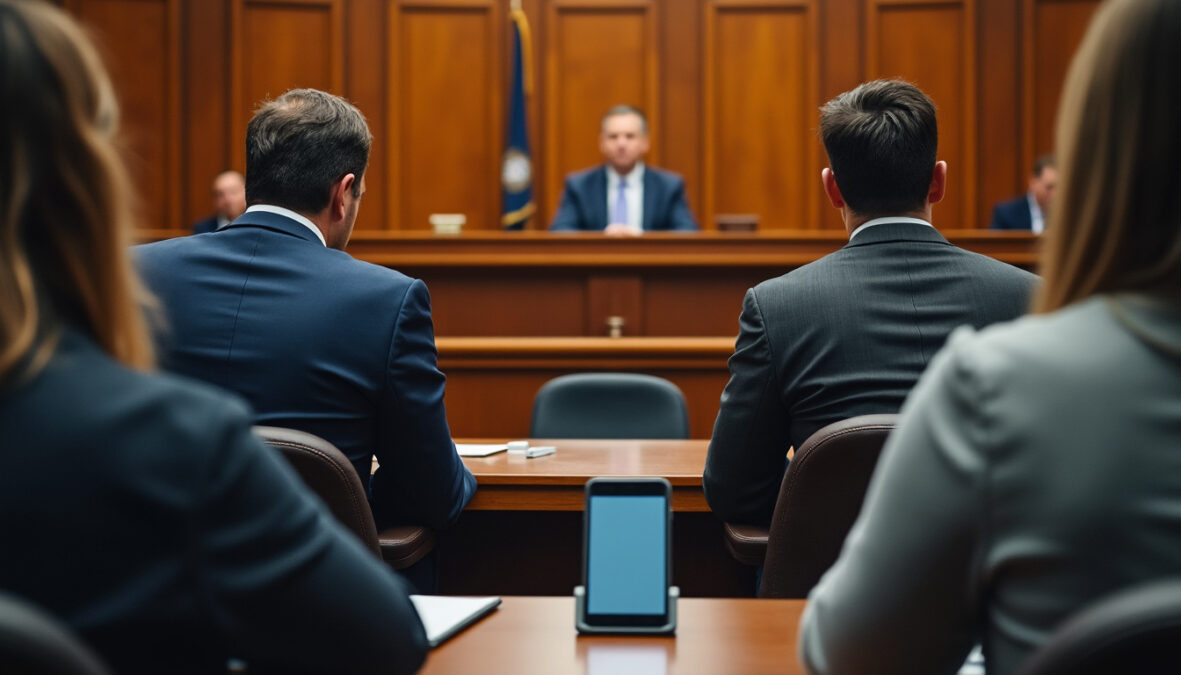
For the first time, Snapchat must face a jury alongside Instagram in a U.S. trial concerning the effects of social media on adolescents’ mental health. The plaintiffs accuse the platforms of having been designed to encourage compulsive use, which they associate in particular with depression, anxiety, eating disorders and self-harm. The trial, set to begin on November 4 in Los Angeles, could have implications for thousands of other lawsuits against major companies in the sector.
Snap faces an unprecedented trial
Until now, Snap, Snapchat’s parent company, had avoided appearing before a jury as part of this wave of U.S. lawsuits. The company reached settlements before hearings, while other groups had already gone to trial. This time, jury selection has begun in Los Angeles, ahead of opening arguments scheduled for November 4. The trial is expected to continue until mid-December, unless the parties reach a settlement in the meantime.
Meta and Snap can still negotiate a settlement before the verdict. The plaintiffs’ lawyers said that Meta CEO Mark Zuckerberg, Snap CEO Evan Spiegel and Instagram head Adam Mosseri are expected to be called to testify in mid-November. The presence of these executives could give the proceedings particular significance, as they concern both the design choices behind the apps and the companies’ responsibility toward young users.
Two teenage girls at the heart of the case
The cases being presented to the jury concern two young women. S.J., 16, from Illinois, reached a settlement with Meta and is now pursuing only Snap. K.D.B., 18, from Mississippi, is continuing her lawsuits against both groups. The complaints describe platform use that allegedly contributed to significant psychological difficulties, including depressive episodes, anxiety, eating disorders and self-harming behaviors.
The accusations focus primarily on the apps’ features and engagement mechanisms. The plaintiffs point in particular to Snapchat streaks and Instagram “likes,” which they say can encourage users to check the apps repeatedly. Their case therefore does not directly concern content posted by users, an area in which U.S. law broadly protects platforms from certain forms of liability.
This distinction also appears in other legal accounts concerning the possible effects of social media. One American woman, for example, described how YouTube and Instagram allegedly contributed to her addiction as part of related lawsuits. These accounts fuel debate over the boundary between content shared online and features that encourage users to spend more time on services.
An earlier verdict has already changed the landscape
Meta and YouTube found liable
In March, a Los Angeles jury awarded six million dollars in damages to K.G.M., a 20-year-old woman. The jurors found that negligence by Meta and YouTube had contributed, at least in part, to the difficulties she described. Judge Carolyn Kuhl, who is also presiding over the new trial, upheld the decision in June. Meta and Google, YouTube’s parent company, have appealed.
The verdict set a notable precedent in lawsuits targeting social media companies. In particular, it paved the way for closer scrutiny of how platforms are designed and the risks they may pose to young people. The current trial will show how another jury evaluates the arguments concerning Snapchat and Instagram, in cases that could serve as a reference for handling thousands of complaints consolidated before California courts.
The proceedings are part of a broader discussion about the digital habits of adolescents and Generation Z. Usage patterns, the role of notifications and user-retention mechanisms are at the center of many discussions about the balance between social connection, entertainment and psychological well-being. Findings on Generation Z’s habits also shed light on the context in which these lawsuits are taking place.
Different strategies among the platforms
Since the first trial, the companies facing allegations have adopted different strategies. YouTube reached settlements with S.J. and K.D.B. before this new trial began. TikTok, for its part, has so far favored settlements over a confrontation before a jury. In late September, the company agreed to pay at least 100 million dollars to the State of Alabama to avoid its first public appearance before that state’s courts.
Meta, long presented as the main target of the complaints, has also entered into numerous settlements. The group reached an agreement with nearly all U.S. states, then a confidential settlement with S.J. in the week before the trial. These agreements have not, however, stopped proceedings in other cases. S.J. is still pursuing Snap directly, while K.D.B. is continuing her claims against Snap and Meta.
Settlements do not necessarily mean that companies admit to the allegations against them. Meta had previously said it would continue to contest lawsuits it considered unfounded. The agreements nevertheless allow the companies to avoid some hearings and limit the uncertainty associated with a verdict, while leaving courts to examine cases that have not been settled.
U.S. states put pressure on social media companies
Agreements that include measures for minors
At the end of August, Meta reached an agreement with the attorneys general of U.S. states, which includes a payment of more than 18 billion dollars and new restrictions for teenagers on Instagram and Facebook. Part of the amount depends on TikTok, YouTube and Snap implementing comparable measures. The agreement increases pressure on other platforms, as authorities seek concrete changes to services used by minors.
Under its agreement with Alabama, TikTok agreed, among other things, to a daily two-hour usage limit for minors, as well as an overnight block. These commitments echo some of the restrictions accepted by Meta and show that settlements can include changes to access and time spent on apps, in addition to payments.
Debates about protecting young people extend beyond U.S. courts. Several countries are considering tighter rules on adolescents’ access to social media, or even banning its use by younger children in certain circumstances. Discussions about a possible ban for under-15s illustrate the scale of the debate over the minimum age, the platforms affected and how such measures would be enforced.
App design at the center of the accusations
Notifications, streaks and engagement
The plaintiffs are focusing on features that may encourage users to log in repeatedly. On Snapchat, streaks highlight the continuity of exchanges between users. On Instagram, “likes” and other popularity signals can encourage users to check reactions to a post regularly. The accusations contend that these mechanisms were designed to hold users’ attention without sufficient consideration of their possible effects on minors.
The question is whether these features amount to design choices that could make companies liable, or whether they are part of the ordinary operation of digital services used by millions of people. The companies deny the accusations and generally argue that they offer safety tools and controls intended for young people and their families.
The relationship between social media use and mental health is also the subject of research and public debate. Some studies examine links between adolescents’ digital habits and other risky behaviors, though these associations alone are not enough to establish a cause-and-effect relationship for every user. The trial will examine the evidence presented by the parties and how it applies to the circumstances of the two plaintiffs.
Thousands of lawsuits could be affected
A case that could set a precedent
The cases brought by S.J. and K.D.B. have been grouped among those that could guide the resolution of thousands of other complaints before California courts. Decisions made during the trial, as well as any verdict, could influence negotiations between families and platforms. They could also help clarify which legal arguments are admissible when a complaint concerns the design of a service rather than content posted by a third party.
A separate federal proceeding in Oakland, near San Francisco, also brings together thousands of lawsuits filed by families and school districts against the same companies. In May, the four groups facing the claims agreed to pay a combined 27 million dollars to avoid the first trial brought by a Kentucky school district. Another district is due to face them before a jury in February 2027, unless a settlement is reached by then.
The court cases thus bring individual experiences, expert analysis of digital usage and companies’ decisions into focus. Another U.S. case brought forward the account of a user who attributes a role in her addiction to YouTube and Instagram, while the Morgane case in France renewed questions about the links between adolescents’ exposure to social media and their mental health.


