
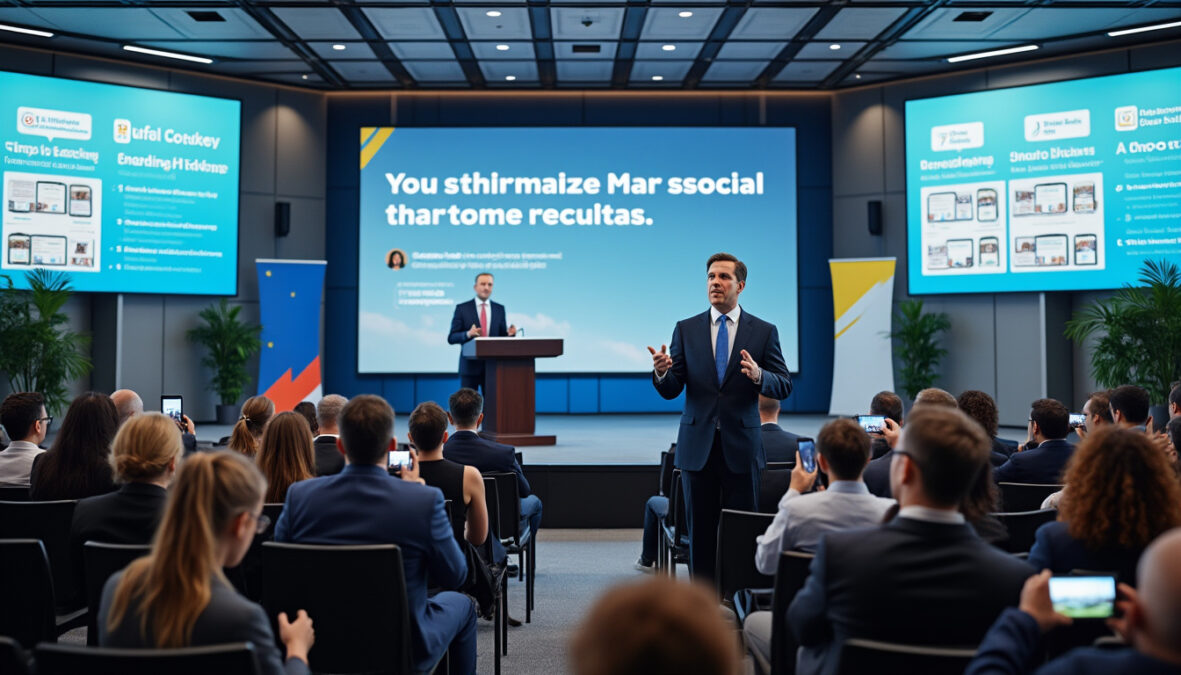
In the age of social media, the role of political meetings must be re-examined. These events, often costly, seem to compete with more economical and accessible forms of communication. Yet, despite the rise of digital platforms, meetings retain undeniable importance in the political landscape. This article explores the current dynamics between traditional meetings and the growing impact of social media on political communication.
The costs of political meetings
Organizing a political meeting requires significant investments. Setting up an event in a large hall, with powerful projectors and giant posters, can quickly reach several tens of thousands of euros, if not more. This represents a major issue for some parties, particularly those struggling to secure stable funding, such as the National Rally. Indeed, the costs associated with security, venue rental, and service providers accumulate, making these events particularly expensive.
The drama of meetings
However, despite these expenses, political meetings are not merely a costly habit but a true ritual at the heart of political life. According to Alexandre Eyries, a researcher in communication, these gatherings resemble an exercise in staging and dramatization. The meeting provides an opportunity for a candidate to meet an audience, test their program, and prove their presidential stature. This direct exposure not only helps to create an authentic connection with the public but also projects an image of strength and authority that is impossible to replicate through a simple video format on social media.
The impact of social media on political communication
Platforms like TikTok, Instagram, and X have transformed political communication by allowing candidates to bypass traditional intermediaries such as journalists. Digital communication offers a low-cost means of disseminating messages while enabling politicians to share their actions in real time. This strategy becomes even more relevant for parties seeking to differentiate themselves and mobilize voters, particularly the youth who are increasingly difficult to reach through traditional media.
Audience of meetings: beyond the convinced
Contrary to certain preconceived notions, meetings are not solely intended for convinced supporters. In reality, a third of the audience present at these events often consists of curious individuals or undecided voters. These attendees come to seek information, assess the candidate on stage, and participate in a collective experience. Thus, meetings provide a unique opportunity to forge a direct link with those still in search of political inspiration.
The alliance of different communication channels
The modern campaign revolves around an indissociable triptych: television to establish institutional legitimacy, social media to maintain a constant flow of news and strengthen ties with voters, and meetings that embody popular fervor. This synergy between different platforms allows candidates to reach a broader audience while validating their oratory skills in a direct setting, essential in a country attached to eloquence.
In summary, the coexistence of political meetings and social media creates a complex communication landscape. Live events remain an indispensable tool for forging human connections, while social media provides the flexibility and accessibility needed to capture the attention of a modern audience, thus juggling between tradition and innovation.


