
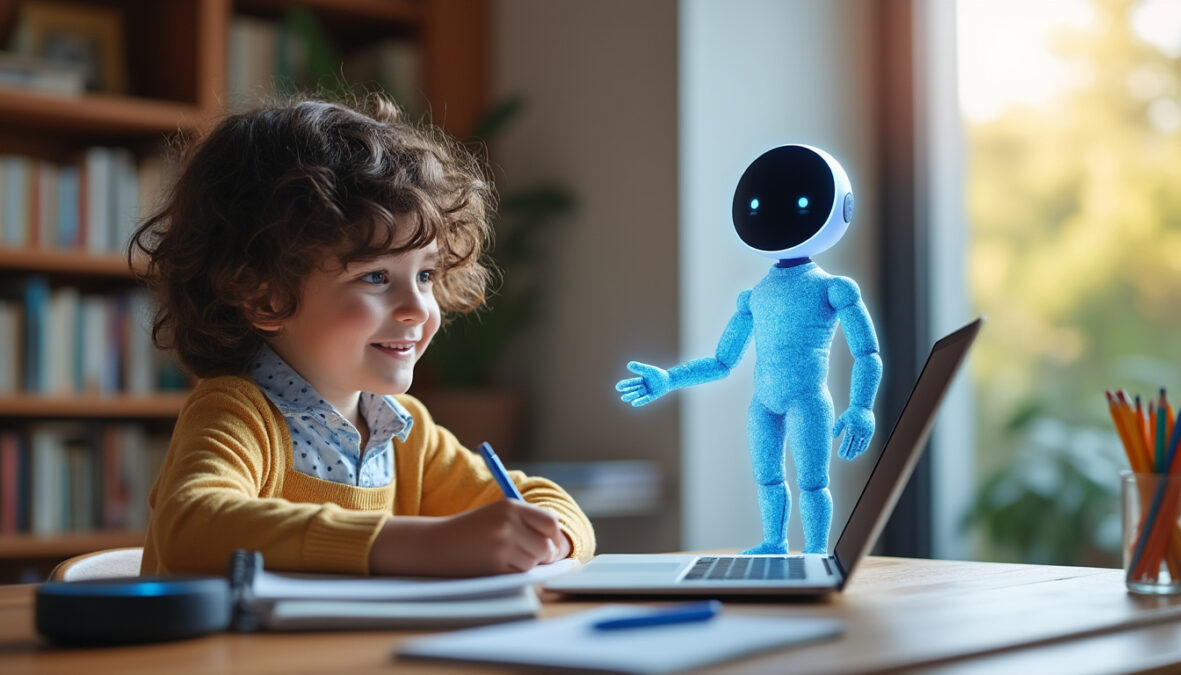
In a context where artificial intelligence (AI) has infiltrated various aspects of daily life, its integration into school assignments is becoming increasingly common. A recent study by Kantar reveals that 74% of parents of children aged 6 to 18 are in favor of using AI as a support in school tasks, as long as it contributes to learning without replacing the effort of students.
Artificial intelligence as an educational tool
In recent years, AI has gained popularity, becoming a valued ally in households for various daily tasks. In the educational context, parents are becoming aware of the benefits that these technologies can bring. They can help children better understand their lessons, provide detailed explanations, or even allow them to practice through exercises tailored to their level. In this regard, platforms like ChatGPT, whose effectiveness has been highlighted, clearly demonstrate how AI can become a valuable aid for those who use it wisely.
A change in parental perception
The results of the Kantar study reveal a significant change in the way parents perceive AI. About 74% of them are willing to allow their children to use these tools for their homework. This acceptance reflects a desire to encourage the effort to learn while recognizing that AI can enrich the educational experience. However, parents emphasize the importance of these technologies not replacing children’s personal work but rather serving as a bridge to better understand school subjects.
The implications of AI in school studies
Integrating artificial intelligence into the educational framework also raises questions about its place and role. Parents are concerned about seeing AI act as an aid, allowing for clarification of difficult concepts or offering tailored exercises while maintaining control over its use. Indeed, as noted by Cécile Lejeune, president of Kantar France, families want AI to explain, train, and simplify, but they remain wary when it makes decisions on behalf of the child.
Encouraging responsibility and autonomy
In this dynamic of acceptance, the challenge also lies in terms of autonomy and responsibility. Parents want, through the use of AI, to encourage their children to become active learners. The idea is not to allow students to delegate the entirety of their homework to a virtual assistant but rather to provide them with a tool that facilitates their understanding and motivates them to engage more. This paves the way for a more interactive and stimulating learning experience.
The limits to consider
Despite the growing enthusiasm for AI in education, it is essential to consider its limitations. Excessive dependence on these technologies may lead to a decrease in critical thinking and the ability to solve problems independently. Parents and educators must therefore strive to find a balance between utilizing technological support and developing essential skills among students.
A future enriched by artificial intelligence
As artificial intelligence continues to evolve, its impact on education is already noticeable. Parents who embrace its use in the context of homework see an opportunity to enhance learning while maintaining a focus on the fundamental values of education. By integrating these tools thoughtfully, it is possible to build an enriched educational future, where AI becomes a partner rather than a substitute for human learning.


