
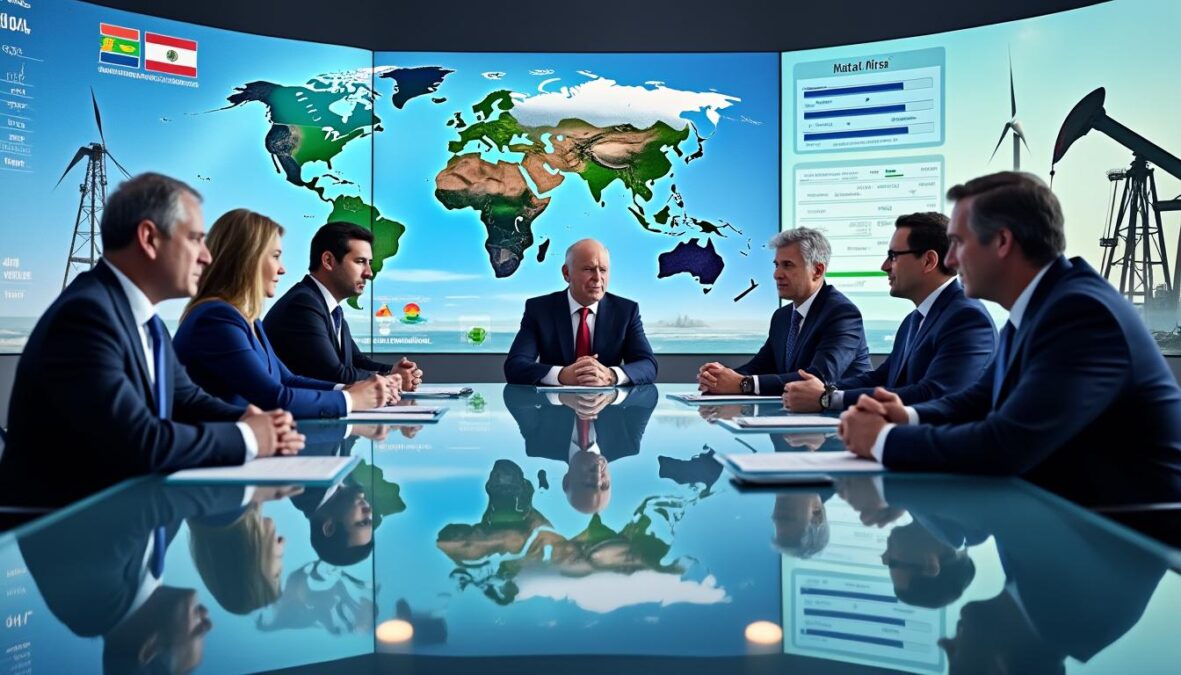
As the war in Iran causes rising tensions in energy markets, the Energy and Finance ministers of G7 countries have announced their vigilance regarding the impact of the situation on the global economy. They expressed their willingness to take adequate measures to ensure the safety and stability of energy markets, despite the lack of concrete initiatives to date. This dynamic is developing as the European Union questions the security of its energy supply in a context of oil crisis similar to that of the 1970s.
G7 Concerns Regarding the Situation in Iran
In a statement released on Monday, the G7 ministers clearly emphasized their commitment to closely monitor the repercussions of the war in Iran on energy and commodity markets. They acknowledge that this crisis could exacerbate inflation and affect global economic stability. Anticipating the risk of contagion, these ministers promised to coordinate their efforts to preserve price stability and ensure energy supply security.
Measures to Consider
Although discussions did not lead to concrete decisions, G7 leaders committed to exploring various options, including the use of oil reserves. This meeting is expected to pave the way for a thorough assessment by European Energy ministers, who will gather to review the energy situation within the European Union. The central issue of the discussions will be to identify viable solutions to enhance energy security in the face of a highly volatile international situation.
The European Union’s Response
As G7 ministers consider the issue, European Union members are also striving to grasp the extent of the current energy crisis. According to Fatih Birol, director of the International Energy Agency (IEA), Europe is facing an oil crisis similar to that of the 1970s, characterized by a notable decline in supply and a surge in oil prices. In response to this disruption, the IEA has already orchestrated the release of 400 million barrels of oil to compensate for the supply drop due to tensions in the Middle East.
Assessment of Stocks and Price Volatility
The European Commission has identified price volatility as the main current challenge. Discussions among Energy ministers aim to assess the levels of available reserves in a context of increasing unpredictability. Shipments of liquefied natural gas (LNG) have been diverted to Asia, where demand is higher and prices more lucrative. This situation exacerbates pressure on European supplies and requires smooth coordination among member countries to tackle this rising cost.
Future Energy Price Outlook
The surge in oil prices, which has reached 119 dollars a barrel, raises concerns among analysts, who project potential increases that could reach 200 dollars depending on conflict scenarios. The natural gas sector is also under pressure, with estimates suggesting levels similar to those observed during the 2022 energy crisis, when a drastic drop in supply from Russia significantly impacted the markets.
In this context, the virtual meeting among Energy ministers is crucial to discuss the strategy to adopt and the implementation of concrete measures. These exchanges are essential for navigating a climate also disrupted by the crisis in Ukraine and the consequences of Moscow’s invasion.
For further analyses on the geopolitical impact related to energy and other topics, feel free to consult these resources: an exclusive live evening on social media, the revival of paper production by Engie, Meta’s investments in technologies, the strategic role of Morocco in the battery market, and the creation of a new fund by Serena dedicated to artificial intelligence.


