
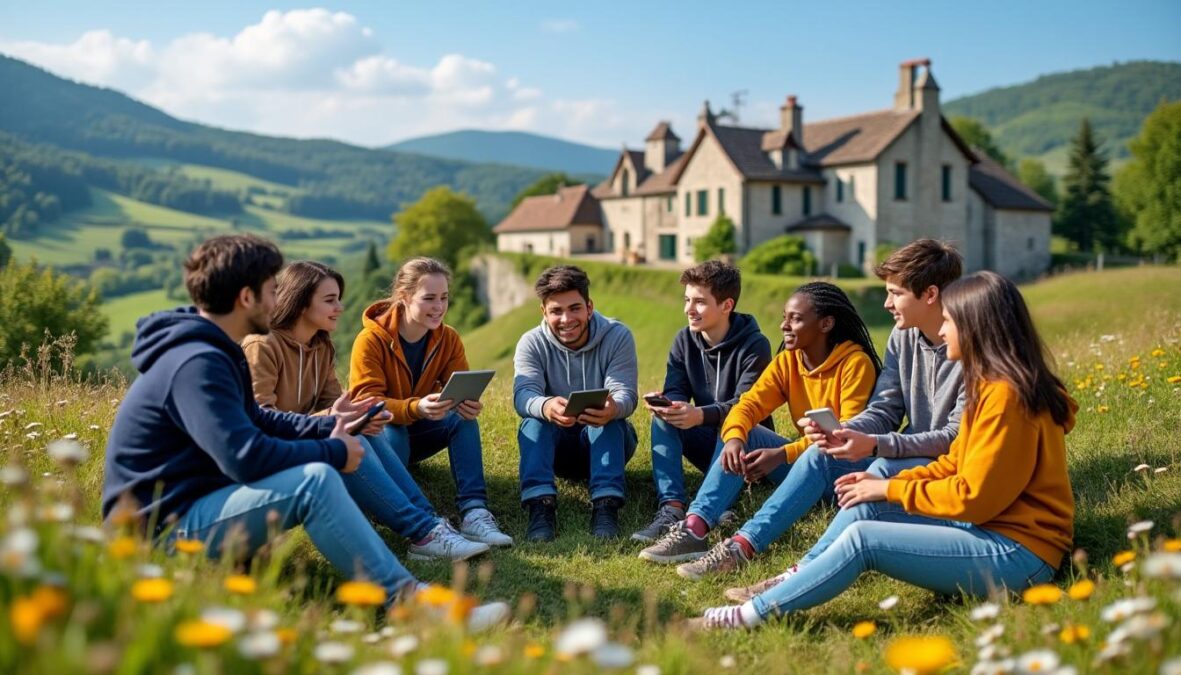
As part of a debate on the possible ban on social media for those under 15, 4th grade students from Henri Bourillon College in Mende expressed their nuanced opinions. While this legislative proposal is being examined in the Senate, these teenagers favor a stricter regulation rather than a total ban. They are aware of the dangers that certain platforms may pose, while emphasizing the importance of education for responsible use of social networks.
Students Facing the Social Media Phenomenon
At Henri Bourillon College, most 14-year-old students regularly use social media like TikTok, Instagram, and Snapchat. This observation raises concerns about the content accessible to young people. However, some students believe that these platforms can also serve as learning tools. “There are also videos that can educate us,” shares a student, illustrating the potential benefits of wise usage.
The Dangers and Surprises Noted
Nevertheless, the students are not blind to the risks associated with the use of social media. They acknowledge that there is inappropriate content that can be harmful. One student mentioned violent, racist, or anti-Semitic videos that sometimes circulate: “Sometimes we come across videos that are not suitable for our age.” Despite these sometimes shocking situations, some students claim that they are not deeply affected by these images, noting that it is possible to report them.
The Screen Time and Its Consequences
The students also testify to a widespread practice regarding the time spent on screens. All claim to spend at least an hour a day on social networks, and some go up to two and a half hours. One student described how algorithms encourage prolonged content consumption: “We start a video and the algorithm pushes us to continue.” This phenomenon can lead to repercussions on their concentration and academic performance, with descriptions of a “mental fog” or post-usage fatigue.
For Regulation Rather Than a Ban
In light of these observations, the majority of students oppose a strict ban before 15 years old. “We tend to be overprotected,” one of them estimates, asserting that education for responsible use is essential. According to the students, it is necessary to reinforce the responsibilities of platforms regarding content moderation. They suggest that social media should better control what is published, thus advocating for an improvement in reporting and regulatory tools.
The Public Debate and Underlying Issues
As this debate rages within public opinion and government bodies, it is essential to consider the perspectives of the young people directly concerned. President Emmanuel Macron has initiated a reflection on protecting youth in relation to social media, and experts like Monique Godin emphasize that the issue lies not only in a ban but in framing adapted to the current digital reality.
Initiatives are also being put in place to raise awareness among young people and their parents about the risks associated with the omnipresence of screens. A screening of the documentary “What if we looked up?” is planned, illustrating the importance of maintaining a balance between technology use and daily life. In this context, the testimonies of students from Mende highlight the necessity for an open dialogue about the realities of social media, along with constructive alternatives for regulating their use.


