Antwerp aims to strengthen its place in the European economy by making innovation a driver of development for its businesses, infrastructure and skills. Its port and industrial identity provides fertile ground for technological transformation, while the challenges of artificial intelligence, the energy transition and competitiveness invite the city to build a more connected, attractive and sustainable ecosystem.
A region where industry and technology can reinforce one another
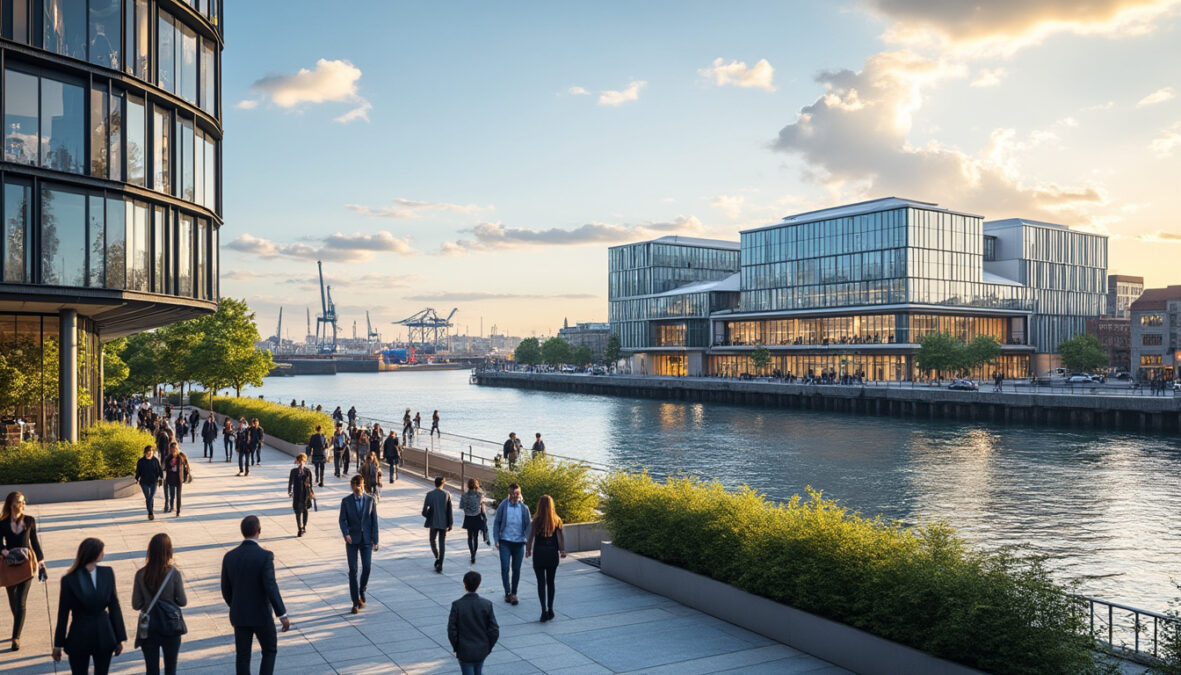
Antwerp has a distinctive profile among Europe’s major cities. Its port activity, industrial fabric and position at the heart of regional trade provide a strong foundation for experimenting with new solutions. Innovation can address concrete needs here: streamlining supply chains, improving the energy efficiency of facilities, automating certain operations and making better use of available data.
This combination of traditional activities and emerging technologies is an asset, provided that exchanges are encouraged between established businesses, young companies, research centers and public authorities. Developing a technology hub is not based solely on the presence of start-ups: it also depends on a region’s ability to turn scientific advances into real-world applications and then deploy them at scale.
From this perspective, innovation is not limited to digital technology. It also concerns industrial processes, new materials, mobility, resource management and reducing environmental impact. For Antwerp, these areas can come together in projects that combine technical expertise with operational challenges.
The port as a testing ground for solutions
A major port is a place where transport, energy, trade and industry intersect. This complexity makes it a testing ground for technologies that can better coordinate flows and make activities more predictable. Digital tracking tools, data analysis and automation can help improve the movement of goods and the use of infrastructure.
The energy transition is another key area. Port and industrial stakeholders face the need to reduce emissions while maintaining their capacity to operate. Solutions related to energy efficiency, electrification, alternative fuels and smart grid management can contribute to this shift. Their deployment, however, requires investment, cooperation between organizations and planning suited to conditions on the ground.
Port innovation can also have effects beyond the facilities themselves. By connecting businesses, technology providers and research organizations, infrastructure projects can foster the development of skills and new services. This momentum helps make smart logistics a strategic area for the region.
Building an ecosystem that supports innovative businesses
Connecting ideas across research and the economy
To attract technology projects, a city must enable stakeholders to meet and collaborate. Businesses need access to specialized skills, while researchers and start-ups must be able to test their solutions in conditions close to real-world settings. Partnerships between universities, industrial companies and public-sector stakeholders facilitate these connections and accelerate the transition from research to practical application.
Major technology events also help showcase innovations and foster connections between sectors. The Paris-Saclay Summit, dedicated in particular to innovation and artificial intelligence, illustrates the importance of bringing together science, businesses and institutions. For Antwerp, the challenge is to develop a comparable dynamic, rooted in the specific needs of its economic environment.
Technology events also enable businesses to compare their approaches, identify partners and better understand emerging applications. Showcasing innovations on a large scale, such as those featured at the VivaTech trade show, demonstrates how professional gatherings can bring solution providers together with organizations seeking practical answers.
Attracting talent and retaining skills
The presence of innovative businesses also depends on the availability of professionals able to design, deploy and maintain new technologies. The skills in demand span information technology and data analysis, as well as engineering, cybersecurity, project management and knowledge of industrial trades.
Continuing education therefore becomes an essential part of technology strategy. Employees must be able to adapt as tools evolve, while students need programs that bring them closer to the realities of professional life. Close cooperation between educational institutions and employers can facilitate this adjustment and narrow the gap between available skills and those in demand.
An ecosystem’s appeal also depends on its ability to provide an environment conducive to starting a business: access to networks, support, financing opportunities and early customers. Established businesses can play an important role by opening their infrastructure to experimentation and incorporating relevant innovations into their own operations.
Artificial intelligence: acceleration and responsibility
Applications tailored to the region’s needs
Artificial intelligence can help optimize certain industrial processes, anticipate maintenance needs, analyze flows or support decision-making. Its value, however, depends on data quality, system reliability and the relevance of the problems it is applied to. Effective adoption therefore begins by identifying useful applications, rather than systematically looking for a technological solution.
AI projects also require consideration of data protection, infrastructure security and the transparency of automated decisions. In sectors where digital systems directly influence how work is organized or goods move, businesses must be able to understand the tools’ limitations and maintain appropriate human oversight.
Public initiatives devoted to this technology show that applications are emerging across a range of fields. The innovative project announced in the national education sector is a reminder that AI also concerns education, support and the transformation of services. For a city seeking to strengthen its digital ecosystem, these developments underscore the importance of preparing skills and frameworks for use alongside the tools themselves.
Keeping people at the center
Technological transformation is measured not only by the number of tools deployed. It also depends on their ability to support people in their work and improve services without undermining human judgment. Creativity, relationships, decision-making and accountability remain essential, even when automated systems are involved in processes.
This question is explored in discussions about artistic practices and creative professions. The article on the search for authenticity in the face of AI’s rise highlights the questions raised by generative tools. In industry as in culture, the challenge is to clearly define the role of technology and ensure that the people concerned retain control over decisions.
A European ambition rooted in technological history
Innovating without losing touch with real-world applications
A city’s technological ambitions are part of a broader history shaped by inventions, infrastructure and changing practices. Innovation often becomes valuable when it addresses an understandable need and is accessible to as many people as possible. The Minitel, often described as a pioneering social network, is a reminder that digital applications now familiar to us were sometimes being tested long before the rise of the internet.
This perspective invites Antwerp to view technology as a means of transforming services and activities, rather than as an end in itself. The most promising projects are those that combine a solid technical foundation, demonstrable usefulness and an understanding of users’ needs. This approach can be applied to logistics, energy management, industry and urban services.
Strengthening cooperation across borders
Competition between European hubs is not determined solely by their ability to attract investment. It also depends on cities’ capacity to collaborate, share knowledge and integrate into research and production networks. Cross-border partnerships can open up new markets for businesses and bring complementary skills closer together.
For Antwerp, consolidating its status as a European innovation hub therefore means linking its local strengths to the continent’s major transformations. The city can build on its industrial and port identity to develop exportable solutions, while remaining attentive to the requirements of sustainability, security and equity. Such an approach depends on sustained cooperation between businesses, institutions, researchers and citizens.
The conditions for sustainable technological growth
Moving from experimentation to deployment
Pilot projects make it possible to test technologies on a limited scale, but their success depends on whether they can be adapted and expanded. This requires clear indicators, evaluation of results and an understanding of long-term costs. Businesses must also plan for maintenance, team training and the integration of tools with existing systems.
The success of an innovation strategy is therefore measured as much by the quality of its execution as by the novelty of the solutions selected. A technology that performs well on a small scale may encounter obstacles when it has to operate in complex environments or serve a large number of users. Support, reliability and interoperability then become decisive factors.
Balancing competitiveness, inclusion and the green transition
Growth in the technology sector can create jobs and strengthen economic activity, but its benefits must be shared across society. Access to training, changes in occupations and the participation of small businesses in the digital transformation are issues that should be incorporated from the outset when projects are designed.
The environmental dimension is equally fundamental. Digital infrastructure consumes resources, and industrial activities must reduce their impact. Innovation can help limit waste and improve energy management, but these gains must be assessed in light of the entire life cycle of the equipment and systems deployed.
By bringing together its industrial expertise, transport infrastructure and digital skills, Antwerp has the means to increase its influence in the European economy. The potential of these assets will depend on sustained investment, the ability to bring stakeholders together and attention to real-world applications. It is by aligning technology, industry and human needs that the city can build a sustainable path to innovation.