
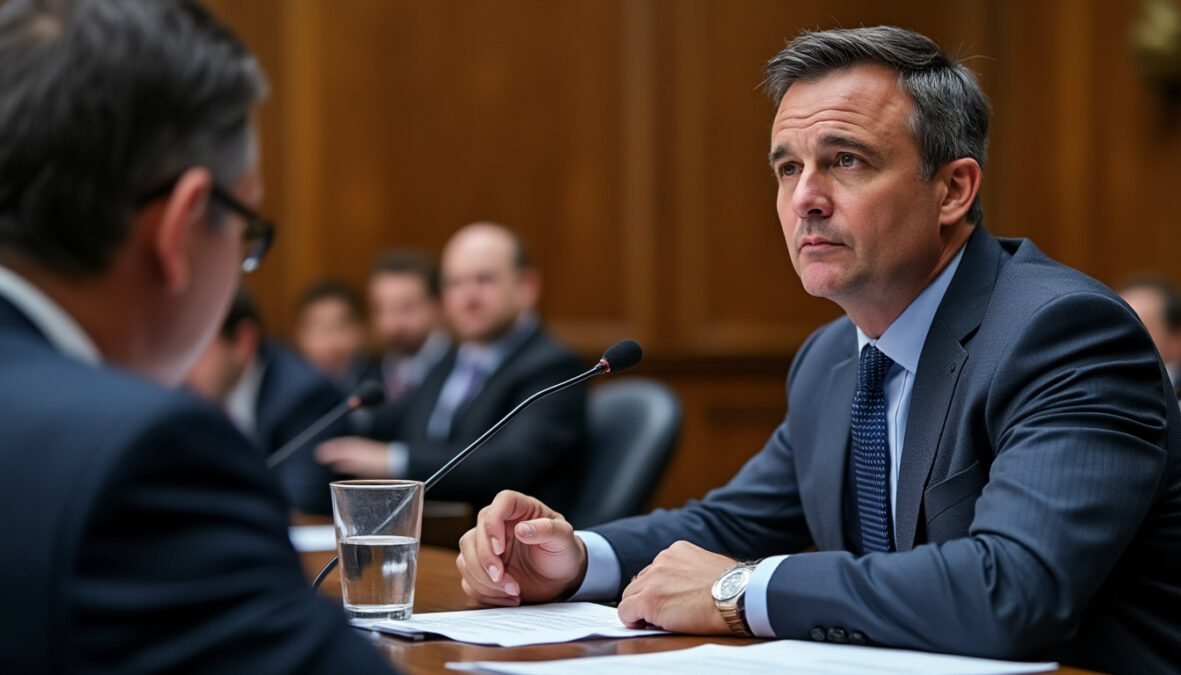
A former Anthropic researcher identified as Coxon has been summoned to testify at a hearing devoted to artificial intelligence. The summons draws attention to the role research specialists can play in public debates about the capabilities of AI systems, their risks, and the rules that should govern their development. However, the information available does not specify the hearing’s location or date, or the exact topics that will be discussed.
Coxon’s participation in the hearing puts expertise from AI research at the heart of an institutional discussion. Testimony of this kind can help those examining the technologies better understand how they work, their limitations, and the challenges associated with their deployment. It can also shed light on the choices facing policymakers as they consider new rules.
However, the information provided about this summons remains limited. It does not reveal which body is organizing the hearing, whether it is taking place before elected officials or another organization, or whether Coxon is appearing as a technical witness, a former employee, or an independent expert. The content of his testimony is not indicated either. It would therefore be premature to attribute a particular position to him or present undocumented revelations as established facts.
Why a researcher’s experience can matter
Testimony from people who have worked in artificial intelligence research can offer practical insight into the steps between a technical breakthrough and its widespread use. It may address evaluation methods, precautions taken before a model is made available, the limitations of tests, or the difficulties of anticipating how the public will use a tool.
This experience does not, on its own, constitute proof that a system is safe or dangerous. Rather, it is a source of information to be weighed against other evidence: technical documents, independent assessments, user feedback, and analyses by the relevant authorities. In a hearing, the precision of the questions asked and the ability to verify statements are therefore essential to distinguishing facts from interpretations.
A hearing within a broader debate about AI risks
Discussions around artificial intelligence cover a wide range of topics: model performance, data protection, professional uses, education, and the consequences of malicious misuse. A hearing devoted to these technologies may seek to examine some of these issues, but the available information does not make it possible to say which ones will be on the agenda in Coxon’s case.
Risks associated with abusive uses nevertheless serve as a reminder of why the question of responsibility regularly returns to the debate. For example, a Safig article addresses the illicit use of AI tools for child sexual abuse material in a case involving a French soldier: a case of technology being misused for criminal purposes. This case illustrates the importance of distinguishing a tool’s capabilities from the choices of those who use it, as well as the need to assess mechanisms for preventing and responding to abuse.
Regulatory responses vary from one country or sector to another. Some measures concern conditions of use, while others address access to tools or the obligations of organizations that deploy them. At the European level, Safig discusses the rollout of new artificial intelligence capabilities: an overview of developments and capabilities presented in the European Union. This kind of progress highlights the challenge of encouraging innovation while establishing safeguards that are clear and enforceable.
Balancing caution, innovation, and public policy decisions
Debates about regulation sometimes pit the desire to support technological progress against concerns that risks are not being adequately managed. In the United States, political positions also help shape this discussion. Safig looks at voices calling for a slowdown in AI development and the criticisms voiced by Donald Trump: the political tensions surrounding the pace of artificial intelligence development.
A hearing can help clarify these debates if it distinguishes risks that have already been observed from hypothetical scenarios and sets out the remaining uncertainties. Witnesses’ answers can also highlight the limitations of current assessment methods. Such a discussion, however, cannot replace either scientific research or legal review: it is one of the ways institutions gather input before defining or adjusting their actions.
Caution is also central to discussions about how to integrate AI into organizations. In an interview on the subject, Safig relays a call to avoid rushing into deployment and to examine the consequences before acting: an interview on the need to approach AI thoughtfully. This concern echoes questions that may be put to specialists: what checks should be carried out, who should be accountable for decisions, and how should a system’s effects be monitored after its launch?
AI use in education: an example of practical choices
Public policies on artificial intelligence do not concern only laboratories or technology companies. They also affect everyday settings, where authorities must weigh the potential benefits of tools against their effects on existing practices. Schools are one example: institutions must take into account pedagogy, student protection, and the conditions for accessing digital services.
Safig reports that New York has banned the use of artificial intelligence in schools for students: an example of restrictions in a school setting. As presented in the article, this decision illustrates one possible approach among others. It is not enough to establish that a general ban would be appropriate for all education systems, but it shows that deployment decisions can be made at the institutional level.
In this context, a former researcher’s testimony could be relevant if it addresses systems’ actual capabilities, their conditions of use, or ways to reduce certain risks. However, without confirmed details about the hearing, it remains impossible to know whether Coxon will address these questions. The significance of his participation will depend in particular on the nature of the questions asked and how his answers are weighed against the other evidence under consideration.
What the available information establishes
At this stage, the central fact is that a former Anthropic researcher named Coxon has been summoned to testify at a hearing on artificial intelligence. The information provided does not specify his background beyond this former affiliation, the institutional framework of the hearing, or the detailed topics of his testimony. Nor does it make it possible to determine whether his testimony has already been scheduled or made public.
This distinction is important when following the case, so as not to confuse testifying with taking a position or making an accusation. A hearing can bring together different kinds of contributions and pursue several objectives, from establishing facts to examining regulatory options. Transcripts, official documents, and statements published after the session would be needed to learn the precise content of the testimony and how it fits into the debate on the governance of artificial intelligence.


