
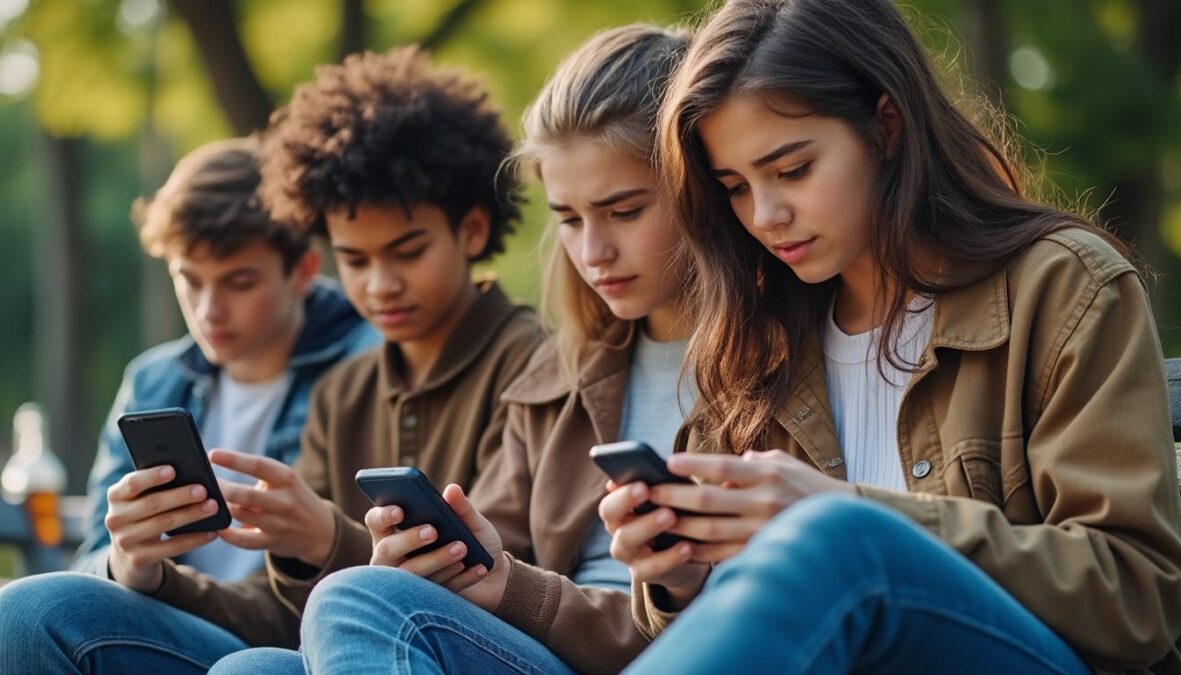
A recent study conducted by Northwell Health in the United States has highlighted a significant link between the use of social media among teenagers and their alcohol consumption. With a sample of over 14,000 high school students, researchers observed that the more time a teenager spends on these platforms, the more likely they are to have consumed alcohol in the past few weeks. This finding raises concerns, especially at a time when applications like TikTok and Snapchat frequently expose young people to alcohol-related content.
A revealing study on social media usage
Through this study, Northwell Health utilized data from the 2023 Youth Risk Behavior Surveillance Survey, a large-scale survey exploring risk behaviors among high school students. The results indicate that the rate of alcohol consumption – defined as having had at least one drink in the past 30 days – increases with the intensity of social media use. Thus, the rate of alcohol consumption was 9.2% among adolescents not using these platforms, rising to 28% among those connecting at least once per hour.
The implications of intensive social media use
Researchers classified adolescents into four categories based on their social media usage: none, low, moderate, and intensive. The latter group, representing frequent connections, showed a striking association with alcohol consumption. Interestingly, adolescents with the highest levels of social media usage were more than three times as likely to have recently consumed alcohol compared to their non-user peers. This trend is even more concerning given the current digital context.
A common phenomenon, but more pronounced in certain populations
It is worth noting that the association between social media use and alcohol consumption remained even after accounting for demographic factors such as sex, ethnicity, and sexual orientation. However, disparities were noted, particularly a more pronounced prevalence among LGBTQ+ youth. This situation underscores the importance of a targeted approach to addressing risk behaviors related to substance use.
Recommendations for parents and educators
In light of these results, the question arises: what can parents and schools do to protect adolescents? While this study does not prove a direct causality between exposure to social media and alcohol use, it invites reflection on the nature of the content that young people are regularly exposed to. Experts recommend promoting enhanced digital literacy, enabling adolescents to navigate the digital landscape more consciously and safely.
Towards regulation of social media
In response to this data, several voices have called for regulating access to social media for minors. Movements to ban access to social media for young people under 15 have begun in various regions, including France. These initiatives aim to reduce the risks associated with harmful content and the glorification of alcohol consumption. Studies continue to affirm the necessity of concrete measures to secure the digital environment for adolescents.
A worrying yet hopeful future
In conclusion, the results of this study by Northwell Health open a crucial debate about the impact of social media on youth behaviors, particularly in terms of alcohol consumption. As measures begin to be considered to regulate the use of platforms, awareness and education remain key tools to assist adolescents in their developmental journey. The need to deepen research on the effects of digital representations of alcohol on young people’s health has never been more pressing.


