
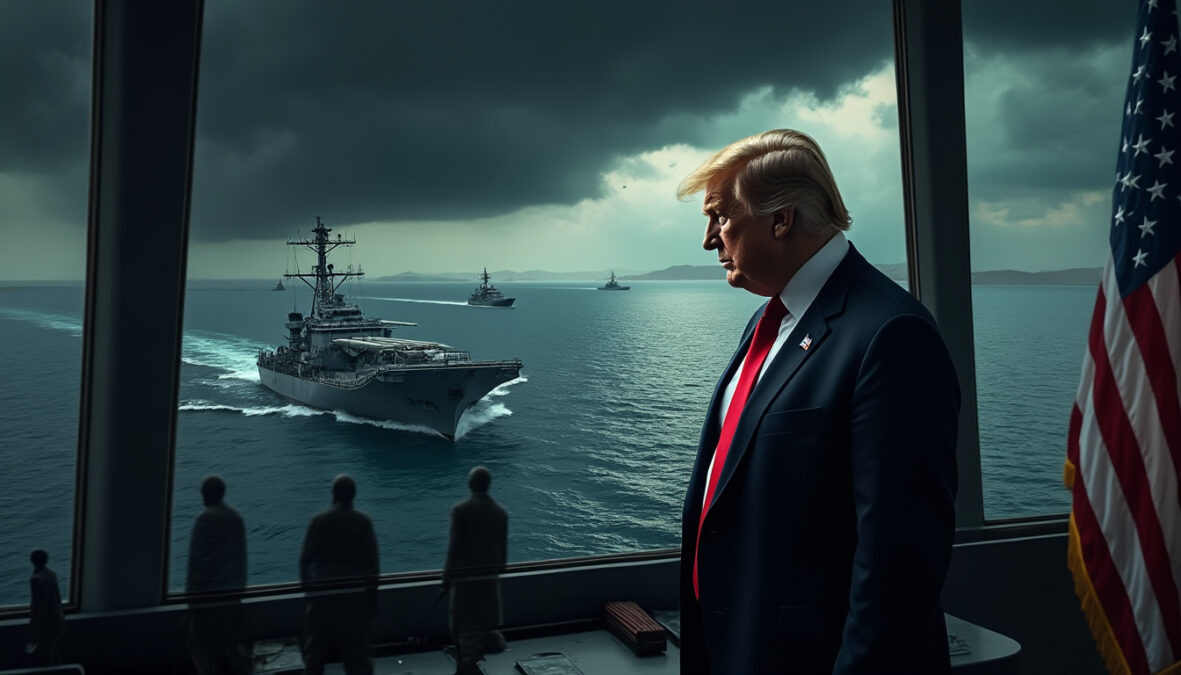
The recently signed agreement in Versailles between Donald Trump and Iran raises more questions than it provides concrete answers. After three and a half months of conflict, the situation seems to be both favorable to Tehran and hesitant on the part of the United States. The stakes surrounding missiles, the Strait of Hormuz, and sanctions are at the heart of this dilemma, as observers question the real benefits of this agreement for American security.
Missiles: the shadow of a persistent threat
The issue of missiles is particularly delicate in the context of negotiations between Washington and Tehran. Despite promises of vigilance, the agreement makes no clear mention of concerns related to the Iranian ballistic program. In the speeches preceding the agreement, Donald Trump himself highlighted the risk posed by Iran’s long-range missiles, capable of threatening Western allies. This lack of explicit mentions in the text shows a form of retreat, which a number of American analysts consider a sign of weakness.
Strait of Hormuz: a strategic passage under tension
The Strait of Hormuz, a crucial point for global oil transit, is once again at the center of discussions. The agreement stipulates that Iran commits to ensuring a “free and secure passage” for ships, but only for a period of 60 days. After this period, the management of the strait could potentially allow Tehran to impose fees, a situation that Washington deems unacceptable. Trump’s statements on the matter show a certain nervousness, exacerbated by the absence of a clear red line in the text. This leaves doubts about the future of negotiations concerning maritime security.
Sanctions: worrisome concessions
One of the most controversial clauses of the agreement concerns sanctions. The United States has committed to ending all economic sanctions against Iran, which many observers perceive as a mountain of cash that could support the Iranian nuclear program and strengthen its regional power. The thawing of Iranian assets and the promise of financing up to $300 billion for reconstruction raise concerns. These provisions have elicited criticism among Republicans, who fear that this will empower Iran in its military ambitions. Ted Cruz’s statement on the subject sums up this apprehension well: “If this agreement brings them $300 billion, it’s a mistake.”
Uncertainties surrounding nuclear negotiations
The concerns surrounding Iran’s nuclear program were not directly addressed in the agreement text. Instead of closing this file, the agreement refers this question to a cycle of future negotiations that should take place within 60 days following the signing. This approach is seen as a weakness, reinforcing the idea that Trump has not succeeded in obtaining a solid commitment from Tehran regarding its nuclear ambitions. Moreover, the text limits itself to reiterating that Iran must not procure or develop nuclear weapons, without providing details on verification methods.
Conclusion in uncertainty
The hesitations of Donald Trump towards Iran reveal deep divides between the willingness to engage and the necessity for firmness. The ongoing challenges surrounding missiles, the Strait of Hormuz, and sanctions illustrate the growing concern regarding the direction this diplomacy is taking. At this stage, the agreement only increases the uncertainty about the future of the region and the position of the United States in the face of a potentially strengthened Iran.
To learn more about the economic implications of this agreement, you can consult additional articles: Hunter Biden and digital art, A giant in Zcash and its success, Conflict in Iran and repercussions, and Reopening of the Strait of Hormuz.


