
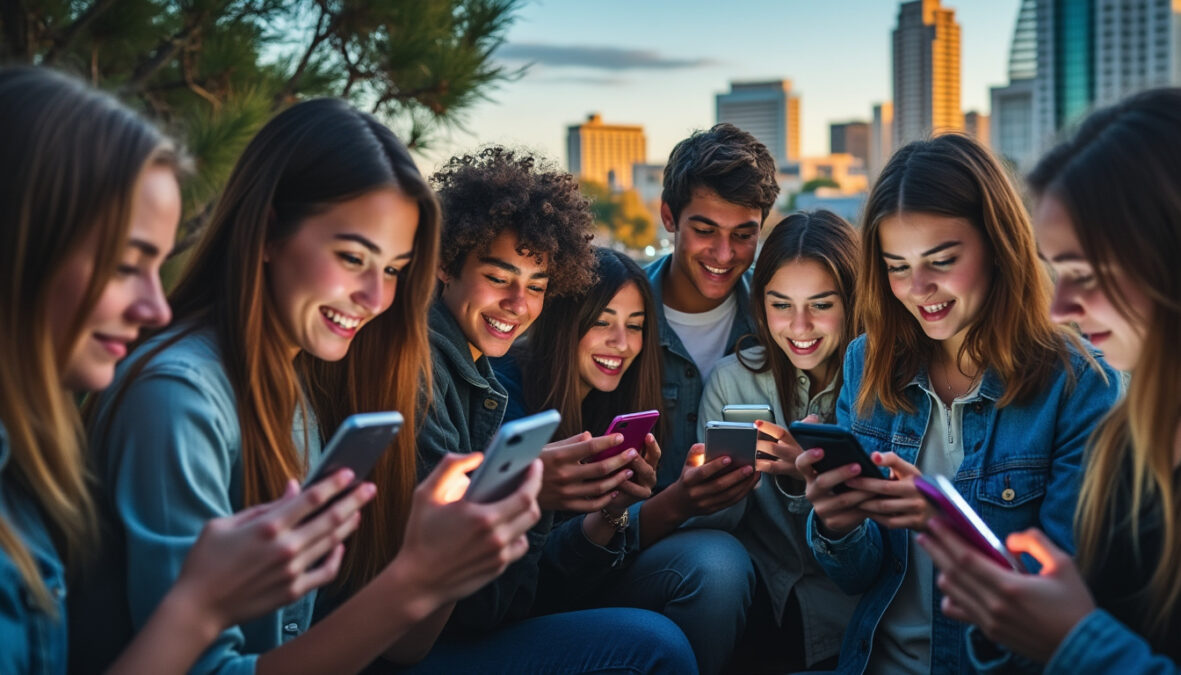
In Australia, a worrying trend is emerging: despite the ban on social media for young people under 15, many teenagers are finding ways to circumvent this restriction and are returning to these digital platforms with a vengeance. This situation raises crucial questions about the impact of social media on the well-being of young people and the regulatory measures that can be implemented.
An unexpected return of teenagers to social media
Australian teenagers seem to ignore the restrictions regarding access to social media. In light of this situation, it is necessary to understand not only their motivations but also the consequences this may have on their daily lives. The desire to belong to a group, to share life moments, and to interact with friends appear to be compelling reasons that drive these young people to sign up under fake identities or use anonymous profiles.
The consequences on mental health
The resurgence of social media use among teenagers can have negative effects on their mental health. Many testimonies from parents reveal how the excessive use of these platforms has led to problems such as anxiety and depression in their children. Studies show that repeated exposure to idealized images and increased social pressure can lead to a decrease in self-esteem among young users.
Parents’ and educators’ reactions
Faced with this delicate situation, parents and educators find themselves in a difficult position. On one hand, there is the desire to protect young people from the dangers of the Internet, and on the other hand, the recognition that these tools are almost indispensable in today’s world. A relevant article addresses the poignant testimonies of parents facing these growing challenges, highlighting the importance of open dialogue between generations.
Towards stricter regulation?
In this context, the question of regulating social media becomes central. Debates are taking place around the opportunity to impose a ban for those under 15. The Constitutional Council recently rejected such a ban proposal, raising concerns about the implications of this decision. Parents and educators are wondering what this means for the future of teenagers and how to prepare to guide them in healthy interactions on these platforms. An article discusses the reactions following this decision.
Young people’s feelings regarding the ban
A recent study in Vannes reveals that teenagers, while feeling a certain sadness over the social media ban, also strongly understand the reasons underlying this measure. This paradox highlights a desire for belonging and an awareness of the potential dangers of these platforms. Young people express feelings of frustration while acknowledging the necessity of protections, as shown in this article on their reactions to the ban.
Alternatives to digital
As teenagers are increasingly turning to social media, interesting alternatives are emerging to promote healthier interactions. Initiatives such as educational escape games dedicated to themes like artificial intelligence and digital security are gaining popularity. These experiences allow young people to learn while having fun in a playful environment. A link to a captivating activity illustrates how education can play a key role in this dynamic.
As teenagers continue to challenge online restrictions, society is at a turning point where today’s decisions can shape the future of young users and their interactions with social media. The balance between protection and autonomy seems more crucial than ever in this constantly evolving digital landscape.


