
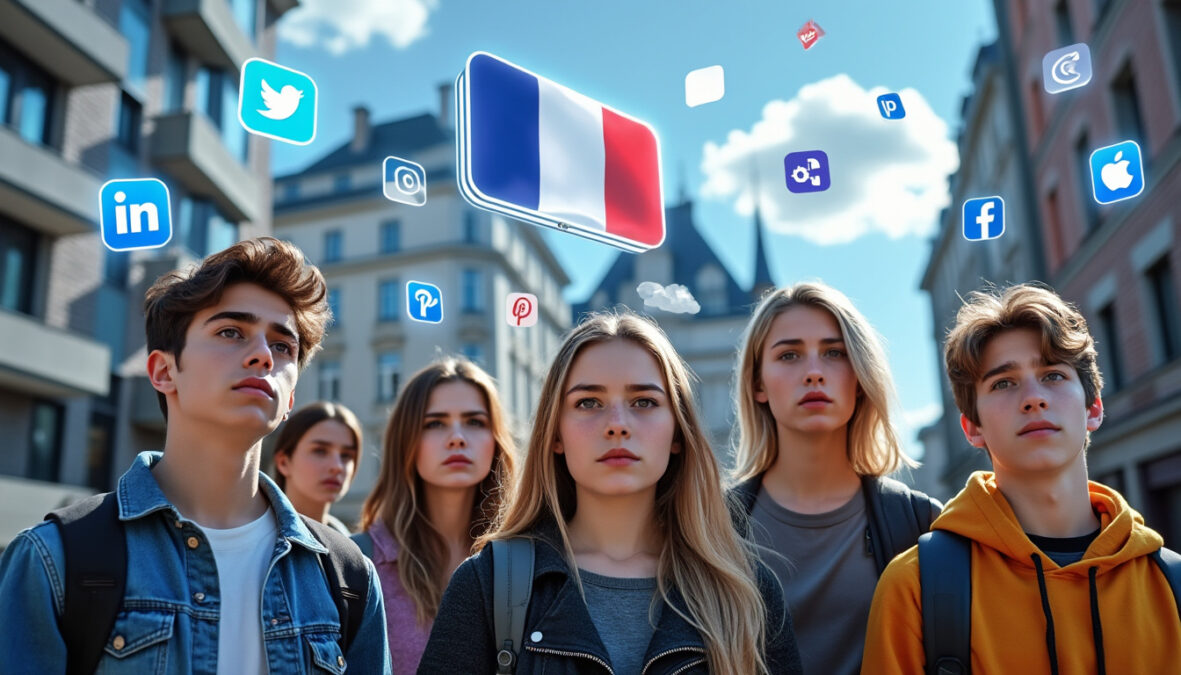
France has recently taken an important step regarding the protection of young people on the internet by adopting a proposal to ban access to social networks for those under 15 years old. This unprecedented measure in Europe underscores the intention of French authorities to protect adolescents from potentially harmful online content. The law, supported by President Emmanuel Macron, comes in the context where young people are spending more and more time on digital platforms, with consequences for their well-being. The ban is set to take effect at the start of the next school year, with exceptions for certain educational resources.
A measure adopted by the Assembly and the Senate
The legislative process to achieve this ban saw a strong mobilization of elected officials. The proposal was adopted by 243 votes in favor and 2 votes against in the Senate, then by 279 votes in favor and 81 votes against in the National Assembly. This text was carefully crafted within a joint committee composed of seven senators and seven deputies, thereby affirming a political consensus around this crucial issue.
The modalities of the law and its entry into force
For adolescents who already had accounts on social networks, the ban will be effective after a period of four months, meaning it will apply from January 1, 2027. However, the creation of new accounts will now be prohibited starting September 1 of this year. It should be noted that certain exceptions are provided, particularly for educational content and online encyclopedias, allowing for limited access for educational purposes.
Reactions and implications of the measure
Emmanuel Macron described the adoption of this law as a “major advancement” for the protection of youth in France. In a video shared on social media, he expressed his satisfaction with the establishment of a measure that could encourage other European countries to follow suit. The president emphasized the need to act against the dangers of content deemed harmful to young people, such as cyberbullying and risky behaviors.
Impact of social networks on adolescents
According to studies conducted by the National Health Security Agency (Anses), one in two adolescents spends between two and five hours a day on their smartphone, primarily on digital social networks. Approximately 58% of young people aged 12 to 17 report using these platforms daily, raising concerns about the effects on their psychological well-being. Research indicates that adolescents, particularly girls, are more likely to experience adverse effects such as sleep disturbances and self-esteem issues related to their online activity.
Consequences for platforms and educational institutions
The law also imposes obligations on platforms regarding age verification, a challenge that companies like YouTube and WhatsApp will have to face. While viewing videos or sending messages are not covered by the law, sharing and commenting functions will be. Furthermore, it is expected to prohibit the use of mobile phones in high schools starting September 1, with potential exemptions included in the internal regulations of schools.
Similar international examples
France is not alone in taking steps to regulate minors’ access to social networks. Other countries, such as Malaysia, have also implemented restrictions to protect young users. Additionally, discussions around banning certain platforms are intensifying in other parts of the world, such as in Taiwan, where controversy is growing over limiting access to Chinese social networks here.
Final reflections on the measure
As the debate over social media regulation continues, France’s decision could pave the way for a new approach to protecting young users. It remains to be seen whether this measure will be effective in reducing the risks associated with social networks and if other countries will follow this initiative. Mental health professionals continue to assess the impact of social networks on adolescents’ well-being, a reflection that is all the more relevant as studies highlight the detrimental effects of these platforms on young minds. For a detailed overview of the impact of social networks on well-being, you can refer to this article on global impact.
For more information on the consequences of the ban on social networks for young people, as well as on the platforms concerned and the implementation of the law, you can also read our article here: details on the measure.


