
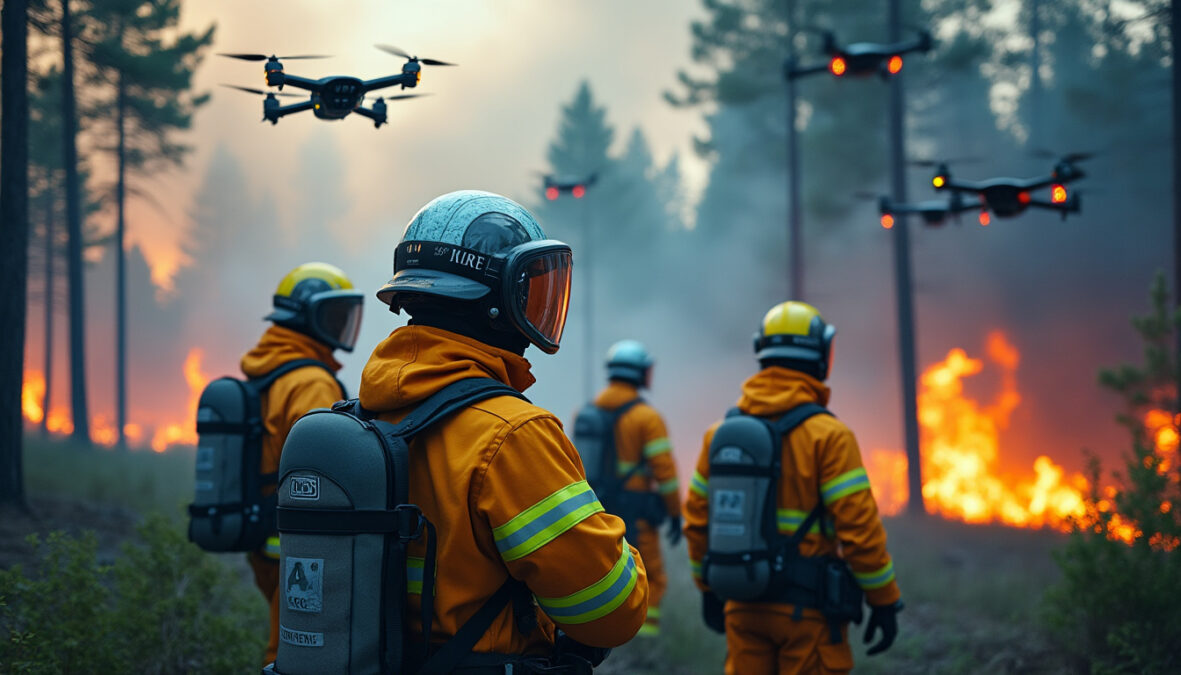
The platform FireWatch represents a major advance in the fight against forest fires by integrating the powerful capabilities of artificial intelligence and satellite data. Operational since this summer, this innovation improves the detection of fire outbreaks and the monitoring of their spread, thus providing firefighters with valuable tools and information for more effective interventions.
A cutting-edge technology at the service of public safety
FireWatch is the result of collaboration between the General Directorate of civil security and several partners, aimed at addressing the growing challenges posed by the acceleration of forest fires, which are an increasingly pressing threat to ecosystems and populations. Through advanced technologies, including spatial data analysis, FireWatch facilitates the early detection of fires and significantly improves the chances of a rapid response to interventions.
Innovative features of FireWatch
One of the most remarkable features of FireWatch is its ability to provide real-time mapping, allowing fire and rescue services to better assess the situation on the ground. With a trial initiated last summer, the system has been tested multiple times on major fires in regions such as Var and Gironde. From this data, firefighters can quickly obtain precise outlines of fires and an estimate of the affected area.
Detection and propagation simulation
The platform also offers automatic fire detection, identifying signals that are often associated with active hotspots. This process has been commended for its efficiency in detecting hot spots during the night, a time when access to human intelligence is often limited. In parallel, FireWatch provides a propagation simulation, allowing anticipation of the paths that flames might take, thus providing rescue teams with essential elements to plan their interventions.
Infrastructure vulnerability analysis
Another crucial aspect of FireWatch is its analysis of the defensibility of buildings. This tool assesses properties and infrastructures that may be at risk from fires and provides advice on their vulnerability. Identifying at-risk areas is crucial for triggering, if necessary, targeted clearing actions among property owners. Thanks to FireWatch, every house or building in France can be classified based on its exposure to fire hazards.
A challenge amidst the increase in forest fires
The summer of 2026 was particularly grueling, with nearly 100,000 hectares burned, an alarming figure according to the European fire monitoring system (Effis). Specialists emphasize that 90 to 95% of forest fires have a human origin, making tools like FireWatch even more critical. However, it is important to note that this platform cannot anticipate human behaviors that often underlie these disasters. Nonetheless, it remains a valuable tool for rapid response and risk management.
Impact of artificial intelligence on interventions
FireWatch thus represents a technological revolution for firefighters, helping them make informed decisions based on reliable data. The integration of artificial intelligence in the fight against fires offers promising prospects for improving not only the responsiveness of interventions but also fire prevention through more proactive management of at-risk areas. This technological evolution also raises ethical and practical questions, as society must prepare to regulate the use of AI in sensitive sectors such as public safety. Indeed, debates are ongoing regarding the regulation of AI, as indicated by some analyses on the challenges of appropriate regulation of these new technologies.
For more information on the issues surrounding artificial intelligence, feel free to consult recent articles examining the challenges of its adoption, the risks of manipulation, and the testimonies of recent graduates navigating this changing environment.


