
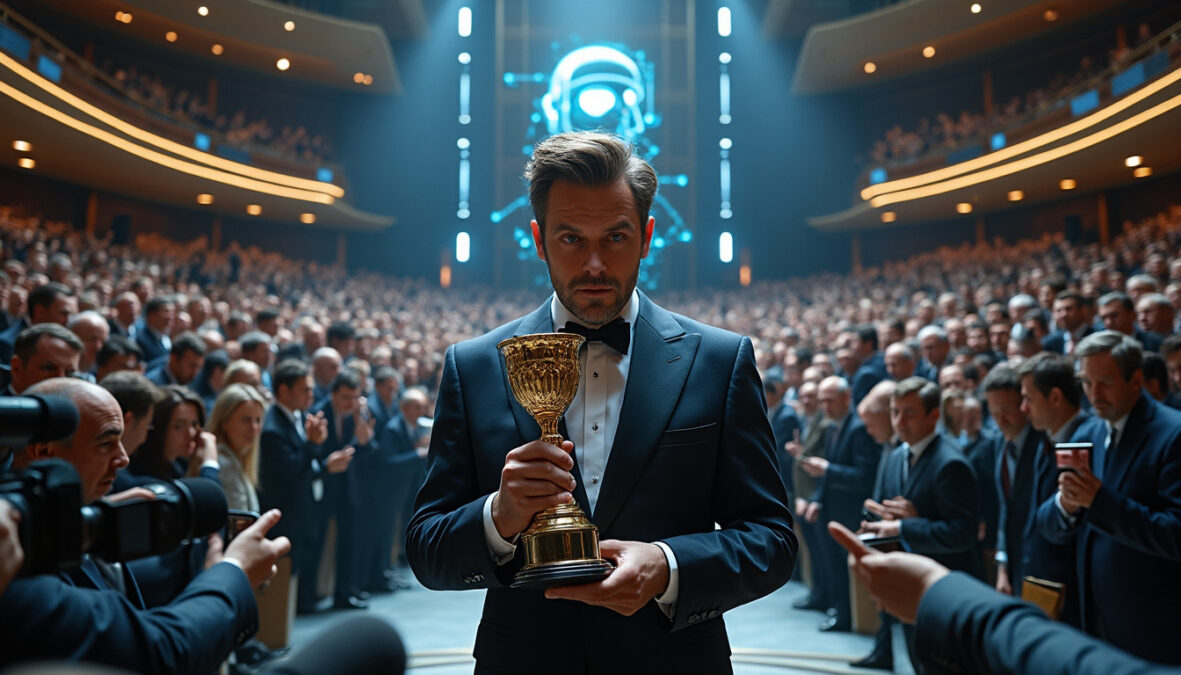
Jamir Nazir, a previously unknown writer in the literary scene, recently won the Commonwealth Short Story Prize 2026 with his short story titled The Serpent in the Grove. However, his success was quickly marred by accusations that his work may have been generated by artificial intelligence. This phenomenon raises crucial questions about the authenticity of literary creation in the digital age.
An Unexpected Path to Literary Recognition
Until his victory, Jamir Nazir was a retired civil servant from Trinidad and Tobago, whose name was not known in literary circles. His short story, published in the prestigious magazine Granta, captivated the audience and jury members, who described his work as “original, poetic, and deeply moving.” With £2,500 at stake, the prize seemed to crown an exceptional amateur journey.
The Accusations of AI Usage
Barely named among the finalists, Jamir Nazir found himself at the heart of a media storm. Critics, writers, and researchers began to point out what they considered markers of AI-generated writing. The elements that raised suspicions included prose deemed too smooth, as well as excessive use of a metaphor, traits often associated with text generation algorithms.
The Scientific Analysis and the Role of Artificial Intelligence
Scientific research on AI-generated texts has gained considerable momentum in recent years. Jenna Russel, a researcher at Pangram, stated that several texts, including Nazir’s, raise concerns regarding their authorship. In this regard, automated analyses even concluded that Nazir’s short story would be 100% generated by a machine.
The Author’s Surprising Statements
In an interview with The Atlantic, Jamir Nazir firmly denied using artificial intelligence to write his text. Surprisingly, he expressed a favorable view on the use of AI in the literary field. “I see AI as a tool that will be integrated in the future,” he stated, which only intensified speculations about the veracity of his position.
The Measures by the Prize Organizing Institution
In light of the controversy, the Commonwealth Foundation, the organizer of the prize, requested authors to submit proof of their creativity, including drafts and timestamped documents. Rather than relying on software to detect AI-generated texts, often criticized for their reliability, they opted for direct discussions with the concerned writers.
A Conclusive Investigation
After a month of investigation, Razmi Farooq, the foundation’s director, declared that the examined texts were not produced by artificial intelligence. His institution expressed satisfaction with the testimonies provided by the authors and confirmed that the use of AI was not responsible for their writing. This allowed the standings to be maintained but did not quell the criticisms.
A Question of Class and Perception
The accusations against Nazir have also been interpreted by Razmi Farooq as an expression of class contempt. She suggests that emerging literary voices outside major urban centers are more likely to be suspected of wrongdoing. “When the default voice of the machine is that of the big cities,” she stated, “the writer who does not fit the expected mold is the first to be suspected.”
The Repercussions on the Perception of Literature
This case, although ultimately in favor of Nazir, illustrates the deep controversies surrounding the integration of artificial intelligence into literary creation. It raises vexing questions about how talent and authenticity are perceived in the digital age. Writers, particularly emerging ones, now must prove not only their competence but also their humanity against a backdrop of growing distrust.
In this era where artificial intelligence seems to play an increasingly dominant role, the distinction between human and machine-generated writing becomes blurry. Issues of ethics and legitimacy inevitably arise, a reality that is only growing as technology continues to advance. With the debates surrounding this issue, it is crucial to question the future of literature and the role that artificial intelligence and its accompanying criticisms will play.


