
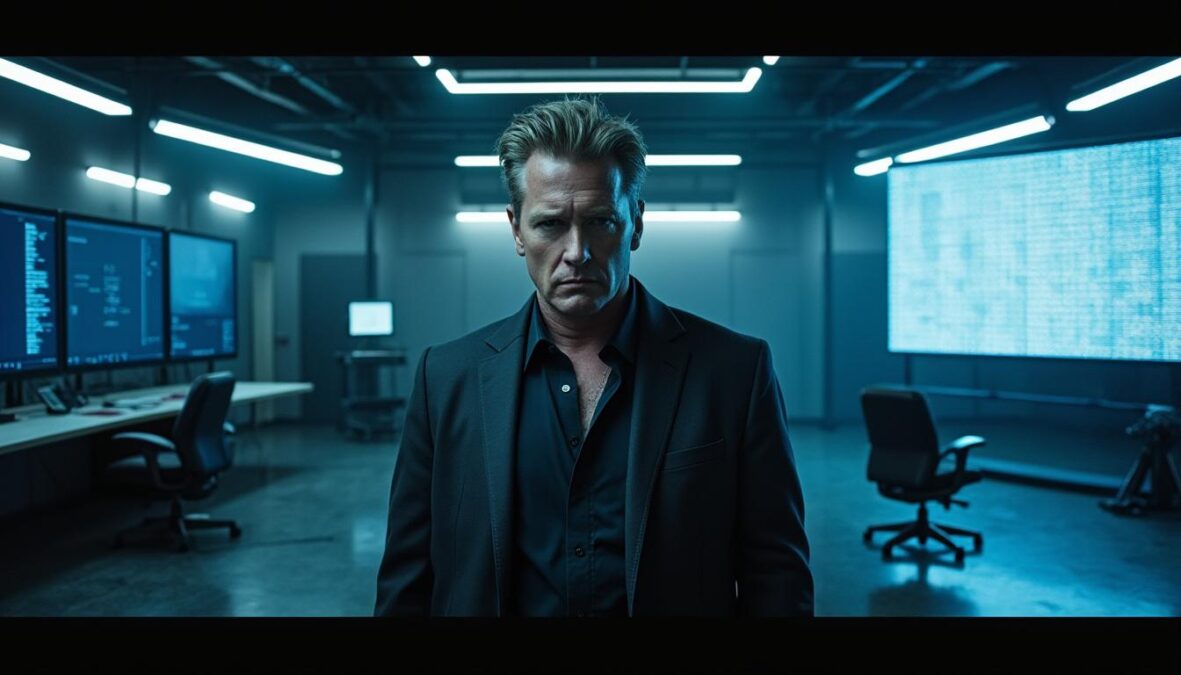
The technology of artificial intelligence continues to disrupt the world of cinema, as evidenced by the latest project, As Deep As The Grave. This controversial western is particularly notable for the presence of Val Kilmer, who passed away in 2025, and whose character has been entirely recreated using AI. As the trailer was recently unveiled, the result has sparked mixed reactions. Between artistic exploitation and violation of memory, the question arises: can this use of AI be legitimized?
Val Kilmer resurrected by AI
The feature film As Deep As The Grave is part of a growing trend of using AI in the cinematic landscape. This film, written and directed by Coerte Voorhees, traces the story of archaeologists Ann and Earl Morris in Canyon de Chelly, Arizona, while integrating fictional elements. The most striking aspect lies in the digital resurrection of actor Val Kilmer. After losing his battle with cancer in April 2025, his family consented to having his character, a Catholic priest and Native American spiritualist, be entirely created by AI.
The trailer for As Deep As The Grave unveiled
The first trailer for the film was revealed at CinemaCon 2026, a major event dedicated to cinema professionals. The images show a digital Kilmer traversing different eras of his life, even delivering lines. However, this technological innovation also raises moral questions about the legitimacy of bringing deceased actors back to life. For some, this goes against the respect owed to their artistic legacy.
A disappointing result
The initial reactions to the trailer are far from enthusiastic. Many criticize the quality of the AI animation, labeling it as “AI Slop”, meaning a low-quality product born from poorly executed algorithms. Even with a cast of exceptional actors, such as Tom Felton and Abigail Breslin, the film seems to have suffered from a lack of creativity and uninspired execution. This situation also raises concerns about the use of AI in filmmaking and its impact on professionals in the field.
The ethical stakes of using AI
The controversy surrounding the film does not stop at visual quality. It also extends to the ethical issues surrounding the memory of actors. The vision of an actor reimagined by technology that cannot capture the essence of a human being raises questions of respect and artistic integrity. Even if Val Kilmer would have supported the project, the purpose of using AI in this context remains debated. Opinions diverge between those who see it as a tribute and those who criticize it as undue exploitation.
In an industry already under financial pressure, dependence on AI can also be viewed as a way to cut costs at the expense of authentic art. The question therefore arises: does the result, particularly visual, justify the use of this technology, at the risk of undermining the work of artists?


