
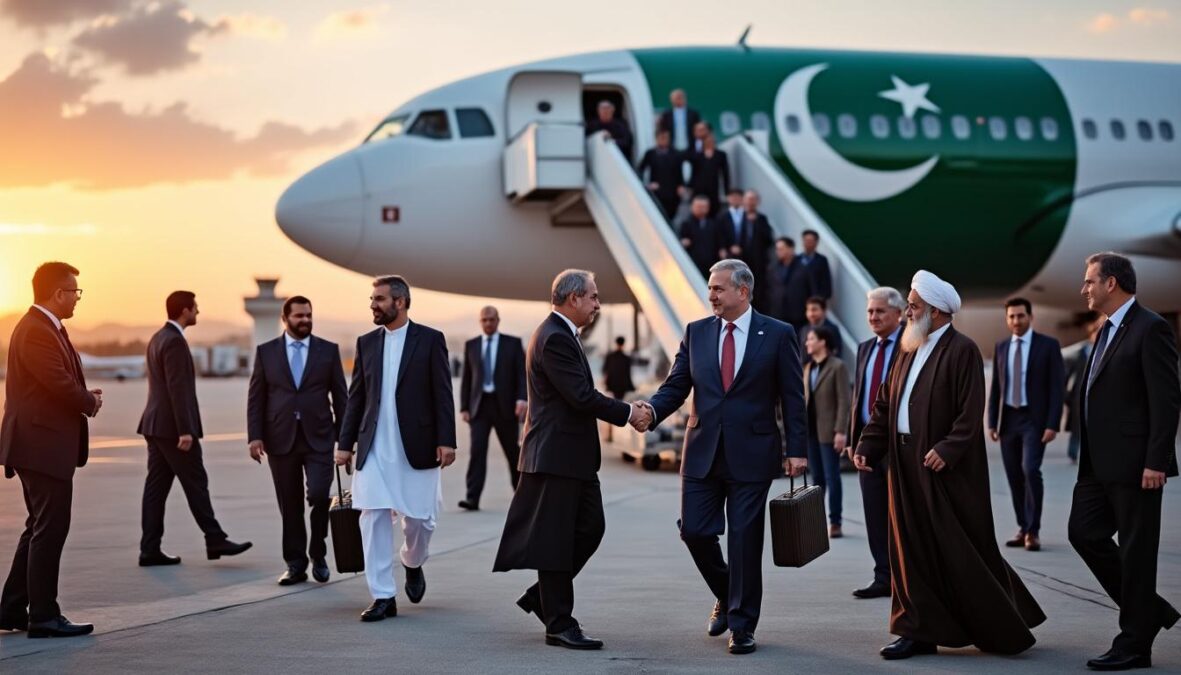
A Pakistani delegation recently arrived in Tehran to facilitate dialogue between Iran and the United States, aiming to ease the growing tensions shaking the Middle East region. This action comes amid ongoing conflicts marked by increased economic sanctions imposed by Washington and reciprocal threats. Pakistan is asserting itself as a key player capable of acting as a mediator in this complex situation.
A decisive diplomatic action
The Chief of Army Staff of the Pakistani military, accompanied by senior security officials and the Interior Minister, landed in Tehran to participate in crucial diplomatic discussions. This initiative comes after nearly seven weeks of conflict that have exacerbated tensions between the United States and Iran. These talks are seen as an attempt to reduce existing divergences and create a conducive climate for future negotiations.
Economic and military tensions
Alongside Pakistan’s efforts to arrange a dialogue, U.S. Treasury Secretary Scott Bessent warned about the escalation of economic sanctions against Iran. These measures are described by some experts as the “financial equivalent” of war, adding further pressure on a country that has seen its economic situation deteriorate since the beginning of the conflict. The blockade of Iranian ports and military threats persist, further complicating the situation and jeopardizing ongoing diplomatic exchanges.
An asserted mediator role
In this context of heightened tensions, Pakistan has emerged as a potentially important mediator. By hosting direct talks between the United States and Iran in Islamabad, Pakistan is attempting to initiate dialogue and ease hostilities. Pakistani authorities have stated that this delegation in Tehran aims to deepen discussions with both parties and examine their respective viewpoints on the current crisis.
The stakes of the ceasefire
Recent progress, although limited, offers hope in the search for a compromise. According to regional officials, the United States and Iran have considered a principle agreement to extend the ceasefire to promote diplomatic exchanges. However, with the imminent expiration of this agreement, mediators are looking to address three major sticking points that could jeopardize these negotiations: the Iranian nuclear program, the situation in the Strait of Hormuz, and war compensation demands.
A dialogue-focused approach
Iranian officials have expressed their willingness to discuss their uranium enrichment program while asserting their rights to pursue this activity based on their needs. The negotiations have revealed disagreements over a moratorium proposed by the United States. Tehran’s rejection of an American plan has highlighted the inherent difficulties of these talks, even though both parties seem willing to attempt to find common ground.
The regional implications of the crisis
The current crisis not only has consequences for Iran and the United States, but it also affects the entire region. Saudi Arabia, for example, recently hosted Pakistani Prime Minister Shehbaz Sharif to discuss regional issues amid escalating tensions. Recent exchanges between Tehran and Riyadh underscore the importance of regional diplomacy in maintaining stability in the Middle East.
The humanitarian consequences of the conflict
The ongoing fighting continues to result in a tragically high number of casualties, both in Iran and Lebanon, where Israel is intensifying its military operations. The humanitarian situation has become precarious in these conflict zones, exacerbated by American sanctions and the naval blockade, which limit access to essential resources. Concerns about the safety and well-being of civilians remain central to the concerns of regional mediators.
Towards a peaceful resolution
Despite a climate of distrust and persistent tensions, dialogue remains an essential means for addressing disputes and avoiding military escalation. Ongoing efforts, supported by the involvement of a key player like Pakistan, could pave the way for sustainable solutions and a restoration of regional peace. The role of mediation is crucial, and every initiative aimed at reducing tensions is a step towards the desired security and stability in the region.


