
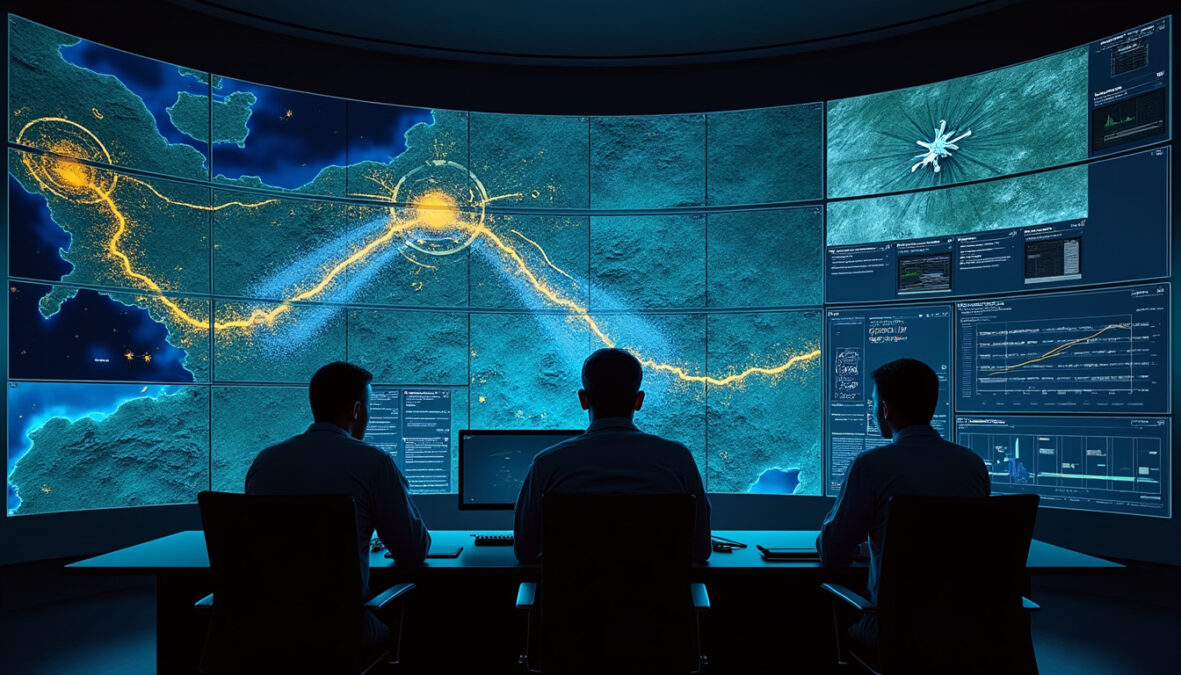
Ukraine is testing SPECTR, an artificial intelligence system designed to process information gathered on the battlefield and help military personnel anticipate possible actions by Russian forces. Already tested by several combat units, the tool aims to speed up data analysis and inform operational planning, although its performance and security measures have not yet been made public.
Over the course of the conflict with Russia, Ukrainian forces have gathered a substantial amount of information from the field. Making rapid use of it is an operational challenge: diverse data must be sorted, developments identified and useful information passed on to military leaders. SPECTR was designed to contribute to this work by using artificial intelligence to identify trends and suggest possible scenarios.
The system is being developed by the A1 centre, an organisation dedicated to artificial intelligence within Ukraine’s Ministry of Defence. Several combat units are already taking part in testing it. However, the authorities have not specified which units are involved or indicated when a possible broader rollout might take place.
A tool to support operational analysis
SPECTR is intended first to organise and examine the available information, then help identify patterns that could shed light on the situation on the ground. By cross-referencing the information gathered, the tool could highlight changes or regularities and generate recommendations for military personnel. These insights are intended to support operational planning and the organisation of forces.
The system is presented as a decision-support tool, not as a system that would replace military leaders. Recommendations generated by an artificial intelligence model must be interpreted in light of the available information and the operational context. Responsibility for decisions therefore remains central to its use.
According to A1 centre head Danylo Tsvok, the aim is to provide military personnel with a platform that can help them choose courses of action and consider the adversary’s possible initiatives. This approach is part of a broader transformation of defence tools, in which automated analysis can complement the work of military staffs.
Turning battlefield data into actionable information
Military data can come from different sources and in different formats. Its volume, transmission rate and sometimes incomplete nature make it complex to process. SPECTR aims to facilitate this step by reducing the time spent collecting, sorting and analysing the information received by military staffs.
By automating certain repetitive tasks, the system could enable military personnel to access useful information more quickly when assessing a situation. The expected benefit is therefore not limited to computing speed: it also concerns how information circulates between teams and how it can be used when preparing an operation.
Identifying trends without absolute certainty
Anticipating the movements of an enemy force does not mean knowing its decisions in advance. Artificial intelligence can analyse data already gathered and flag patterns or developments, but its results depend on the quality, quantity and currency of the information provided. Changing battlefield conditions also make any projection more difficult.
The results of SPECTR have not been made public in detail. In particular, the Ukrainian authorities have not released any measures that would make it possible to assess its accuracy, its ability to function when data is incomplete, or how often its recommendations need to be revised. It is therefore too early to determine the tool’s precise capabilities in operational conditions.
This caution is part of a broader debate about the role of artificial intelligence in human decision-making. Geoffrey Hinton’s warnings about the rapid development of this technology illustrate concerns about its limitations and control. These reflections extend beyond the military sector, but take on particular importance when automated systems contribute to analysing sensitive situations.
Military trials and security concerns
The fact that several units are testing SPECTR indicates that the project has moved beyond the theoretical design stage. The trials are intended to assess its integration into the practices of Ukrainian forces and its usefulness in processing operational information. However, the Ministry of Defence has not specified the timetable for the next stages.
Data protection is a crucial aspect of the project. Information from the front can be sensitive, and its exposure could pose risks to the forces transmitting or using it. SPECTR must therefore be able to integrate with systems already used by the Ukrainian military and run on local equipment, keeping the data in a controlled environment.
Technical details about this protection have not been disclosed. Kyiv has not revealed which artificial intelligence models are being used, how the data is secured, or what measures are in place to limit unauthorised access. Offline operation, permission controls and the traceability of recommendations are all issues that may matter when deploying this type of military tool, but the available information does not make it possible to confirm which solutions have been adopted.
Integration that depends on existing systems
To be useful in the field, an analysis platform must work with the tools military personnel already use. Integration may involve data formats, available devices and transmission procedures. It also requires users to be able to understand the information presented and distinguish verified facts from estimates generated by the system.
The experience of other defence players shows that artificial intelligence is now being considered as a driver of military transformation in Europe. The start-up Helsing, for example, is developing technologies for the defence sector at a time when several countries are seeking to strengthen their capabilities. This trend highlights the growing importance of software and automated analysis in military systems.
Ukraine’s strategy for artificial intelligence
SPECTR is part of a broader policy aimed at expanding the use of artificial intelligence within the Ukrainian armed forces. The A1 centre was established in March 2026 with support from the British government to advance these applications. Its work focuses on how data from the field can contribute to the planning and conduct of operations.
For Kyiv, the challenge is to turn the accumulated information into material that military personnel can use. Artificial intelligence can help process large volumes of data, but its effectiveness depends on how it is integrated into an organisation, the reliability of the available intelligence and the teams’ ability to verify the results.
The development of these tools is also taking place in a geopolitical environment where states are adopting different approaches to artificial intelligence. In Russia, initiatives related to this technology can be examined through the lens of official ideology, while other regions are seeking to build their own capabilities and gain influence in international competition. These developments show that AI is a technological, economic and strategic issue.
Uses that raise questions beyond the battlefield
The advance of artificial intelligence in defence is fuelling questions about system autonomy, responsibility for decisions and human oversight. In the case of SPECTR, published information describes a tool that analyses data and makes recommendations. It does not state that the system makes operational decisions itself.
These debates are not limited to the armed forces. Research on the effects of artificial intelligence on society, its influence on human choices, or the risks of dependence on automated systems points to broader concerns. In particular, concerns expressed by the Pope about the promises associated with machines are a reminder that technical capabilities must be considered in light of their human consequences.
SPECTR’s success will therefore depend as much on its technical performance as on how military personnel use it in practice. The results of the trials, data security and the role given to human analysis will be essential in assessing the platform’s contribution to Ukrainian operational planning.


