
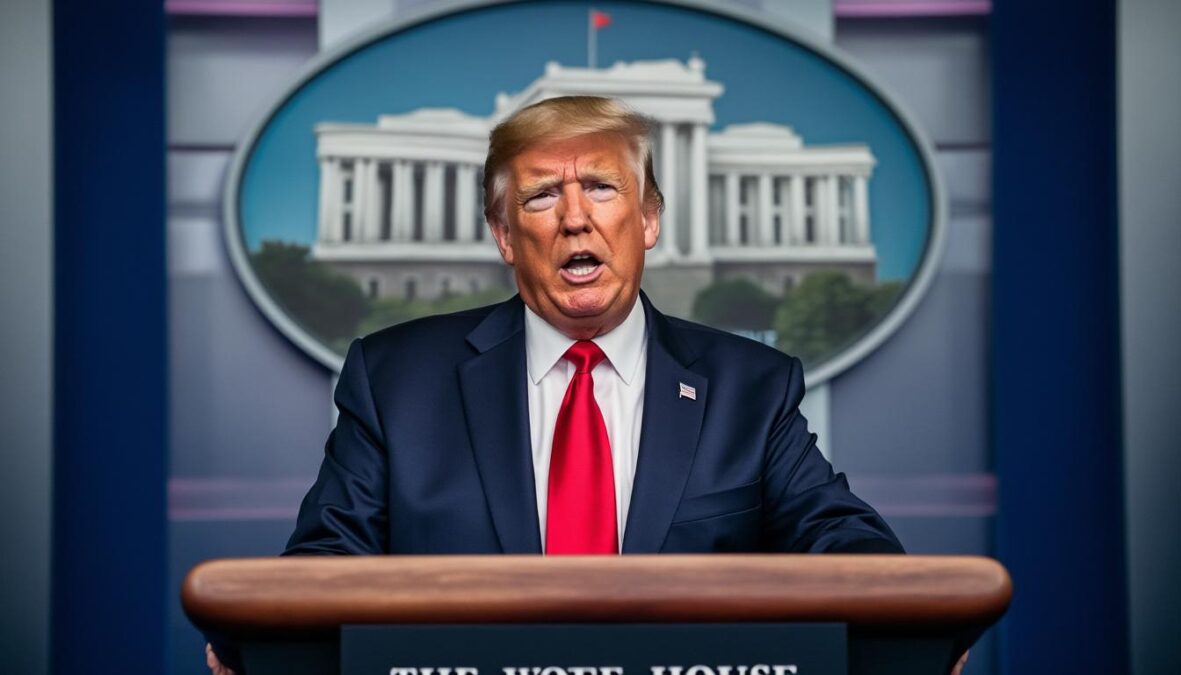
In a tense geopolitical context, the American president Donald Trump categorically rejected the Iran response to his latest peace initiative, calling it “totally unacceptable.” This reaction came after a series of maritime events in the Gulf, raising concerns about escalating tensions between the two countries. In this article, we will explore the details of this critical situation, the statements from both parties, as well as the possible implications for regional stability.
Donald Trump’s Statements
In a post on his social network, Truth Social, Trump expressed his dissatisfaction after learning of the response from Iranian representatives, stating: “I don’t like it − IT IS TOTALLY UNACCEPTABLE!” Although he did not provide additional details, he hinted that Iran has been mocking the United States for nearly 50 years. This statement reflects the ongoing frustration of the American administration regarding Tehran’s stance, especially in the context of discussions aimed at ending a prolonged conflict.
The Iranian Response
In response to this peace initiative, Tehran reacted by emphasizing the need to end the war on all fronts. According to the state television channel IRIB, the Iranian response, communicated through Pakistani mediators, also raised issues of maritime security, particularly concerning the situation in Lebanon, where Iran supports Hezbollah. Iranian President Massoud Pezechkian stated that his country would never submit to external pressures, specifying that any discussion must occur without capitulation.
Increasing Tensions in the Gulf
Tensions have escalated in the region, particularly following drone attacks that targeted several sites, including a cargo ship coming from Abu Dhabi, which was damaged in Qatari territorial waters. The United Arab Emirates also accused Iran of being involved in attacks that targeted their territory. This period of uncertainty has the effect of weakening the ceasefire in the region, creating an atmosphere of concern among neighboring nations.
Statements from the Iranian Armed Forces
In the face of these provocations, Iranian military leaders have intensified their rhetoric. The Chief of Staff of the Armed Forces, Ali Abdollahi, indicated that he had received new instructions from the Supreme Leader Mojtaba Khamenei to continue operations against forces perceived as enemies. Additionally, the spokesperson for the Iranian parliament’s National Security Commission warned the United States, stating that Iran’s “restraint” was now over, signaling an increasingly militant stance from Tehran.
Implications for the Strait of Hormuz
The Strait of Hormuz, a strategic passageway for oil and gas, lies at the center of this escalation. Iran continues to exert economic pressure on the United States in an attempt to control this critical region, while the U.S. Navy intensifies its efforts to curb Iranian influence. American officials have firmly opposed Iranian domination over what many consider an international shipping lane.
International Security Initiatives
In this tense context, a joint initiative between the United Kingdom and France has been launched to secure the Strait of Hormuz. Around forty countries have joined this mission, which is expected to be led by the British and French defense ministers. The deployment of the aircraft carrier Charles de Gaulle to this strategic area has already been confirmed, drawing the ire of Iranian officials, who perceive this action as a provocation.
In summary, Tehran’s reaction to Trump’s peace initiative highlights the complexity of a deeply rooted conflict between the United States and Iran. The repercussions of these events have a direct impact on the stability of the Gulf and maritime security on a global scale. Tensions continue to rise, foreshadowing difficult days ahead in the region.


