
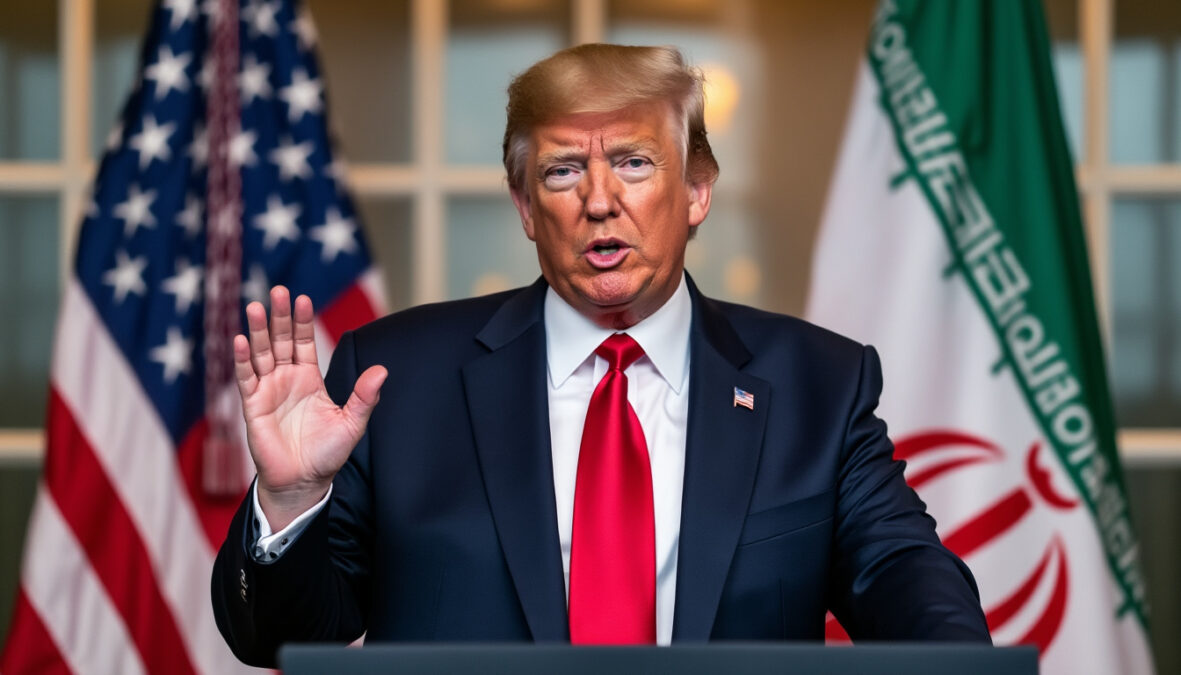
Donald Trump recently announced that the United States and Iran are set to sign a historic agreement aimed at ending the war in the Middle East, an agreement that could be signed this Sunday. This statement came after an intense week marked by increasing tensions between the Islamic Republic and American and Israeli forces. However, while progress has been reported, differences remain, and the timeline for the agreement remains uncertain.
Progress Towards a Compromise
In recent days, representatives from both nations have indicated that they have made significant progress towards a compromise. While some information has been leaked, it reveals discrepancies regarding the details of the agreement, particularly on very sensitive and technical issues. The current context, exacerbated by mutual attacks, raises concerns about a renewed escalation in the region.
The Role of Pakistani Mediation
The Pakistani Prime Minister, Shehbaz Sharif, plays a key role as a mediator, hoping to finalize the agreement within the “next 24 hours.” Sharif mentioned on X that this agreement could include an electronic signing process before technical discussions the following week. This negotiation framework underscores the importance of diplomacy in the context of international conflicts.
The Strait of Hormuz and Economic Implications
One of the crucial elements of this agreement could be the reopening of the Strait of Hormuz, a strategic passage for global trade. According to Trump, as soon as the agreement is signed, this maritime route will be accessible to all. This measure could have profound implications for the global economy, particularly concerning oil prices, which have recently experienced significant fluctuations due to tensions in the region.
Internal Tensions in Iran
On the Iranian side, diplomacy faces strong internal opposition. A protest movement has emerged with demonstrators opposing the concessions mentioned by the government, as shown in a video broadcast by an Iranian news agency. The triple pressure on the government, both internal and external, complicates the negotiation landscape surrounding this agreement.
Implications of the Iranian Nuclear Program
One of the cornerstones of the negotiations remains the Iranian nuclear program. The proposals discussed include a dilution of enriched uranium stocks and a less threatening perspective for the concerned nations. Recent statements from Trump, asserting that Iranians no longer wish to acquire nuclear weapons, add a new layer of complexity to the ongoing dialogue.
Consequences for Lebanon and Regional Balance
Another dimension of this possible agreement concerns Lebanon. The relations between Lebanon and Iran are intrinsically linked to regional dynamics. Hezbollah has been involved in the conflict, raising concerns about the repercussions of a potential agreement on the stability of the country and Israeli military actions against the Shia movement.
International Reactions
As Trump prepares to meet with leaders of the major powers at the G7 summit, a climate of discontent is settling in. The concerned countries fear the fallout from a military intervention with which they have not been associated. Trump’s diplomatic approach will be closely scrutinized in front of global leaders, reflecting the interconnectedness of current political issues.
It is essential to follow the evolution of events as discussions progress and the signing date approaches, as the implications of this agreement could redefine the geopolitical landscape of the Middle East for years to come.


