
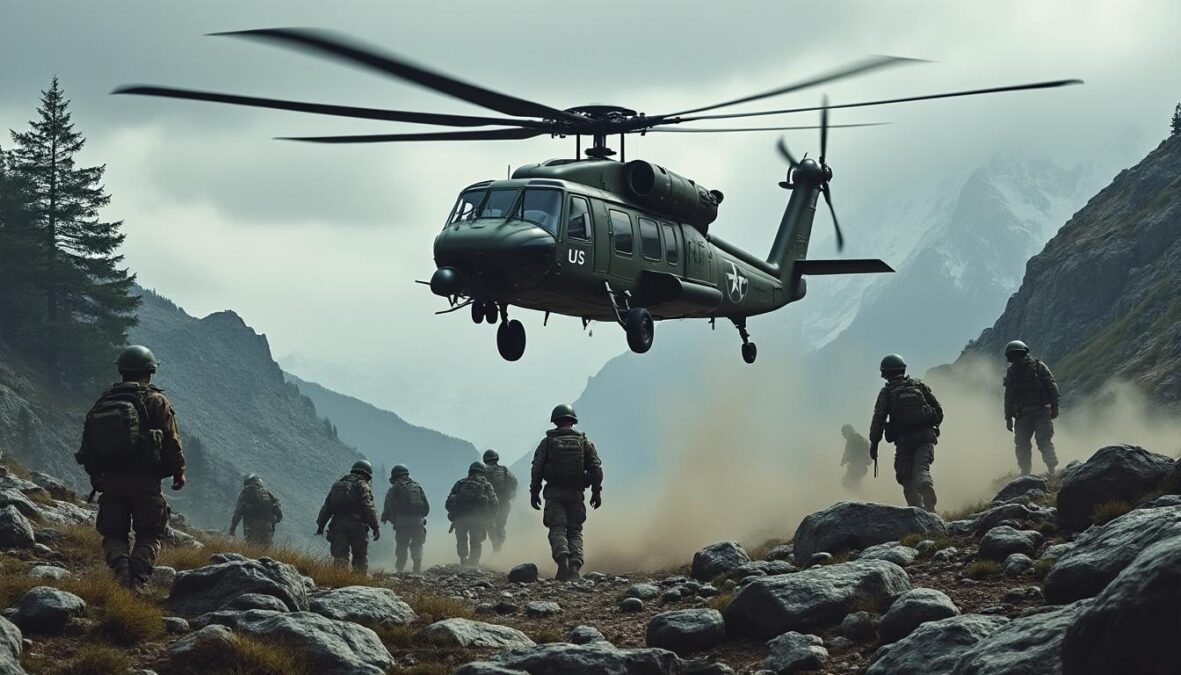
On April 3, 2026, a rescue operation led by the American military was widely publicized after a pilot of an F-15E fighter jet was shot down over Iranian skies. However, many videos and images circulated on social media, claiming to show the crash of an American helicopter during this mission, turned out to be fakes. This article highlights the misinformation that circulated around these events as well as the actual incidents that were confused with this rescue operation.
Analysis of Videos Shared on Social Media
The day after the F-15E crash, internet users began eagerly sharing videos that seemed to depict an American helicopter being shot down. A particularly viral post, which garnered over 8,000 “likes” on Facebook, showed a helicopter in flames falling from the sky, followed by a pilot ejection. However, it turned out that these images were actually old footage, with distinct origins from Iran.
Origins of the Shared Videos and Images
Footage Filmed in Syria
The explosive video shown on social media was identified as originally coming from Syria, specifically filmed in 2020. Reverse image searches revealed that this footage was published by Euronews and linked to an incident where a Syrian regime helicopter was shot down in Idlib, resulting in the death of its pilots. This military and political context is crucial, as it shows how events can be misinterpreted and repurposed to fuel unchecked narratives and theories.
An Out-of-Context Image from Honduras
Meanwhile, another image circulating on social media showed a helicopter lying on the ground, supposedly shot down by Iranian forces. However, thorough research revealed that it was a Black Hawk helicopter that had performed an emergency landing near Soto Cano Air Base in Honduras in March 2025. This false context also contributed to fueling a misleading narrative, linking the image to the American rescue operation without real foundation.
The Stakes of Misinformation
These examples of misinformation underscore the importance of critical evaluation of media and information sources, especially in the context of military conflicts where propaganda and information manipulation are common. With the speed at which technologies evolve, it is essential for the public to understand how to distinguish truth from falsehood. False information can have serious consequences, including skewing public opinion and impacting strategic political decisions.
For a broader perspective, it is interesting to examine the evolution of technology and its implications for humanity, with analyses found in publications such as: The Speed of Technology Evolution.
Reactions to False Information
The reaction of traditional media and fact-checking agencies was immediate in response to the proliferation of false information. Many journalists committed to demonstrating the authenticity of the videos and shedding light on the actual origins of the shared content. This dynamic demonstrates the importance of rigorous investigative journalism in the fight against misinformation, especially during times of crisis.
Another notable case of despair and misinterpretation of emergency situations has also been the subject of discussions. This is the case of a couple of hikers trapped on the ice who formed a giant SOS to call for help, as described in this article: Couple of Hikers Forming a Giant SOS.
Conclusion on the Impact of Misinformation
Recent events illustrate just how much misinformation can proliferate in our interconnected society. The fight against this reality requires heightened vigilance and ongoing commitment from governments, media, and individuals to ensure the dissemination of accurate and reliable information.


