
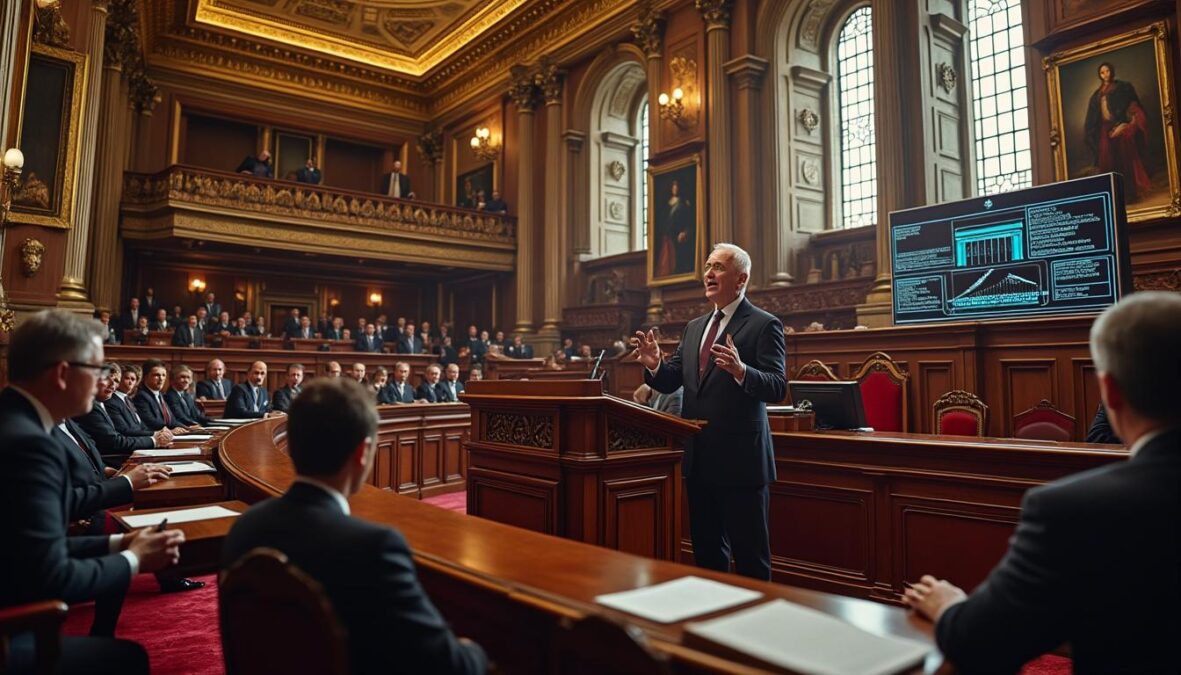
The French Senate is firmly committed against the abusive exploitation of cultural content by artificial intelligences. In a context where artistic creations are used without consent to fuel AI systems, a bipartisan bill has emerged. This measure aims to protect the rights of creators while raising concerns among the platforms that exploit these technologies.
The issue of cultural content exploitation
In light of the rise of artificial intelligence models, the cultural sector is increasingly expressing its fears regarding the exploitation of works. Actors and writers are noting a new form of competition that is deemed threatening. Voice samples of actors and texts from works are now being used by AI-based systems, which appear to draw from entire repertoires without any form of recognition or compensation.
A necessary legislative response
To remedy this situation, the Senate has adopted a proactive approach. A bill has been introduced that notably provides for the introduction of a presumption of use of cultural content protected by copyright. This means that in the case of a dispute, it would be up to the platforms to prove that they have not infringed the rights of creators, thereby reversing the burden of proof that currently favors exploiting entities.
Support for endangered creators
Many artists find themselves in a precarious position in the face of fraudulent use of their works. Examples are multiplying, such as the case of 25 French voice actors who managed to have AI models that used their voices without permission taken down. However, these judicial victories remain the exception rather than the rule. The new proposed legislation aims to provide more robust protection and to encourage the defense of creators’ rights.
The repercussions for technology platforms
The bill raises concerns among technology companies, which fear heavy consequences for their operations. Industry stakeholders worry that this regulation could stifle innovation and impose additional administrative burdens. The debate is thus opened, between the need to protect culture and the risk of hindering technological advances.
Towards international recognition of creators’ rights
Senate members believe that the adoption of this text could propel France as a model on the international stage, sparking interest from other nations for similar legislation. Examples in Australia and Quebec show that a comparable approach could emerge elsewhere. By asserting itself as a pioneer, France could play a key role in preserving the rights of creators on a global scale.
As the cultural and artistic world faces unprecedented challenges related to artificial intelligence, the Senate is taking significant measures. However, the path remains fraught with obstacles, between the divergent interests of creators and those of tech giants. This dynamic raises crucial questions about the future of the arts and how they should be protected in the digital age. To learn more about content ownership on social networks, click here: Content ownership on social networks.


