
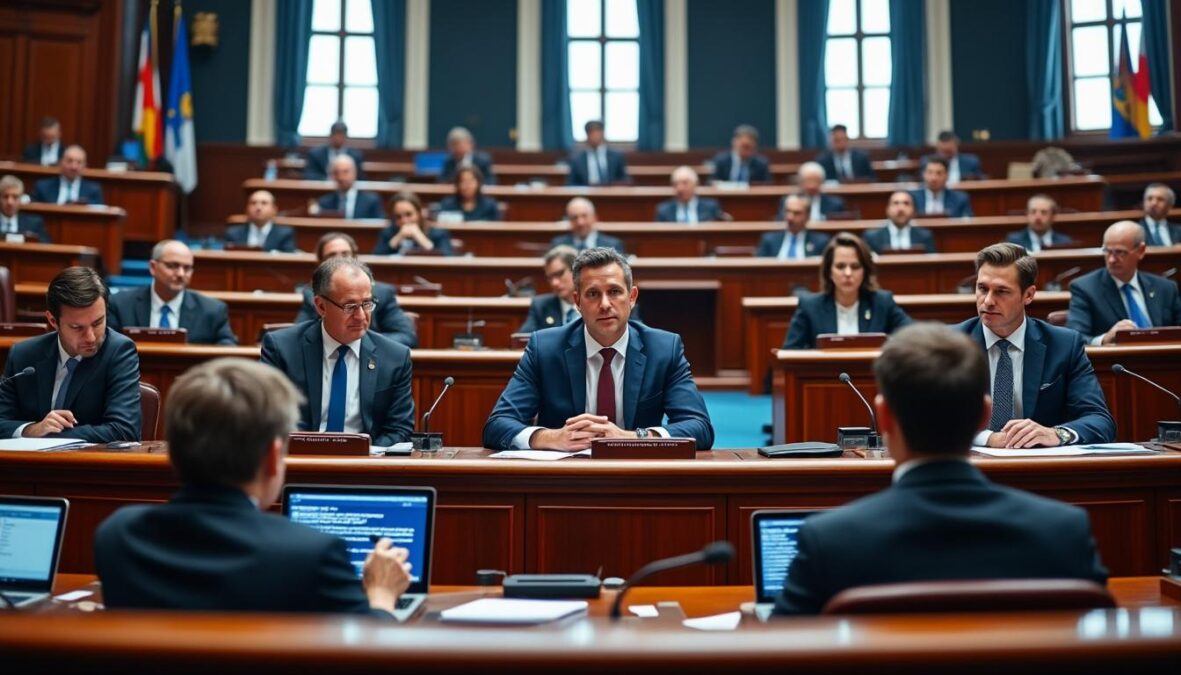
The debate on banning social networks for young people under the age of 15 is coming to the Senate. This initiative, supported by the government and highlighting concerns about the safety of minors on online platforms, could make France the second country after Australia to adopt such restrictive legislation. The proposal, adopted by the National Assembly, aims to regulate children’s access to social networks while proposing measures tailored to the type of platform.
An ambitious legislation under discussion
The bill being discussed in the Senate aims to prohibit access to social networks for minors under the age of fifteen. This approach reflects a desire expressed by the President of the Republic, Emmanuel Macron, and addresses a growing concern about the dangers linked to the early use of these communication tools. The text has been examined by senators in committee, and a vote has been scheduled for Tuesday, March 31, marking a crucial step for the ongoing legislation.
A model inspired by Australia
If this ban were to be adopted, France would follow Australia’s example, which has already implemented a similar restriction by banning access to social networks for minors under the age of 16 last December. This initiative aims to protect young users from dangers present on social platforms, such as cyberbullying and exposure to inappropriate content. Discussions around this legislation highlight the increasing importance of online safety for young people.
The implications of the proposed amendment
Senator Catherine Morin-Desailly, the reporter on this text, proposes an amendment to refine the scope of the law. She suggests distinguishing between platforms that pose a risk to the physical, mental, or moral development of young people and those that do not. This distinction would allow for the establishment of a list of sites that would be completely banned for those under 15, while still requiring explicit parental permission for platforms considered less dangerous.
A balance to be found
The proposal raises questions about the balance to be struck between protecting minors and freedom of access to information. Senator Morin-Desailly emphasizes that there are social networks that do not feature a toxic algorithmic model and could be accessible with parental consent. This approach aims to ensure children’s safety while preserving their right to exploration and social interaction on appropriate platforms.
The legislative timeline and its stakes
The government hopes to implement this ban by the start of the 2026 school year. This is an ambitious timeline with just months remaining before the end of the five-year term, which could significantly transform the way young people interact online. Discussions in the Senate will determine whether this goal will be met and if the proposed measures will be sufficiently effective to address the safety issues of minors on the internet.
The public debate on social network usage
This draft law is also part of a broader dynamic concerning the regulation of social networks. The debate is fueled by increasing concern within society about how these platforms can influence the development of young people. According to some experts, excessive use of social networks can have devastating consequences on users’ mental health, hence the necessity to consider appropriate solutions.
To delve deeper into the reflection on this delicate subject, you can consult dedicated articles on the issues of regulating social networks and their repercussions on minors, such as those addressing security concerns and the consequences of early use, as presented in this article: The Union targets social networks with a ban for minors.


