
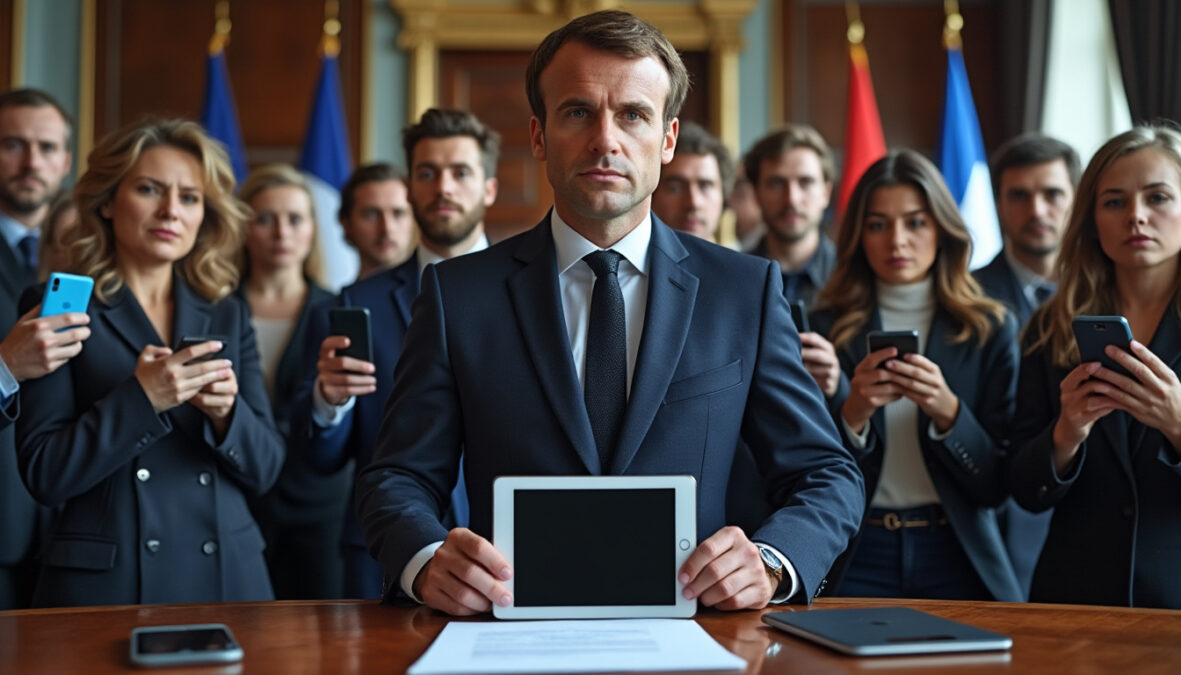
At the heart of an important debate for the future of young French people, Gabriel Attal, Renaissance candidate for the presidential election, recently urged President Emmanuel Macron to launch a referendum on the ban of social media for those under 15 years old. This request comes after the Constitutional Council censored a law passed in Parliament, highlighting the issues and concerns related to children’s protection on these digital platforms.
The Call to Emmanuel Macron
In an article published in La Tribune, Gabriel Attal calls on Emmanuel Macron to take a bold stance in light of the current situation. After the censorship of the law aimed at protecting young users from social media, it is essential to propose a quick solution. To this end, Attal suggests that the new version of the law be submitted to a referendum, in order to give back the voice to the French people.
This recourse to a referendum is seen by Attal as a way to respond quickly to an urgent problem. He believes that time is running out, as without swift intervention, millions of children will continue to use these platforms, often to the detriment of their well-being. “There is a race against time,” he states, emphasizing that up to 1.5 million children spend an average of nearly 1 hour and 47 minutes on social media each day.
The Stakes of Child Protection
Attal underscores the importance of this issue by stating that the protection of children must be a priority. In the current context, where social media can expose young people to algorithms, cyberbullying, and many inappropriate content, a clear political will must emerge. By submitting this question to a popular vote, Attal hopes to mobilize the French around a cause that directly affects their families.
The Legal Framework of the Referendum
The Renaissance candidate also emphasizes the constitutional feasibility of this approach. According to him, a child protection law that includes the ban on social media for those under 15 fits within the framework of the social policy of the Nation. He refers to Article 11 of the Constitution, which allows for a referendum in such situations. An inconceivable act for some, yet legitimized by the issues of public health and the safety of young people.
The Reactions to the Censorship by the Constitutional Council
The Constitutional Council justified its censorship by stating that the law voted by Parliament would infringe upon the freedom of expression of young people. This observation raises an essential debate about the limits of this freedom in the current digital context. In response, Gabriel Attal emphasizes that young people must be protected without sacrificing their right to free expression. This nuance is crucial and highlights the complexity of the legislation to be established.
The tension between the need to protect children and the respect for individual freedoms is a central issue, and the choice of a referendum as a democratic tool could allow for an inclusive response. Indeed, direct recourse to the people could alleviate the accumulated frustrations in the face of an assembly severely criticized for its inability to respond quickly and effectively.
A Societal Issue
For Emmanuel Macron, this proposal could fit into a series of crucial reforms he wishes to enact by the end of his term. The stakes extend far beyond social media; it is also about redefining our digital society and establishing public trust in institutions. A referendum could allow for a broad public consultation, a way to create a consensus around the protection of young people and online safety.
Thus, through these discussions, similar initiatives could emerge, akin to those proposed regarding blockchain or the banning of platforms like TikTok, all subjects resonating with contemporary social concerns. The ban on social media for those under 15 is just one facet of the challenges facing democracy and digital regulation. The question now is whether political courage will be present to move in this direction.


