
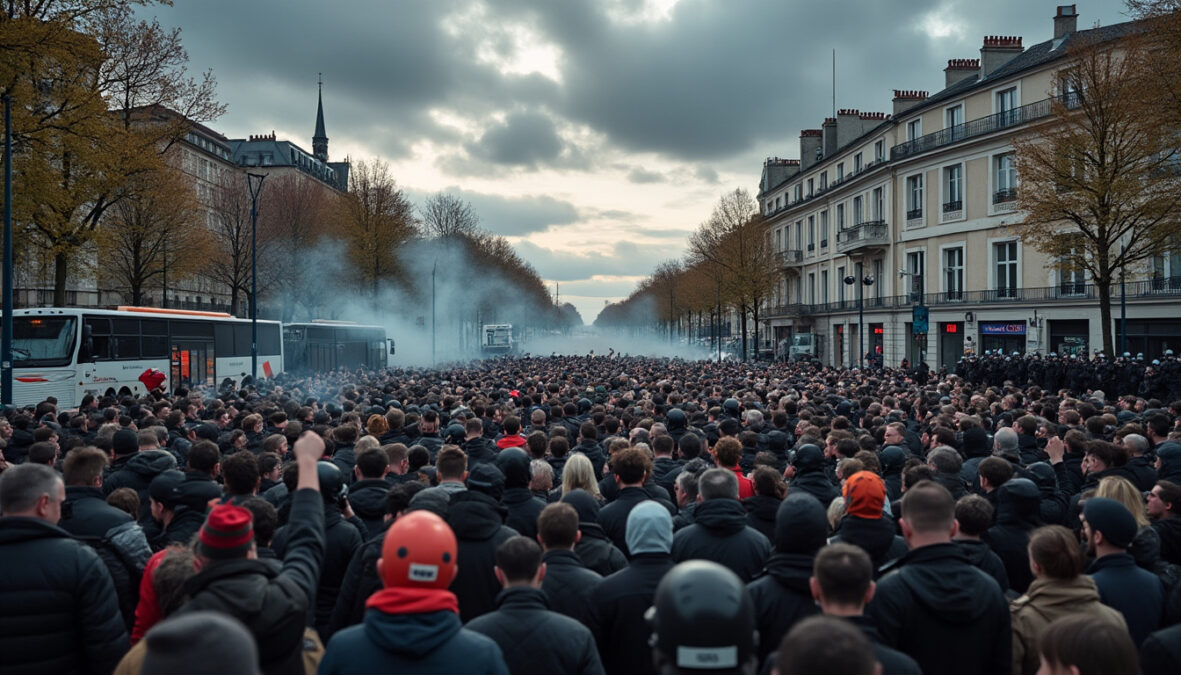
Tuesday, September 29 promises to be a day of strong social mobilization, with over 160 demonstrations planned across France. Public servants, employees, and teachers intend to make their anger heard, amid concerns over the rising cost of living, tensions in several sectors, and worries about employment. Local actions, already reported in hospital services, education, and telecommunications, illustrate the scale and diversity of the movement.
The expression “black day” reflects fears of significant disruptions during this day of mobilization. The number of announced gatherings suggests widespread discontent across the territory. The demands may vary from one sector to another, but several concerns overlap: purchasing power, working conditions, job protection, and resources allocated to public services.
The multiplication of calls to protest gives this day a national scope. However, the concrete consequences will depend on employee participation and the location of the actions. Strikes can particularly affect the functioning of certain administrations, schools, or essential services, without the scale of disruptions being the same everywhere.
More than 160 demonstrations announced
More than 160 demonstrations are planned across the country. This simultaneous presence of gatherings in numerous cities attests to a mobilization that is not limited to a single profession or a unique demand. The processions are meant to give visibility to social tensions and allow employees to make their difficulties known.
The high cost of living is among the concerns highlighted. The rise in the cost of living fuels the sentiment that wages and incomes do not always keep pace with price increases. In several professions, this pressure adds to working conditions deemed difficult or concerns about job security.
The difficulties related to fuel prices also illustrate the diversity of situations. Fishermen, particularly exposed to the costs of their activity, are among the professions for which the rise in energy significantly impacts daily expenses and the economic viability of their work.
The public service at the heart of the mobilization
Public service agents are called to participate in the movement. Their mobilization can highlight concerns regarding staffing, remuneration, and the ability of services to meet public needs. In administrations as well as in healthcare or educational establishments, strike movements remind us that operational difficulties often extend beyond just the day of action.
The situation of hospital teams is among the tensions reported. At the Édouard-Herriot hospital center, staff from the post-urgent care service are involved in a strike. This type of mobilization highlights the constraints faced by teams responsible for caring for patients after their emergency visits, in a context where care organization and workload are essential issues.
Strikers seek to make visible the effects of these difficulties on their daily activities. In health services, social movements take place, however, with particular obligations related to the continuity of care. Their impact can therefore vary depending on the services concerned and the arrangements made to accommodate patients.
Tensions also affecting employment and education
In Bron, SFR employees are worried about their jobs
In Bron, SFR employees are mobilizing as nearly 600 jobs are said to be threatened in the Lyon region. This concern gives the movement a dimension directly linked to the future job security of workers and the sustainability of local activities. The strike serves as a means for employees to highlight their worries and request answers regarding the potential consequences of the announced changes.
Mobilizations around employment are occurring amid a climate where employees may fear a deterioration in their working conditions or a reduction in staffing. The effects of such decisions are not limited to those directly concerned: they can also weigh on the remaining teams and on the job markets where positions are threatened.
Debates on means of collective action sometimes include the question of supply chains and the impact of economic disruptions. This reflection is mentioned in an article dedicated to mobilization strategies around pension reform: the analysis of supply chain disruption as a protest lever questions the relative effectiveness of different forms of action.
Teachers gathered in front of the rectorate
In Vénissieux, teachers from the Sembat-Seguin high school are also involved in a strike. They gathered in front of the rectorate, bringing their mobilization outside the institution to appeal to academic authorities. This gathering is part of a broader movement where education personnel can express their concerns about teaching conditions and the organization of their work.
Being present in front of the rectorate gives the action an institutional dimension: teachers are addressing directly the authority responsible for organizing education at the academic level. As in other sectors, the day of September 29 could thus include work stoppages, gatherings, and speeches, depending on the choices made by personnel and local realities.
Mobilizations with varying effects depending on the territories
The diversity of engaged sectors makes it difficult to provide a uniform estimate of disruptions. A demonstration may gather a large number of participants without causing a significant interruption of activity, while a strike in a key service may have more visible effects, even if it involves a limited number of employees. The situation will therefore depend on the strike rates, the locations of gatherings, and the chosen organizational methods.
Users may face changes in the functioning of certain services. It is advisable to check local information communicated by the establishments, administrations, or operators concerned, as the consequences of a movement can evolve throughout the day. National announcements provide a general trend but do not necessarily describe the situation in every city.
Unions and mobilized collectives will also need to navigate sometimes differing expectations. Some participants may prioritize the immediate defense of wages or jobs, while others may wish to draw attention to available resources, service quality, or longer-term developments. This plurality contributes to the size of the movement while giving gatherings distinct local accents.
A social anger fueled by multiple issues
The day is not limited to a single demand. The high cost of living, tensions regarding working conditions, and fears of job cuts intersect in the calls for mobilization. This combination explains why professions that are far apart from each other might choose to act at the same time, while defending demands specific to their sector.
The issue of technological transformations can also foster discussions about work organization and the future of jobs. An article dedicated to the IATSE agreement and artificial intelligence examines the possible role of these tools in professional activities: the debates around artificial intelligence as a transformative tool remind us that technical changes also raise questions of employment, control, and working conditions.
In creative professions, discussions about automation juxtapose the capabilities of tools with the place of human experience. This reflection is addressed in an article on the authenticity of performance and scripts in the face of the rise of artificial intelligence: the quest for authenticity in artistic professions in the face of the rise of AI emphasizes the importance attributed to the human role in rapidly evolving sectors.
The day of September 29 under scrutiny
The announcements of strikes and planned gatherings place this day under the attention of authorities, businesses, and users. In some domains, organizers may adapt the modalities of mobilization to security or service continuity constraints. The announced actions do not necessarily mean a complete halt to activities, but they signify a desire to occupy public space and make the demands visible.
The prospect of social movements may also concern specific events. Regarding the Pope’s visit to Paris, the police union Unité indicated that it does not rule out action, depending on how the situation evolves. This position illustrates how professional tensions can add to a calendar already marked by mobilizations, even if the stakes and the personnel involved differ.
Tuesday, September 29 thus appears as a significant moment of protest, driven by diverse professions and territories. Participation in demonstrations, the scale of strikes, and responses to demands will determine the real impact of this “black day” for services, employers, and those who depend on them.


