
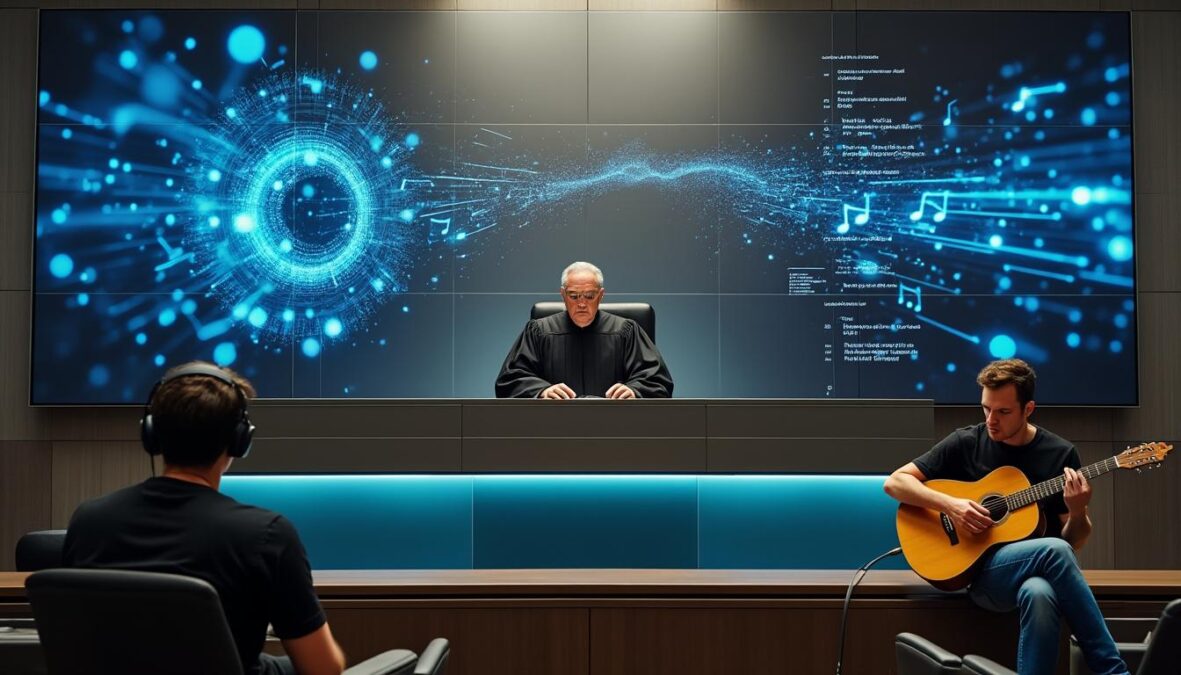
Recently, a verdict shook the world of phonographic publishing by reigniting an essential discussion regarding the impact of artificial intelligence on musical creation. This ruling addresses the issues related to intellectual property and raises questions about the role of technology in artistic production. This article explores this debate, the implications of this verdict, as well as the current evolution of the music sector in the age of AI.
A landmark verdict in the world of phonographic publishing
The recent verdict on phonographic publishing shed light on the legal challenges posed by the use of artificial intelligence in musical creation. Courts have ruled on critical issues concerning copyright and the protection of original works. This ruling represents a decisive turning point and could influence how artistic works are recognized and protected in a context where AI is increasingly involved in composition and music production.
The implications of AI in musical creation
The rise of artificial intelligence in the musical field presents immense possibilities, but it also poses ethical and legal questions. AI-based tools can create music pieces, generate melodies, and even imitate the style of great composers. This raises the issue of intellectual property: who holds the rights to a work created by a machine? The musicians, the technology developers, or the AI itself?
The debate on creativity and authenticity
The question of authenticity is at the heart of the debate on the use of AI in musical creation. Some argue that music generated by algorithms lacks soul and emotion, while others contend that these new technologies can broaden the creative horizons of artists. This divide raises questions about the nature of creativity and what truly defines a work of art.
Industry reactions to the musical industry
Professionals in the music industry are reacting in various ways to this verdict and the increasing introduction of artificial intelligence. Some artists applaud the innovation, considering that these tools open new avenues for artistic expression. Conversely, others fear that AI may lead to market saturation and devalue the work of human musicians by offering machine-generated alternatives.
Future perspectives for phonographic publishing
As the debate over artificial intelligence and musical creation intensifies, it is crucial for the industry to adapt. Developing new regulations to govern the use of AI in music may be necessary to protect artists’ rights while fostering innovation. In this context, it is essential to examine the research and developments surrounding artificial intelligence in the music sector.
To delve deeper into this topic, you can explore how AI appears as a creative partner in this article on the revolution of artificial intelligence, as well as the current situation of tech players in this battle related to AI in the industry here on the competition of titans.
The challenges of this evolution are also well summarized in an essential debate to discover here, which highlights the promises and risks associated with AI. This disruption of musical creation is accompanied by growing concerns, as evidenced by a record fundraising for OpenAI here, as well as innovations in health here that reinforce the impact of AI in our lives.


