
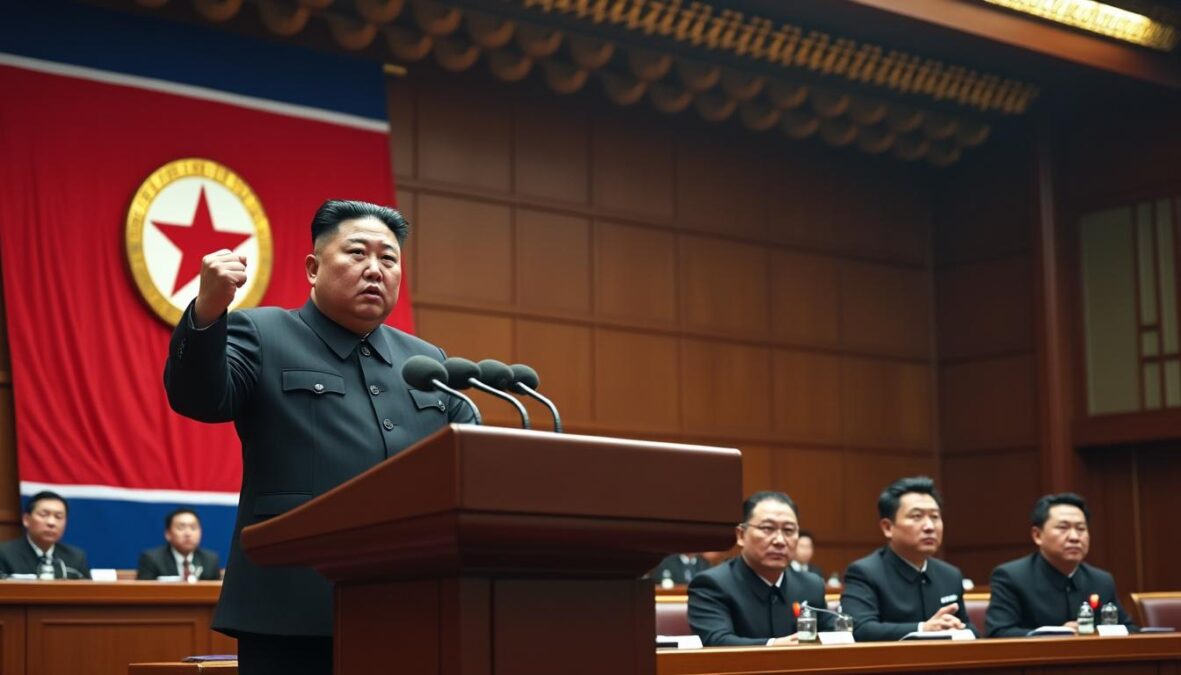
North Korea has recently reacted vehemently to accusations of cybercrime leveled against it, calling them “an absurd slander“. This statement issued by a spokesperson of the Ministry of Foreign Affairs comes as investigators point to a growing link between major hacks in decentralized finance (DeFi) and actors considered to be supported by the Democratic People’s Republic of Korea (DPRK).
Rejection of the accusations
In a statement to the official Korean Central News Agency (KCNA), the spokesperson expressed deep indignation at what he considers a misunderstanding spread by governments, media, and various organizations. According to him, these entities seek to distort the image of North Korea by evoking an alleged “cyber threat” that would be unfounded.
Washington’s claims deemed unreasonable
The North Korean representative also pointed fingers at the US government, accusing the United States of portraying itself as a victim while controlling the global computing infrastructure. This observation raises many questions about the veracity of the accusations against the DPRK, and highlights an alleged hypocrisy on Washington’s part. “Why do the United States, which prides itself on being the greatest cyber power, present themselves as the biggest targets?” he questioned.
Cyberattacks and their attribution
However, recent research highlights statistics showing a significant volume of activities attributed to groups linked to North Korea. According to a report from TRM Labs, these actors are responsible for approximately 76% of the losses related to crypto hacks recorded during that year. This data raises questions about the distribution of responsibilities in the context of global cyberattacks.
A defense of cyberspace
In continuation of this defense, the North Korean Ministry of Foreign Affairs also clarified that the protection of cyberspace is a constant political priority for North Korea. The spokesperson asserted that the country would not tolerate hostile acts against it and that all necessary actions would be taken to defend the interests of the state, as well as the rights and interests of its citizens.
An atmosphere of international concern
The tensions between North Korea and the United States over cybersecurity issues continue to fuel a climate of distrust and concern within the international community. Outside actors in this dispute, such as the Paris Prosecutor’s Office, are also attempting to take measures to ensure digital security, as evidenced by their recent search of X.
Increased surveillance and distrust
As North Korea continues to push back against these accusations, other situations around the globe heighten nations’ vigilance in the face of potential threats. For example, the Ministry of the Interior in France has intensified monitoring of social networks, as seen with Gab, suspected of being used for extremist purposes.
Targeted police operations
Moreover, operations carried out in the United Arab Emirates aimed at eradicating the spread of sensitive information demonstrate how seriously many countries take the issue of cybercrime. For instance, the 45 arrests recently made testify to a concerted effort to respond to this growing threat.
Attacks on digital security
The various incidents in recent years, such as the black market for prompts to unleash artificial intelligences, also raise concerns about the intentions and capabilities of malicious actors. In this context, the accusations against North Korea should be scrutinized in light of the actions and data emerging on the international stage.
The issue of online fraud
To conclude with a specific case, the affair of the two brothers who managed to raze the Ethereum blockchain in record time highlights the challenges the current system faces, compelling governments to double their efforts to secure their digital infrastructures.


