
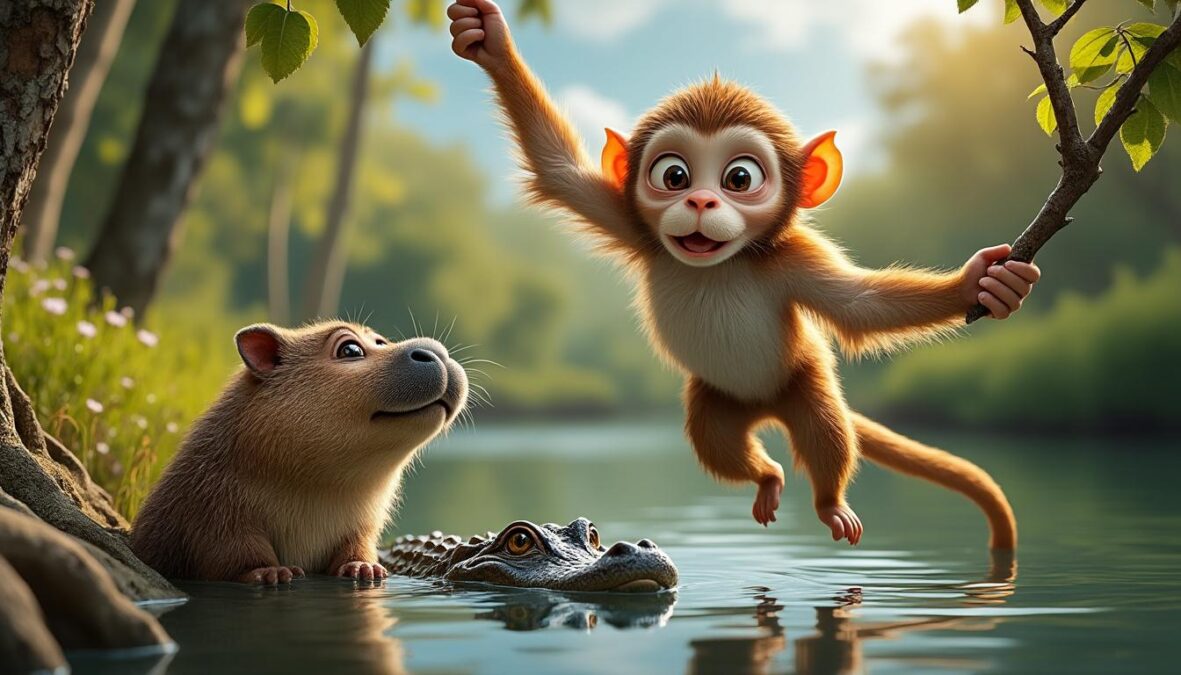
Social media, true showcases of modern entertainment, are blossoming with content where surprising animals, such as monkeys, capybaras, or alligators, are staged in amusing ways. Although initially perceived as playful and entertaining videos, this content raises a number of ethical concerns and species protection issues. Increasingly, specialists like the International Fund for Animal Welfare are highlighting the dangers of this trend and alerting the public to its potential impact on wildlife.
Monkey: a playful companion or an animal in distress?
Videos featuring monkeys as playmates are booming on platforms such as TikTok and Instagram. Influencers often showcase young chimpanzees, resembling children discovering the world. Take for example Nordine, a zoo owner, who shares daily moments with his young chimpanzee named Kiky. The latter, dressed in a diaper and a onesie, performs daily actions like opening the refrigerator or walking while holding his owner’s hand. While this image may seem cute, it hides a darker reality: these animals are often removed from their natural habitat, raised in captivity conditions that are unsuitable for them, and destined to be exhibited for public entertainment.
Capybara: a sociable animal in the spotlight
Capybaras, presented as trendy pet animals, are becoming stars on social media. Videos show people celebrating their birthdays with these giant rodents on their laps, or posing with them like traditional pets. This glorification of the capybara obscures the challenges associated with their ownership. Indeed, although these animals have a sociable nature, they require a specific environment to thrive. Their staging in viral videos raises questions about the respect of their needs and well-being.
Alligator: from a fearsome animal to a garden attraction
Alligators are no exception to this trend. Content showing individuals posing next to these majestic reptiles, often on leashes, circulates widely on social media. These images may seem innocent or even exhilarating, but they reflect a troubling ignorance of the needs of these predators. By familiarizing themselves with themes that should encourage fear or respect, these videos promote a disenchanted view of wildlife, encouraging irresponsible behaviors regarding the keeping of these potentially dangerous animals.
The dangers of viral content featuring wild animals
The report from the International Fund for Animal Welfare highlights the growing dangers related to the trivialization of wild species on social media. The playful format of videos like “Guess the Animal” may seem innocuous, but it encourages participants and the audience to interact with animals without understanding the consequences of these interactions. Wildlife advocacy groups fear that these practices contribute to the erroneous perception that wild animals are toys or accessories, rather than sentient beings needing protection.
The necessity for increased awareness
In light of the rise of this content, it becomes essential to raise public awareness about the issues related to the possession of wild animals and the consumption of such content. Social media must take responsibility by preventing the dissemination of videos that encourage harmful behaviors towards wildlife. A collective awareness could play a key role in the protection of these endangered species and in educating users about wild animals.


