
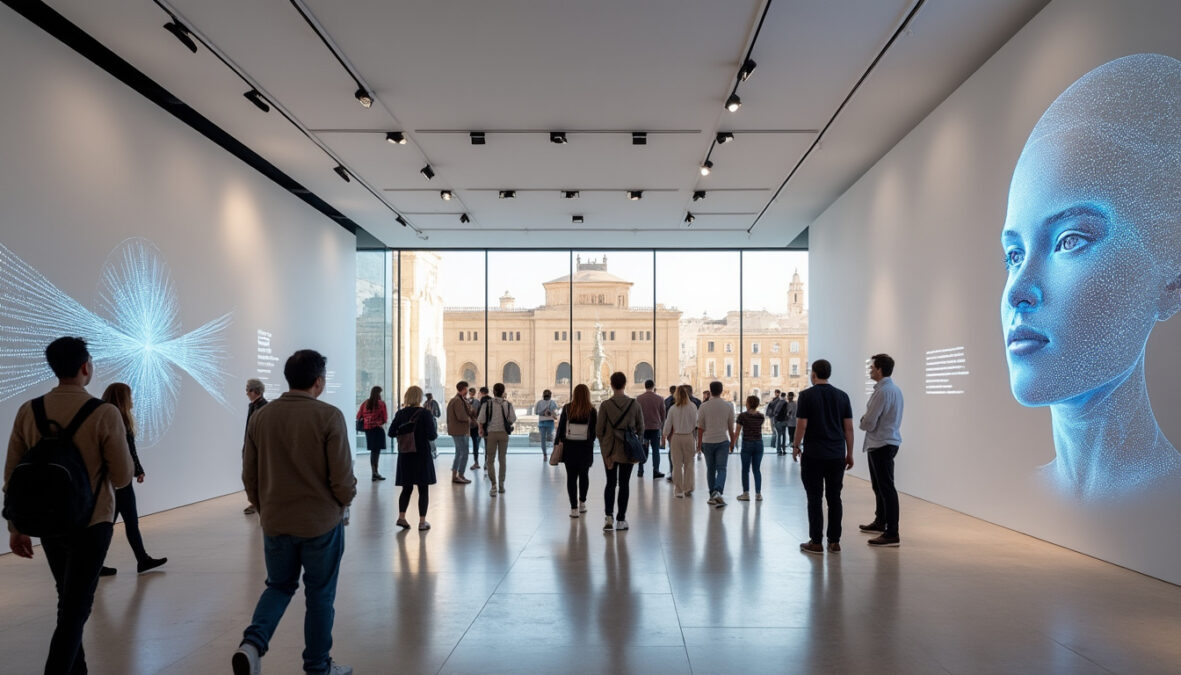
In Casablanca, the exhibition “Artificial Intelligence, Rights Ahead!” invites the public to reflect on the effects of AI technologies on freedoms, privacy and digital practices. Through press cartoons from around the world, this Cartooning for Peace initiative explores algorithms, personal data, disinformation and changes in the workplace with humor. It is on display until October 30, 2026 at 5 p.m., at 121–123 Boulevard Mohamed Zerktouni.
In Casablanca, the exhibition “Artificial Intelligence, Rights Ahead!” explores the issues surrounding AI and human rights
Artificial intelligence is becoming part of an increasing number of everyday activities: searching for information, online recommendations, professional tools and digital services. Its presence raises fundamental questions about how technologies influence choices, relationships and access to information. In Casablanca, the exhibition “Artificial Intelligence, Rights Ahead!” offers an accessible perspective on these changes, bringing technological innovation and human rights into dialogue.
Conceived by Cartooning for Peace, the exhibition uses press cartoons to make issues that can sometimes be difficult to grasp more visible. Humor and surprise make it possible to examine the promises of AI, as well as the risks associated with its development and use. The works invite visitors to take a step back and consider tools that may seem abstract, even though they have concrete consequences for individual and collective practices.
Press cartoons to unpack digital practices
The cartoons in the exhibition come from different countries and offer a range of perspectives on the rise of artificial intelligence. Their diversity helps show that debates about AI are not limited to a single region or sector. The artists draw on familiar situations to question the growing role of automated systems in society.
Press cartoons often rely on an immediate image, a recognizable scene or an unexpected contrast. This visual language can therefore open up discussion about topics such as data collection or algorithmic decision-making without requiring prior technical knowledge. The humorous tone does not diminish the significance of the questions raised; rather, it offers a different way of approaching them and highlights their contradictions.
Algorithms, personal data and freedoms
Algorithms are used in many digital services, including to rank content, anticipate preferences or automate certain decisions. However, their workings can remain difficult to understand for the people who use them or are affected by their outcomes. The exhibition draws attention to this opacity and the questions it raises about transparency, oversight and accountability.
The collection and use of personal data are another important theme. The digital traces left behind when using platforms or applications can contribute to the operation of artificial intelligence systems. How this information is collected, stored and used has a direct bearing on privacy. The cartoons thus invite visitors to consider the importance given to consent and the means available to individuals to control their data.
These reflections form part of a broader debate about the sometimes unexpected effects of technology on everyday life. The article on the effects of artificial intelligence on our daily lives extends this inquiry into the practices that are emerging, the habits that are changing and the questions that arise as these tools become more widespread.
Disinformation and trust in information
The exhibition also explores the links between artificial intelligence and disinformation. Tools for generating and processing content can make it easier to create or spread misleading messages, while the rapid circulation of information can sometimes make it harder to verify sources. The issue concerns the ability to distinguish reliable content, as well as the trust placed in the media and online exchanges.
Cartoons can depict the gap between how content appears and how reliable it is, or highlight the difficulty of knowing who produced a piece of information and for what purpose. They thus remind us that the issues surrounding AI are not purely technical: they also affect the quality of public debate and the conditions needed to access information freely.
Work in the face of the advance of artificial intelligence
The world of work is among the themes explored. The automation of certain tasks and the arrival of new tools are transforming professions, collaboration methods and the skills in demand. These changes can give rise to expectations, but also to concerns about the role of workers, the distribution of responsibilities and the consequences of decisions made with the help of automated systems.
The spread of AI in businesses is the subject of analyses of its adoption and potential effects. In this regard, Vladimir Atlani’s article on the widespread adoption of artificial intelligence in business offers further insight into the workplace changes associated with these tools.
Collaboration technologies are also part of these changes. They can alter how teams communicate, share information and organize their work. The article on collaboration technology trends places these practices within a broader discussion of how work environments are evolving.
An exhibition at the heart of contemporary debates about AI
Bringing together press cartoons on these subjects, “Artificial Intelligence, Rights Ahead!” offers a journey exploring the social and human effects of innovation. The works provide an opportunity to consider the benefits of digital tools while questioning the choices that shape their design and deployment. Technology thus emerges as a subject for collective debate, connected to freedoms, accountability and forms of oversight.
Questions evolve as new services and practices emerge. Analyses of innovations and current AI issues, such as those presented in this overview of contemporary innovations and issues, complement the exhibition’s themes by placing the debates in a changing technological context.
Some digital experiences raise particular questions about the boundaries between humans and artificial systems. The example of a social network populated by artificial intelligence agents and inaccessible to humans illustrates the emergence of new online environments and the concerns they may raise among researchers. These situations extend reflections on trust, interactions and the place of people in automated digital spaces.
Practical information
The exhibition “Artificial Intelligence, Rights Ahead!” is on view at the following address: 121–123 Boulevard Mohamed Zerktouni, 20340 Casablanca. It runs until October 30, 2026 at 5 p.m. For further information, visitors can consult the organizer’s website.


