
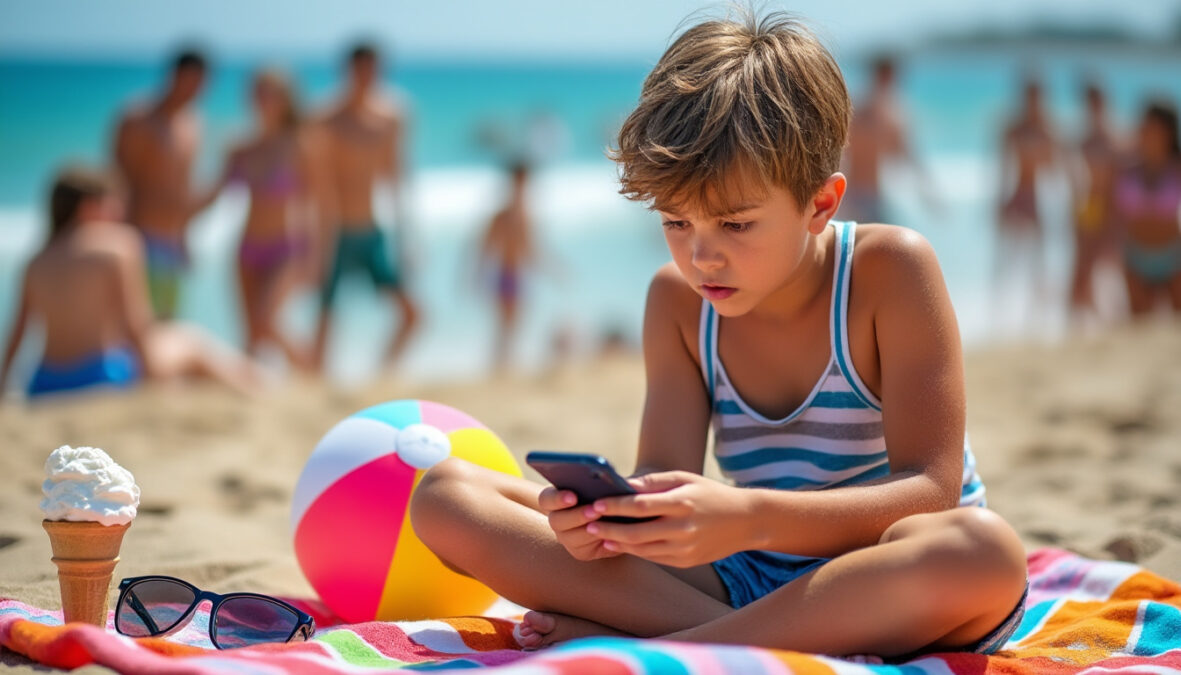
Summer vacation is often synonymous with relaxation and leisure for young people. However, this summer, the issue of screen usage is becoming particularly concerning. With the rise in the use of social media and online gaming, many experts, including child psychiatrists, are highlighting the dangers of excessive screen exposure during this period. The risks of addiction, depression, and various disorders continue to rise, leading some countries to consider strict measures, such as banning social media for young people during holidays.
Vacation and screens: an explosive cocktail
For many young people, vacations are an opportunity to spend more time on their electronic devices. Online games, social media, and other applications become omnipresent distractions. According to Dr. Sophie Dechene, child psychiatrist, this enthusiasm is comparable to an increase in alcohol consumption during holidays: young people are swept away by the easy access to these digital contents. This creates an environment conducive to the development of addictive behaviors, where the line between the digital world and reality is blurred.
The dangers of screen addiction
The direct consequences of this period of excess are numerous. Sedentary lifestyle and the rising cases of obesity among young people are growing public health issues. Moreover, problems with vision, posture, and sleep disorders have been linked to excessive screen usage. Caroline Depuydt, psychiatrist, emphasizes the connection between social media use and the exacerbation of pre-existing disorders, particularly body image disorders, anxiety, and depression.
The constant temptation of online games
Video games, particularly those from free platforms, often lead to addiction since their design is based on psychological techniques aimed at capturing young people’s attention. Reward mechanisms and in-game purchases generate a dopamine loop that drives young people to play compulsively. Dr. Depuydt highlights the video game economy that generates billions of euros, often at the expense of young people’s mental health.
The necessity of regulation
While France is considering a ban on social media for those under 15 years old, Belgium finds itself at a crossroads, without a clear position. Ministries and organizations like Child Focus are warning about the dangers of gaming platforms that allow communications, where young people can easily be exposed to inappropriate content. The risks of grooming, propaganda, and hate speech are alarming.
Towards a collective awareness
Parents, society, and authorities must become aware of the harmful effects of too much freedom of access to screens. Legalizing access to social media without serious oversight opens the door to considerable dangers. It is crucial to establish a favorable educational framework, where young people can learn to use digital technologies responsibly rather than banning them without explanation.
Redefining digital landscapes
While some countries are taking steps to protect young people, it is essential to initiate a real debate on the implications of social media usage. Proposals range from a strict age limit to restrictions on evening use, similar to those considered in England. Dr. Dechene insists on the idea that young people do not yet have the necessary maturity to manage their digital interactions and that parents have a crucial role to play.
Discover some examples of contemporary digital concerns with this analysis on the challenges of banning social media and explore other issues related to screens, such as those discussed in this article addressing the impact of social media.


