
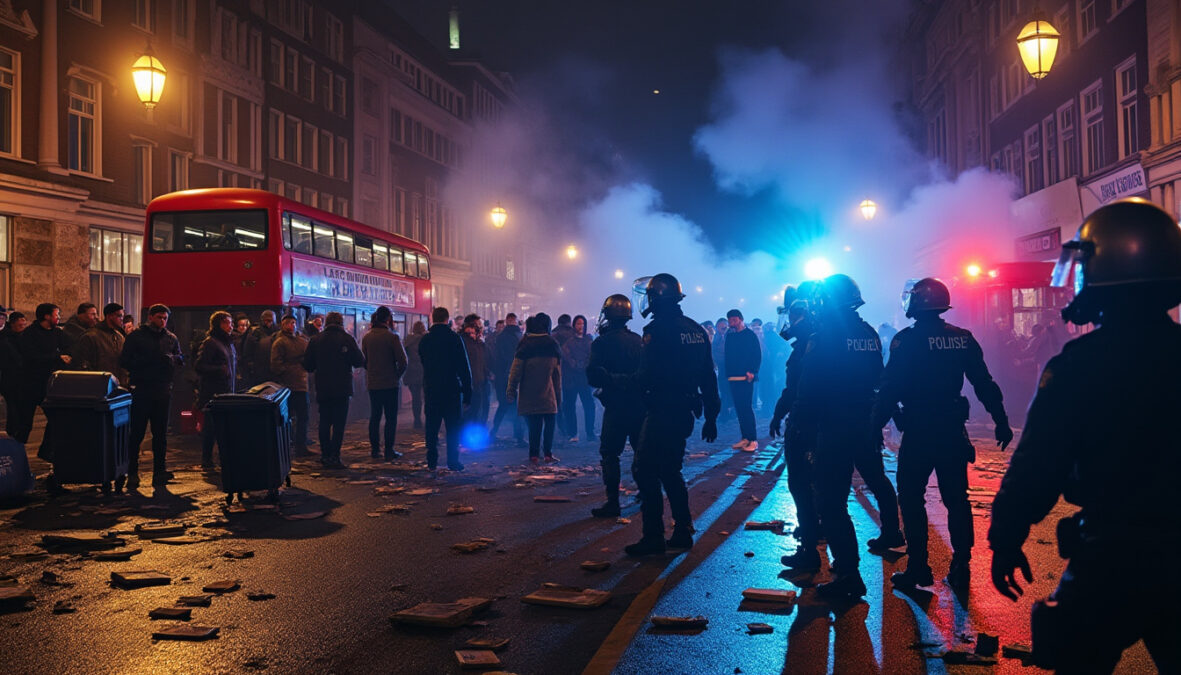
The events that took place in London after the match between France and Morocco during the quarter-finals of the 2026 World Cup were marked by violence and clashes between law enforcement and supporters. That evening, which saw France win 2-0, was tarnished by tensions in the Edgware Road area, requiring a thorough analysis to understand the causes and consequences of this situation.
Predictable Signs of Tension
In the days leading up to the match, the atmosphere was already electric, with Moroccan supporters showing great fervor for their team. Their desire to destabilize the French players was manifested through various displays of support within the streets of London. This ambiance created high expectations, not only for the sports events but also for fans’ reactions after the match.
Clashes Erupt on Edgware Road
After the final whistle, the situation quickly escalated on Edgware Road, a heavily trafficked artery, when groups of supporters gathered. According to statements from the metropolitan police, dozens of people began to block traffic, leading to rising tensions. Things worsened when some individuals started throwing objects at the police, prompting the arrival of reinforcements.
The Aftermath of the Violence
The clashes resulted in one injury among the police, with an officer reportedly being hit by a glass bottle and needing to be transported to the hospital. Furthermore, four individuals were arrested following the disturbances. The law enforcement had to deploy riot control measures to attempt to restore order. Images of this intervention highlight the escalation of violence, a stark contrast to most sports events usually characterized by celebration.
The Situation in Paris: A Stark Contrast
While in London confrontations raged, in Paris, the qualification of Les Bleus for the semi-finals led to scenes of massive joy, especially on the famous Champs-Élysées. The gatherings of supporters, much more festive, did not result in clashes, partly due to the significant presence of law enforcement, which had been mobilized to ensure the safety of the celebrations.
A Proportional Mobilization
In Paris, the area around the Arc de Triomphe was monitored by CRS units and motorcycle officers from the BRAV-M. This preparation helped prevent any overflow, showing the importance of adequate crowd management after high-stakes matches. Law enforcement, by being proactive, managed to maintain a celebratory atmosphere, contrasting with the disturbances in Britain.
Consequences and Reflections on the Events
The violence that occurred in London raises questions about the management of sporting events in multicultural contexts. The passion for sports can lead to extreme behaviors, prompting reflection on how local authorities and event organizers can better anticipate and address these reactions. In a world where the passion for football transcends borders, it is essential to establish a constructive dialogue between supporters, players, and law enforcement to foster a climate of respect and peace.
The Role of Social Media
In the digital age, social media will also play a crucial role in how these events are perceived and how they unfold. Images and videos shared on platforms such as TikTok can amplify tensions in real time, as can the reactions from supporters. The need for an analysis of online discourse and agitation movements has become essential to prevent moments of celebration from turning into violence.


