
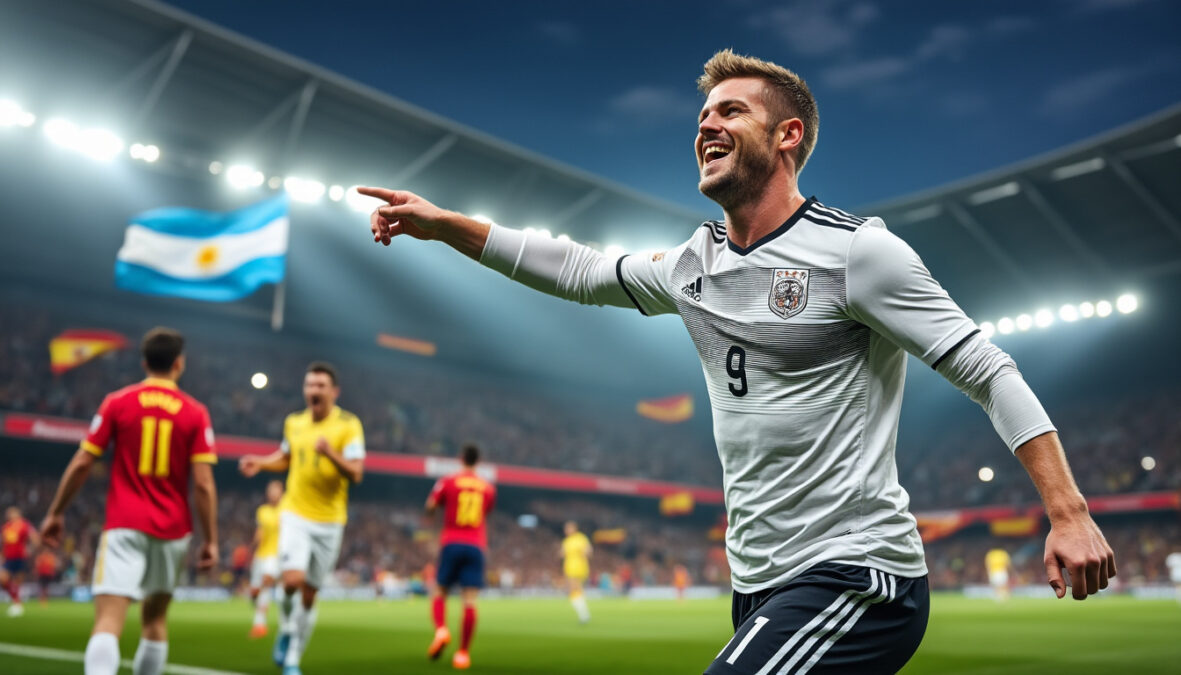
Toni Kroos celebrates Spain’s victory
The former German midfielder, Toni Kroos, expressed his enthusiasm on social media following Spain’s victory in the World Cup final against Argentina. While the Argentine team faced setbacks with discipline issues and a questioned tactical approach, Kroos stated that the true winner of this match was football itself. This victory marks a decisive moment in the history of global football, solidifying Spain’s place as one of the great powers of the game.
An exciting final in New York
Spain triumphed over Argentina in a match full of emotions, securing its second World Cup title. The clash, which took place in New York, was marked by Spanish dominance throughout regulation time. Luis de la Fuente’s men were able to impose their rhythm, completely stifling their opponents, who failed to register a single shot on target. Unfortunately for Argentina, Enzo Fernández was sent off for a second yellow card, a key turning point that altered the match’s dynamics. Ferran Torres, by scoring the decisive goal in the 106th minute, allowed Spain to seal its fate.
Kroos throws a sharp jab at Argentina
Shortly after the final whistle, Toni Kroos did not hesitate to convey his message on social media. The latter, less impressed by Argentina’s defensive tactics and aggressive approach, candidly declared: “Football has won.” This phrase, laden with implications, raises questions about how the Argentine team approached this final. With criticism mounting regarding their discipline and tactics, Argentina must now engage in deep reflection to prepare for the future.
The new world order of football
With this significant victory, Spain confirms the emergence of a talented new generation, often referred to as “La Roja.” This success is all the more remarkable as it caps off a Euro-World Cup double, placing Spain at the top of global football. In contrast, Argentina, after having been champions, must now face a harsh reality and subject itself to a thorough analysis of its shortcomings. Coach Lionel Scaloni is perpetually expected to rebuild a team that had won the trust of its supporters but now struggles to maintain this level of excellence.
The upcoming challenges for Argentina
The incessant criticism regarding Argentina’s discipline now fuels numerous questions about the future of the national team. A reconsideration of their tactical approach is necessary as a rebuilding process is inevitable. The disappointment over failing to defend their title should primarily serve as a catalyst for improving future performances. This process will require not only technical adjustments but also a strengthening of the team’s morale before the start of the next qualification cycle.
This situation echoes the challenges that many clubs and national teams must overcome to maintain their position at the highest level. For some, this may even lead to shifts in strategic decisions, an evolution that can also be observed in other sectors, such as performance analysis or consideration of the impact of social networks.
In summary, this World Cup final was not only a turning point for Spain, but it also opened a new chapter full of uncertainties for Argentina. The future of global football could well evolve with unexpected dynamics, inspired by victories like Spain’s and the challenges faced by iconic teams.


