
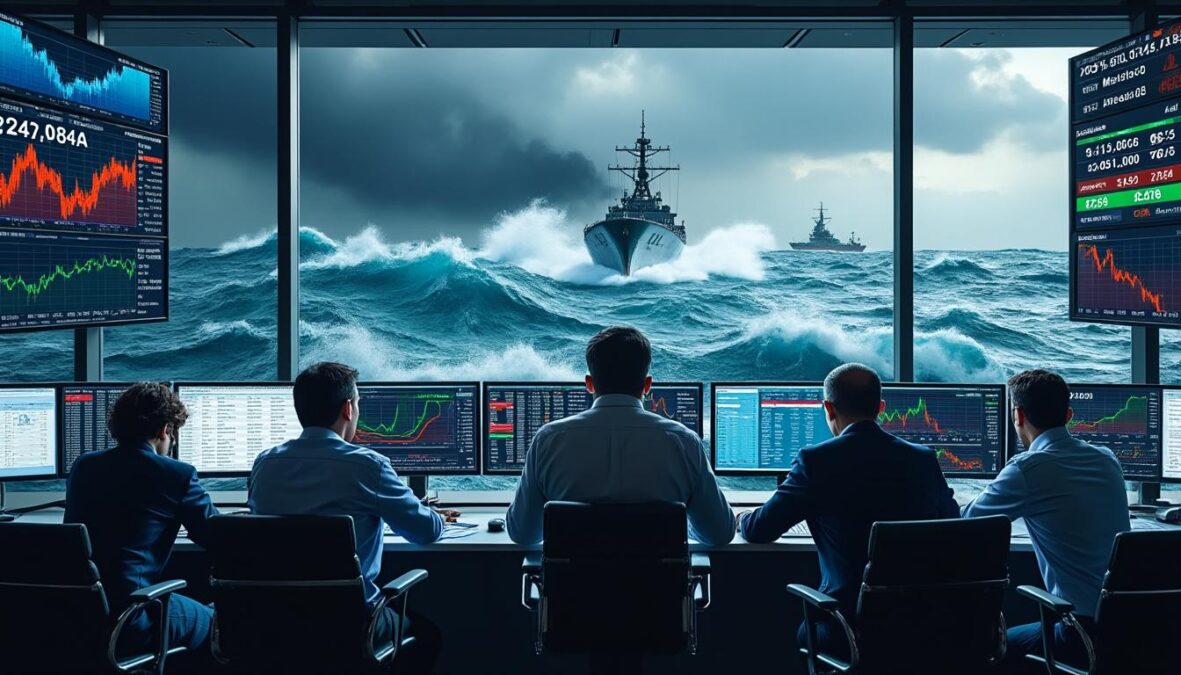
The recent tensions in Iran and the closures of the Strait of Hormuz have profoundly impacted the global financial landscape, prompting Wall Street to reconsider its strategies. Financial institutions are increasingly turning to “tokenized” markets that operate 24/7, in response to the challenges posed by geopolitical crises and the need for constant liquidity. This context has paved the way for the emergence of perpetual futures and the tokenization of assets, thus transforming how trading takes place in financial markets.
Tensions in Iran and Their Impact on the Financial Market
The escalating tensions in Iran have been illustrated by recent events, such as American and Israeli military strikes on nuclear facilities. These announcements, often made over the weekend, coincide with the closure of traditional markets such as the CME and NYMEX. This has pushed market participants to look for alternatives, such as decentralized platforms, where perpetual contracts on oil, gold, and silver continue to evolve without interruption.
Wall Street and the Monetization of Digital Assets
In an environment where time is a critical factor, the ability to trade assets at any moment becomes paramount. Major financial firms on Wall Street, including multi-strategy and macroeconomic funds, have realized that blockchain-based structures can provide solutions to common operational problems encountered within traditional contracts. According to Iggy Ioppe, Chief Investment Officer at Theo, this shift towards round-the-clock operation is no longer just an option but a structural necessity.
The Advantages of Tokenized Markets
Tokenized market environments enable instant settlement, thereby removing the constraints related to the expiration dates of traditional contracts. This is particularly relevant during major events, such as the closure of the Strait of Hormuz. Traditional markets, unable to respond in real-time, give way to those governed by the blockchain, where transactions can be executed on demand, ensuring that supply and demand are always met.
The Implications for Investors and Institutions
New trends are prompting financial institutions to partner with technology companies, such as the British bank Standard Chartered, to develop new financial products. This transition is not just about a technological upgrade, but also reflects a fundamental shift in market dynamics. Geopolitical crises, increasingly frequent over the weekend, underscore the importance of having reliable and flexible trading mechanisms.
Concrete Examples of the Impact of the Tokenized Market
The immediate market reaction following tensions, such as those on February 28, clearly shows the role of crypto platforms in maintaining liquidity. As Andrei Grachev, Managing Partner at DWF Labs, points out, the rapid shift of traders to online services for trading commodities during these periods of uncertainty demonstrates the growing need for infrastructures that can operate continuously. Exchanges are now possible despite the closure of traditional exchanges.
Conclusion on the Future of Financing Markets
Tokenized markets thus provide an adequate response to the need for uninterrupted and secure operation in the face of evolving global events. With the convergence of these new technologies and traditional trading practices, the future of the markets seems to be heading towards a deep integration of blockchain-based solutions, establishing a new standard in terms of access and financial transparency. Institutions that adapt quickly could benefit from a significant competitive advantage in this new dynamic and demanding environment.


