
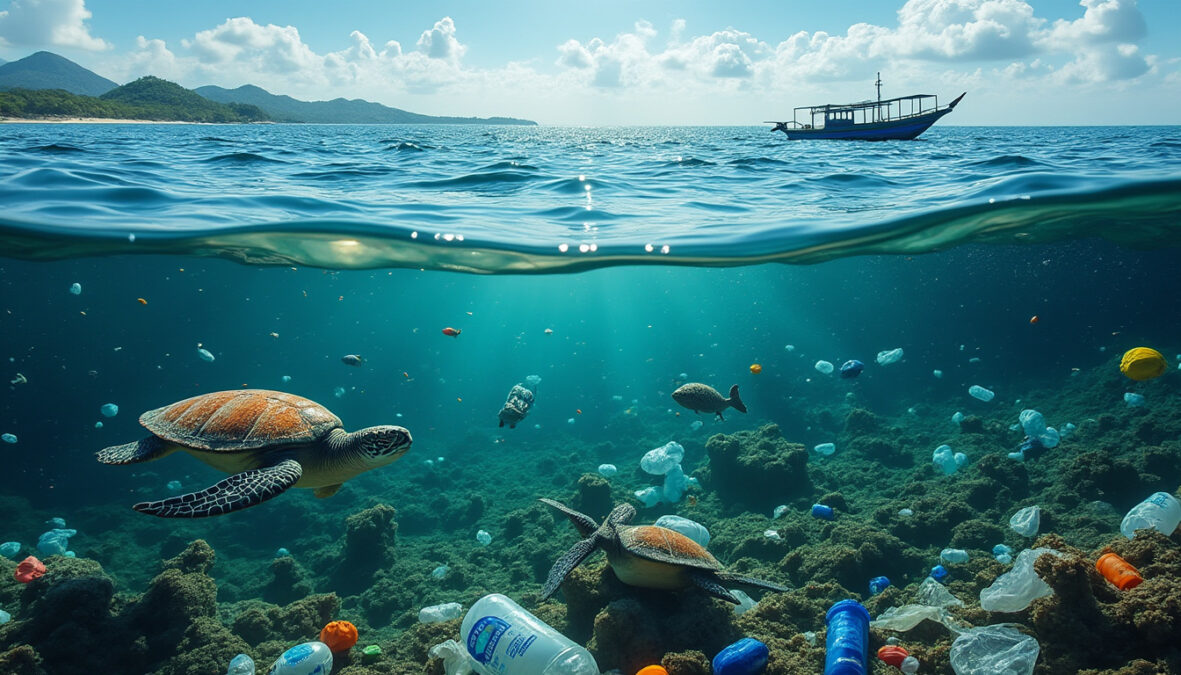
Plastic waste in our oceans represents a major environmental issue on a global scale. Among the countries often cited as responsible for this pollution, the Philippines, Malaysia, and India particularly attract attention due to alarming figures regarding their contribution to marine plastic debris. Yet, behind these data lie more complex realities than one might think.
An alarming plastic pollution
A study conducted in April 2021 revealed that the Philippines was the country generating the most plastic waste dumped into the ocean, with an estimate of 356,371 tons per year. This situation gives them a responsibility of 8.8% of their total plastic production. India and Malaysia follow with 126,513 tons and 73,098 tons per year, respectively. In total, these three nations contribute 555,982 tons of plastic to the seas each year, a figure that has sparked outrage and criticism on social media.
A more nuanced perspective
However, it is crucial not to exclusively attribute the responsibility for this waste dumping to these countries. While the situation is concerning, the published statistics have not been updated in five years and reflect a partial image. Indeed, most of the plastic pollution observed in the oceans does not solely come from these nations but results from a global accumulation of irresponsible behaviors and faulty waste management practices.
The issues of plastic production
The production of plastic in these countries is booming, both for economic reasons and increasing consumption. The impact of this growth is accompanied by a lack of appropriate waste management systems, leading to the release of waste into the sea. In other words, marine pollution cannot be entirely attributed to their individual actions but is part of a complex system involving environmental, socio-economic, and political factors.
Solutions on the horizon
Initiatives are beginning to take shape to address the challenges posed by plastic waste. Raising awareness among local populations, improving recycling infrastructure, and international cooperation are some of the avenues to explore. These efforts could help reduce the impact of marine pollution and restore balance in marine ecosystems threatened by plastic waste.
Conclusion: a collective responsibility
In summary, although the figures identify the Philippines, Malaysia, and India as major contributors to marine plastic pollution, it is essential to recognize that this issue transcends the borders of these nations. A collective and responsible approach on a global scale is crucial to combat this environmental scourge.


