
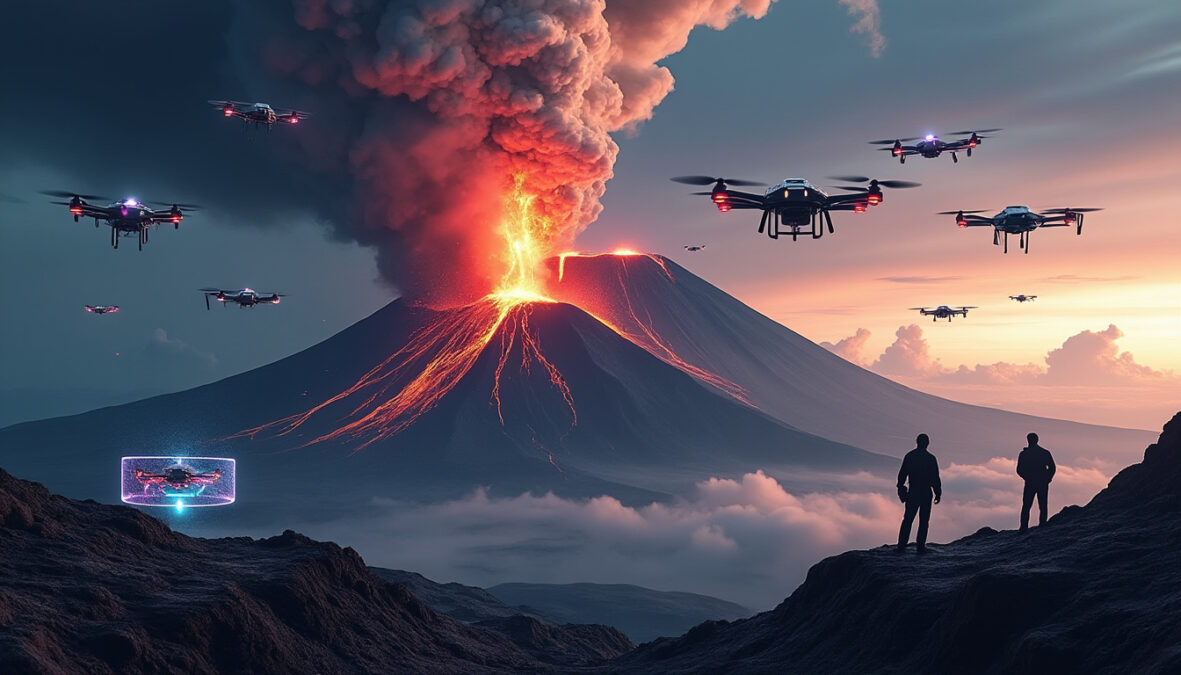
The monitoring of volcanic eruptions is a constantly evolving field, especially in Indonesia, where the volcano Anak Krakatoa is at the center of many concerns. Thanks to advancements in artificial intelligence, detection and warning methods regarding eruptions are experiencing a true revolution. This technology, which has the potential to transform the way we observe and anticipate natural phenomena, offers new perspectives for the safety of populations living near volcanoes.
The challenges of volcanic monitoring in Indonesia
Indonesia, located on the Ring of Fire in the Pacific, is one of the most volcanically active regions in the world. The volcano Anak Krakatoa, in particular, has garnered considerable attention since its formation after the catastrophic eruption of 1883. Nearby homes, as well as infrastructures such as roads and ports, are constantly threatened by surprise eruptions. The need for accurate and real-time information to minimize risks and protect residents is therefore paramount.
Artificial intelligence and eruption detection
With the emergence of artificial intelligence, volcanology experts have access to more sophisticated tools to detect signs of impending eruptions. Thanks to algorithms capable of analyzing large amounts of data, including satellite images, seismic readings, and volcanic gas recordings, scientists can now more accurately predict the behaviors of volcanoes. Drones equipped with high-definition cameras and sensors also allow for the observation of hard-to-reach areas and the collection of essential data for analyzing volcanic activities.
The benefits of enhanced monitoring
The implementation of artificial intelligence in monitoring the volcano Anak Krakatoa not only allows for anticipating eruptions but also enables quicker responses in emergencies. For example, when an increase in volcanic activity is detected, authorities can immediately alert the at-risk population, potentially saving lives. Additionally, AI-based systems can provide precise recommendations on evacuation routes, thereby facilitating the evacuation of threatened areas.
Case study: a past eruption and its lessons
During a recent eruption of Anak Krakatoa, impressive videos circulated on social media, showing the volcano spewing massive columns of lava. These images, while captivating, did not come from a verified source and were actually generated by artificial intelligence. This raises concerns about misinformation and the importance of relying on accurate information during critical situations. The ability of artificial intelligence to create realistic content makes it more difficult for the general public to distinguish between true and false, further emphasizing the need for rigorous and reliable monitoring.
Toward a deeper integration of artificial intelligence
As artificial intelligence technologies continue to advance, Indonesia has a unique opportunity to integrate them into advanced monitoring systems. Collaborations between government, scientists, and tech companies are essential to develop effective actions against volcanic threats. By studying the implications of artificial intelligence in the field of volcanic monitoring, the country can not only improve the safety of its citizens but also become a model for other nations facing similar challenges.
Conclusion on the future of volcanic monitoring
The monitoring of the volcano Anak Krakatoa and other Indonesian volcanoes is beginning to benefit from the incredible advancements offered by artificial intelligence. This development is not only promising but also represents a necessity to ensure the safety of populations living near active volcanoes. How this technology will be employed in the coming years remains a question to explore. However, it is certain that vigilance and innovation will be essential to navigate this new era of volcanic eruption monitoring.


