
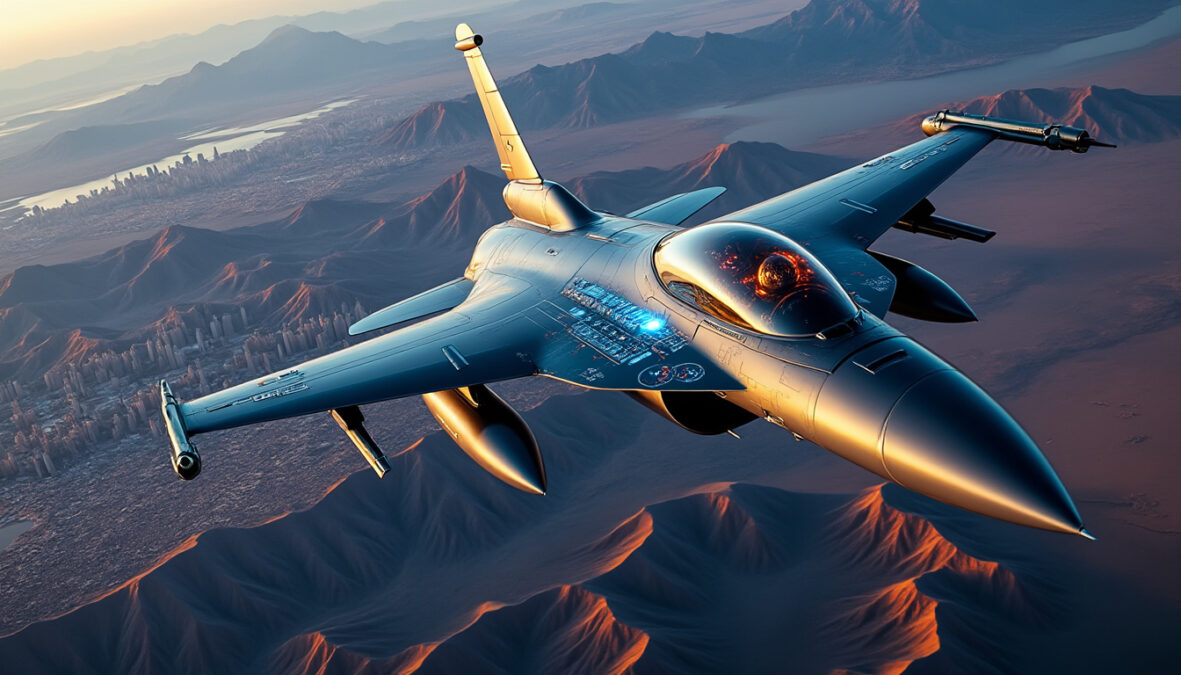
In the United States, a significant advance in the military field has been achieved with the flight of an F-16 piloted by artificial intelligence. This demonstration led by the Defense Advanced Research Projects Agency (DARPA) reveals not only the growing technological capabilities in combat aviation but also raises important ethical and legal questions regarding the autonomy of weapon systems. This new development could redefine future aerial combat while prompting reflection on the implications of using autonomous weapons.
A major advance for military technology
On July 16th, DARPA announced that it successfully conducted a test flight of a modified F-16, autonomously piloted by an artificial intelligence system. This project is part of the VENOM (Viper Experimentation and Next-generation Operations Model) program, which aims to develop autonomous air combat technologies. During these tests, the aircraft demonstrated its ability to interact in real-time with flight commands as well as with various mission systems.
A human pilot still on board
Although the aircraft is piloted autonomously, it is important to note that a human pilot remains on board. The pilot’s mission is to supervise the functioning of the AI system and intervene if necessary. This hybrid approach aims to ensure human oversight while testing the autonomous capabilities of the aircraft in a real operational context. However, the details concerning the precise duration of autonomous piloting and the maneuvers performed during the test have not been disclosed by military authorities.
Preparing for future aerial confrontations
According to General James Valpiani of DARPA, these tests represent a crucial step for the development of autonomous air combat systems. The context of modern confrontations requires quick responses and analysis of complex data, particularly during engagements beyond visual range. In this context, artificial intelligence could act as a decision-making assistant, thereby increasing the effectiveness of crews and improving coordination among multiple aircraft. Ultimately, this could allow pilots to command squadrons of autonomous aircraft while maintaining human supervision.
A technological revolution that raises ethical questions
Although this technological advance is welcomed as a success by the military sector, it also raises numerous questions about the involvement of AI in armed conflicts. The possibility of entrusting complex tactical decisions to a machine raises concerns. In the event of an error, misidentification of a target, or collateral damage caused to civilian infrastructure, where is the line between the responsibility of algorithms and that of the military?
The legal and moral dilemmas posed by AI
Many strategy experts point out that autonomous systems pose considerable legal and moral challenges. The central question remains how to establish clear limits regarding the use of technology while respecting ethical principles. A recent study by the Mediterranean Foundation for Strategic Studies questions the ability of Western democracies to integrate these innovations without falling into naivety, thereby offering a strategic advantage to competing nations.


