
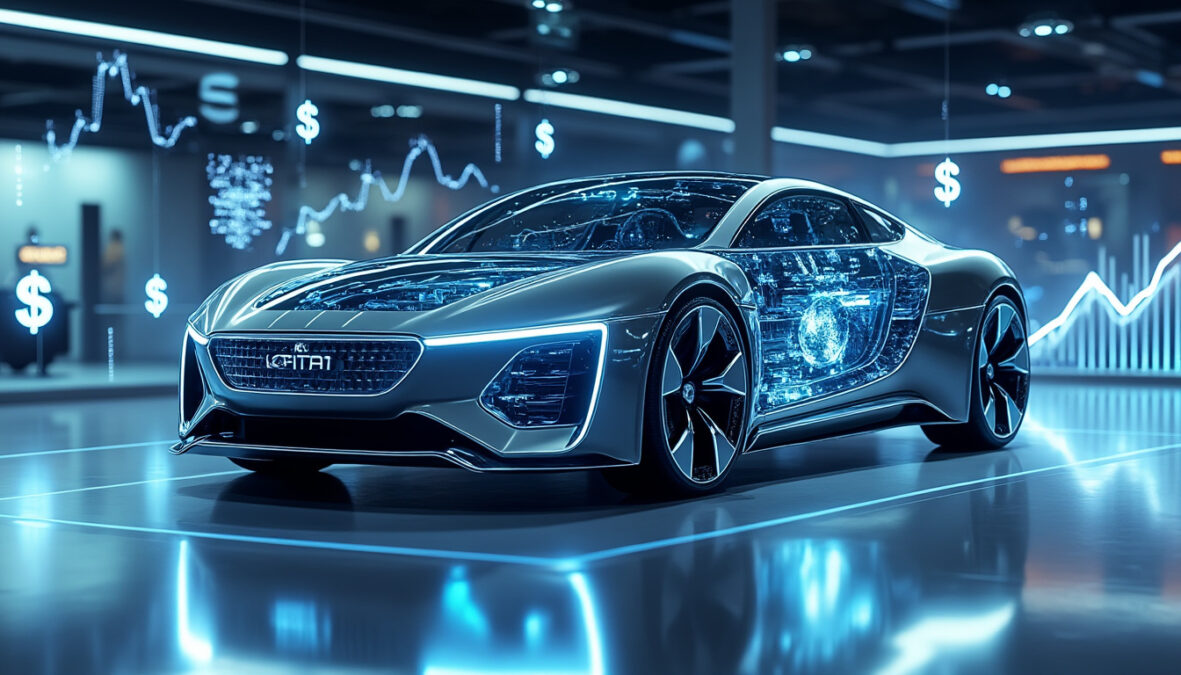
The revolution of artificial intelligence (AI) does not only impact our daily lives and our way of working, but it also has significant repercussions on the automotive sector. As the demand for essential electronic components for modern vehicles increases, manufacturers’ choices in electronic equipment could considerably raise the cost of your future car. This article explores how AI influences the automotive market, focusing on the tensions surrounding electronic components and their impact on prices.
The increased demand for electronic components
With the emergence of artificial intelligence technology, many modern car features rely on sophisticated electronic components. Elements such as DRAM (dynamic random-access memory) play a crucial role in the functioning of advanced driver-assistance systems and other digital devices. However, the demand for these components does not only come from the automotive sector. Data centers, which support AI infrastructures, are also vying for these resources, leading to fierce competition for electronic chips.
The hierarchy disrupted by digital players
Tech giants, particularly those grouped under the GAFAM, are increasingly directing their investments towards the AI sector. As a result, these companies prioritize the acquisition of electronic chips, often at significantly higher prices. Automakers, for their part, find that their access to these essential components is threatened as they integrate them into increasingly high-tech cars. Consequently, car brands must compete not only with their traditional rivals but also with a new market segment that values chips at an previously unmatched level.
The impact on electronic component prices
According to reports, the prices of certain types of DRAM could see dramatic increases, sometimes reaching rises of 400% between September 2025 and January 2026. This rising trend could fuel a vicious cycle, where price increases create additional pressure on automotive manufacturers, consequently driving up production costs and, thereby, vehicle sale prices.
The concentration of the electronic chip market
The DRAM market is already ultra-concentrated, dominated by three players: Samsung, SK Hynix, and Micron. These companies control nearly 90% of the DRAM supply dedicated to the automotive sector, allowing them to influence prices according to the demand from various sectors. In such a context, even though major automotive groups like Volkswagen assure that they are keeping the situation under control, market reality may prove them wrong in the medium term.
The adaptation strategies of manufacturers
In the face of these challenges, automakers are trying to adapt. While Stellantis announces a reorganization of its purchasing strategy and bets on a return to a more balanced market by 2028, others like Renault choose to continue investing to increase their production capacities, aware that adapting to the rapid evolution of technology is essential. However, the risk remains, particularly due to the use of aging technologies such as DDR4, which may no longer be available on the market in a few years.
An uncertain future for car prices
As the demand for digital features in cars continues to grow, the risk of cost increases for consumers is becoming more palpable. Due to heightened competition for electronic components and the strategic choices of manufacturers, car prices could come under upward pressure. The combination of increasing dependence on AI and the chip crisis could redefine the automotive landscape in the years to come.
For broader reflections on the impact of artificial intelligence in various sectors, you can read this article on the innovative transformation of communities in the era of AI or explore how AI is shaping our professional environment here.


