
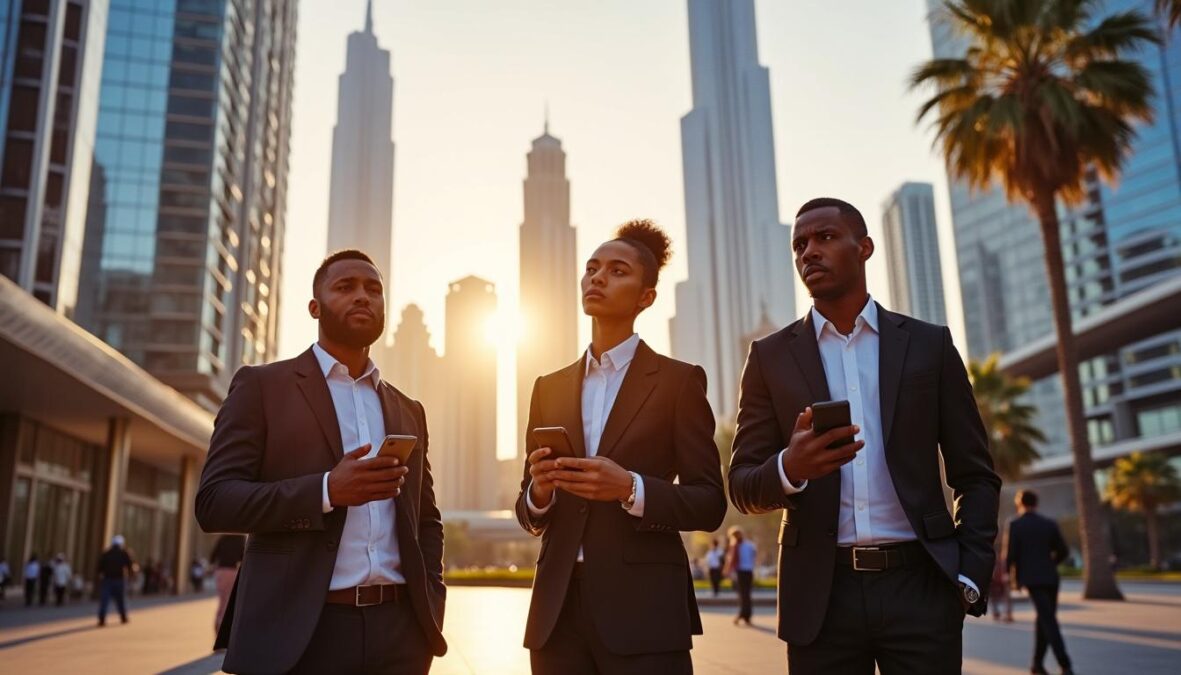
The situation in Dubai, where geopolitical tensions related to the recent conflicts in the Middle East are being felt, leads us to question the behavior of the influencers present there. After expressing their concerns about safety in the region, some of them seem to adopt a more favorable discourse towards the host country, raising questions about the motivations behind this change. Is it a desire to avoid financial sanctions imposed by local authorities? This article explores the dynamics surrounding the messages disseminated by these influencers across social media.
Dubai: a tense environment
The Gulf region, particularly Dubai, is experiencing moments of uncertainty following military strikes by Israel and the United States against Iran. Returns to France for expatriates, many of whom are French residents in Dubai, are expected to be delicate and gradual. The fear of a broader conflict has already led to calls for help on social media from famous influential figures, such as Maeva Ghennam.
Reassuring messages in response to concerns
Initially, several influencers expressed their fear and called for support from France. However, within a few hours, the tone changed radically. Many influencers began to publish reassuring messages, stating that they felt safe and supported Dubai. For example, figures like Nabilla or Caroline Receveur relayed a message showing their attachment to this country, accompanied by a photo of the Emirati flag and a message proclaiming their choice of residence.
A new strategy to avoid sanctions
This turnaround in discourse can only be explained by external pressures. The Dubai police recently reminded via an announcement on social media that any dissemination of false information is strictly prohibited and could lead to heavy penalties, ranging from fines to imprisonment. Influencers likely realized that taking a stand against the local regime or expressing doubts about the safety of their situation could expose them to financial and legal consequences.
The consequences of controlled speech
The situation raises ethical questions regarding the freedom of expression of influencers in Dubai. Testimonials from internet users report phone checks by the police, aimed at spotting content likely to provoke panic among the population. A climate of distrust has settled in, and some influencers have even been asked to clarify their positions. It is in this context that critical voices, such as influencer Bastos, have mentioned the lack of freedom of expression, describing the situation as an obligation to publish positive messages to avoid trouble.
The dynamics of social media in times of crisis
Beyond concerns related to sanctions, the interaction of influencers with their audience plays a vital role in the perception of ongoing events. Their messages influence not only their public image but also the opinion of their followers regarding the situation in Dubai. The communication strategy adopted by these influencers in response to geopolitical tensions illustrates the significant impacts that social media can have in crisis contexts. Platforms like Bereal thus become tools through which they seek to maintain their popularity while avoiding negative repercussions.
This shift in tone among influencers in Dubai illustrates not only a response to personal and professional fear but also a strategic calculation in light of the consequences that an imprudent discourse could have in such a delicate environment. Their recent messages resonate not only with their daily lives but also reveal the challenges of free expression in contexts of political tension.


