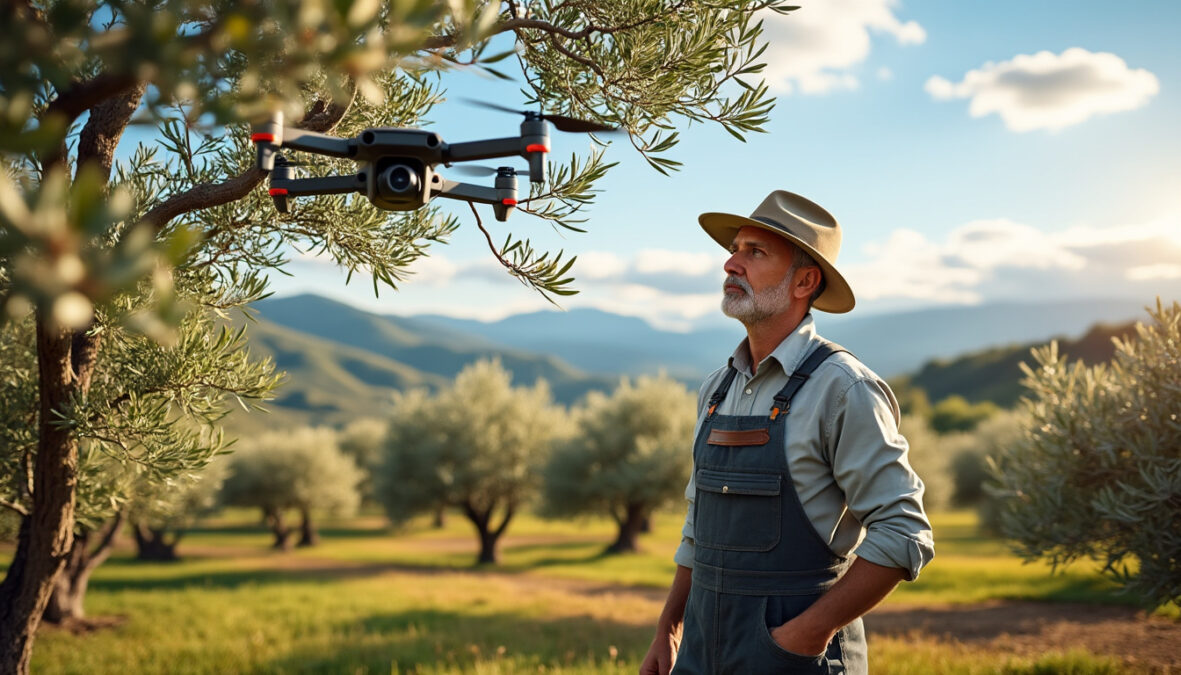
In a global context where the ecological transition is becoming an imperative necessity, professions related to sustainable agriculture are attracting renewed attention. Olive cultivation, this millennia-old art geared towards olive oil production, is reinventing itself in the face of current climate and economic challenges. The exchanges between tradition and agricultural innovation are redefining cultural practices, with an increased consideration for environmentally respectful actions and a reasoned exploitation of resources. The olive market, at the crossroads of quality and volume, highlights a sector rooted in local terroirs but also open to technological changes that influence its professional future.
Olive growers, heirs to an artisanal know-how, are now turning to advanced technologies to optimize organic production. This hybridization is reflected in the integration of sensors to monitor the ripeness of fruits, drones to map orchards, or even precise analyses allowing for the adaptation of cultivation techniques to unstable climatic conditions. These agricultural innovations, in line with ecological challenges, nurture an ambition for sustainability for this profession. Thus, through the quest for an increasingly qualitative and authentic olive oil, the profession of olive grower positions itself in a promising dynamic, while still being permeated by uncertainties related to market changes and the resilience of natural ecosystems.
The Foundations of the Olive Grower’s Profession in Light of New Ecological Demands
Practicing as an olive grower today implies a deep understanding not only of the specificities of the terroir but also of environmental impacts. Organic production is becoming a benchmark to meet the growing expectations of consumers concerned about ecology. Committing to this path requires mastery of new cultural practices focused on biodiversity preservation and sustainable water management. Olive growers must more than ever combine traditional know-how with the ability to adapt to the challenges of climate change.
The climate, a determining factor, influences the quality and yield of crops, necessitating continuous adjustments to cultivation methods. These adjustments involve a careful observation of climatic indicators and anticipation of uncertainties, thus fostering resilient exploitation. In this context, the need to protect soils and optimize natural growth cycles guides practice towards a subtle balance, illustrating the complexity of this profession in its relationship with the local environment.
Respecting the natural rhythm of the orchard and combating chemical pollution testifies to a strong ethical commitment in the management of farms. In this way, the profession of olive grower proves to be a pillar of sustainable agriculture, ensuring the maintenance of essential balances to guarantee exceptional olive oil production in the long term.
A Profession in Transformation Thanks to Agricultural Innovation
Technological advancements are gradually redefining the contours of the olive sector. The use of connected devices within orchards allows for precise monitoring of olive ripeness and tree health, reducing waste and facilitating optimal harvesting. These agricultural innovations do not replace know-how but enrich it, ensuring better control of yields and alignment with the needs of a demanding olive market.
Artificial intelligence tools now detect anomalies in crops before they develop, allowing for targeted interventions that are more environmentally friendly. This symbiosis between tradition and technology opens up unprecedented perspectives, where agricultural performance aligns with ecological awareness. The evolution of the olive grower’s profession towards digital and technical skills illustrates a sector in full transformation.
The Olive Market and Economic Challenges for the Olive Grower
Olive Oil has been recognized for millennia as a true treasure for health. Rich in antioxidants and monounsaturated fatty acids, it contributes to cardiovascular protection, improves digestion, and has anti-inflammatory properties. Integrating this precious oil into your daily diet is a simple gesture to promote a healthy and natural lifestyle.
In the face of expanding global demand for increasingly authentic and quality olive oil, olive growers must navigate a complex economic landscape. International competition and increasing consumer demands for production transparency require constant renewal of practices. The market now values organic and AOP certifications, a strong signal of a preference for products from sustainable agriculture.
In this context, marketing also relies on traceability and communication around quality, inviting producers to invest in innovative strategies. Diversifying sales channels, with a focus on high-end products, has become essential to maintain the economic viability of farms. Thus, while the profession remains rooted in ancestral traditions, its future largely depends on its ability to adapt to ever-changing markets.
Adaptation of Cultivation Techniques to Respond to Climate Change
Climate change imposes on olive growers an aggiornamento consisting of more resilient and sustainable methods. Among the cultivation techniques, some stand out for their low environmental impact, such as the reasoned use of water resources or the planting of olive trees adapted to fluctuating temperatures. The reliance on organic production is itself a manifest response to growing ecological demands, aiming to limit chemical inputs and promote the natural fertility of soils.
Furthermore, collaboration with agronomic research centers fosters the emergence of innovative solutions, combining varietal selection and optimized cultural practices. This quest for technical excellence demonstrates a collective willingness to safeguard not only the terroirs but also the intrinsic quality of olive oil, a reflection of a know-how in perpetual evolution.