
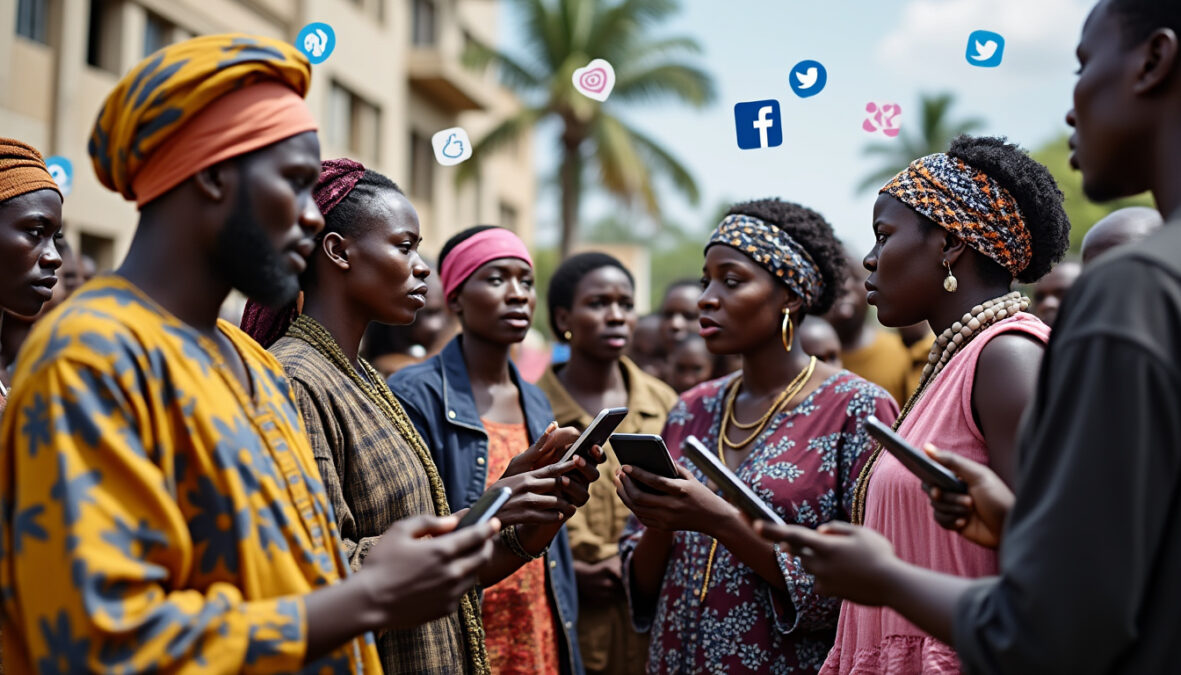
The recent context in Mali has given rise to an unprecedented digital conflict, where pro-excision activists oppose feminists from across West Africa. Triggered by the release of a shocking video showing the excision of a little girl, this mobilization caused such a shockwave that it quickly transcended borders, revealing deep social, cultural, and legal issues surrounding the practice of female genital mutilation (FGM).
A video that changes everything
The situation escalated significantly with the release of a disturbing video filmed in a rural area of Mali. The footage, showing a little girl held in a basin while her genitals are amputated, elicited an immediate reaction from feminist activists. The video was shared on social media, triggering a massive mobilization that challenges the tradition of excision in a country where, according to the latest data, 89% of women aged 15 to 49 have already faced it.
Mobilization and social media
The outrage provoked by this clip prompted many feminists, such as Tabara Touré, to make their voices heard on social media. They called upon the Malian authorities to remind them that excision is not merely a cultural issue, but also an unacceptable violence that must be acknowledged, particularly in light of new laws such as the 2024 Penal Code, which condemns sexual assaults.
Conservative responses
In response to this mobilization, pro-excision voices were also heard, leading to replies from certain businessmen and religious figures who generated pro-excision campaigns on social media. These posters, which publicly support the practice while brandishing slogans like “Yes to excision: let’s protect the girls,” reflect a conservative resistance that seeks to uphold tradition.
A cross-border digital war
The campaign against excision is now a national debate that transcends borders, uniting feminists across West Africa. Thanks to hashtags like #OneLawOneFaithOnePeople, activists from Guinea, Senegal, and Ivory Coast are joining forces to keep the pressure on governments and to raise public awareness. How can a digital movement influence an issue so deeply rooted in tradition? The answer lies in the power of social media.
Coordinating the fight and identifying perpetrators
Anti-excision activists are also pursuing a goal of identifying those promoting pro-excision messages. Through hard work, they are trying to expose the individuals behind these offensives, whether they are doctors or religious figures who legitimize the practice through religious discourse. This strategy of targeting influencers proves effective, causing some to delete their controversial posts after being confronted with the consequences of their words.
Authorities facing their responsibilities
The Malian government appears caught in a dilemma, hesitating to take concrete action against excision for fear of generating tensions with conservative groups. The state’s reactions, ranging from worrying silence to actions aimed at appeasing religious leaders, illustrate the embarrassment of leaders confronted with a topic that could foster divisions within society. The pressure from international organizations further complicates the situation, highlighting governance issues and human rights.
A fierce political and social debate
This digital conflict over female genital mutilation exemplifies the cultural and religious divides that exacerbate an already polarized debate. The battle between tradition and modernity, along with the political implications of discussions concerning FGM, challenge the balance of power in Mali and Guinea. The challenge is to navigate between the expectations of funding agencies and those of conservative societies while seeking to advance women’s rights.
In this context, it is clear that the fight against excision transcends mere local dynamics. As Tabara Touré states, it is necessary to understand that FGM does not recognize borders and that it is vital to unite on a broader level to combat this practice. Digital mobilization thus becomes a fundamental tool for activists, drawing attention to this crucial issue while calling for collective awareness.


