
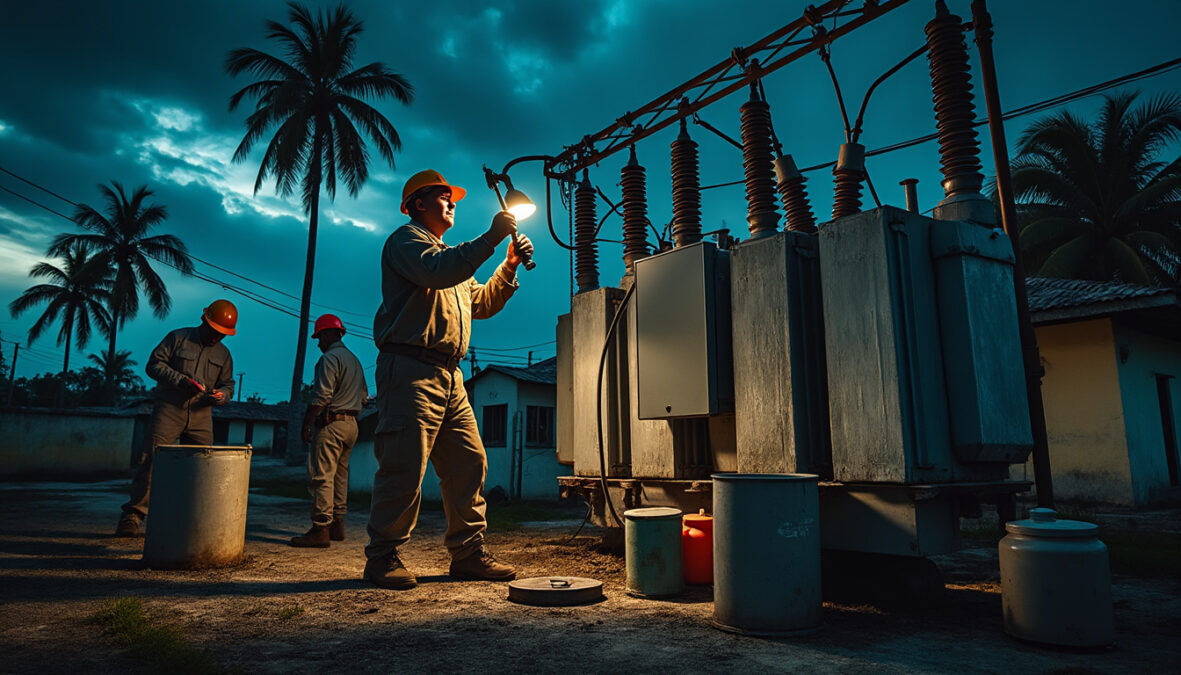
The Cuban electrical network is going through tumultuous periods with recurring widespread power outages. Subjected to structural challenges and a fuel shortage exacerbated by an oil blockade, Cuba is desperately seeking to restore its electrical system. For more than a year, the population has been enduring incessant power cuts, making the situation critical and provoking growing anger among the inhabitants.
Widespread outages and network recovery
On July 12, 2026, Cuba faced its fourth general outage in less than six months and the ninth since the end of 2024, affecting its entire electrical network. The national electricity company announced that the system was reconnected at 6:30 AM, after more than 24 hours of struggling to restore it. Despite significant efforts by engineers, the search for solutions has become even more complex due to the lack of fuel, making the reconnection process long and difficult.
The impact of outages on the population
Recent events have increased stress within the population. Power cuts can last up to thirty hours in the capital, Havana, where over 1.7 million residents are directly experiencing the effects of this instability. Pedro Martinez, a 63-year-old courier, expressed the growing helplessness of the inhabitants, highlighting that the level of stress is “unsustainable” with little hope for improvement in the short or medium term.
The aging of infrastructure and fuel shortages
The Cuban electrical infrastructure is suffering from severe aging, while energy production is continuously threatened by fuel shortages. The failure of thermal power plants contributes to this crisis, as many facilities are unable to operate reliably. The oil blockade imposed by Washington since January 2026 has worsened the situation, preventing any delivery of essential fuel to operate the generators.
Recovery efforts and ongoing challenges
The Antonio-Guiteras power plant, Cuba’s main source of electricity, is often shut down due to regular breakdowns and maintenance needs. Its commissioning can provide a brief respite from outages, but the stability of the network remains precarious. Even though more than 65% of households in Havana regained electricity during the last restoration, rolling blackouts continue to weigh heavily on daily life.
A future to consider
In the face of this dramatic situation, voices are rising to call for fundamental reforms and the introduction of sustainable solutions. Several initiatives could be considered, such as the development of renewable energy technologies, which represent a viable future for stabilizing the electrical network. To learn more about these innovative proposals, you can read this article on green and renewable electricity efforts on Safig.fr.
The challenges ahead are many and will require not only a rapid response but also long-term solutions to pull the country out of the crisis. Recent developments, such as the creation of artificial intelligence capable of anticipating failures, could offer interesting avenues to strengthen the network and better manage future resources, a topic you can explore by reading this article on Safig.fr.


