
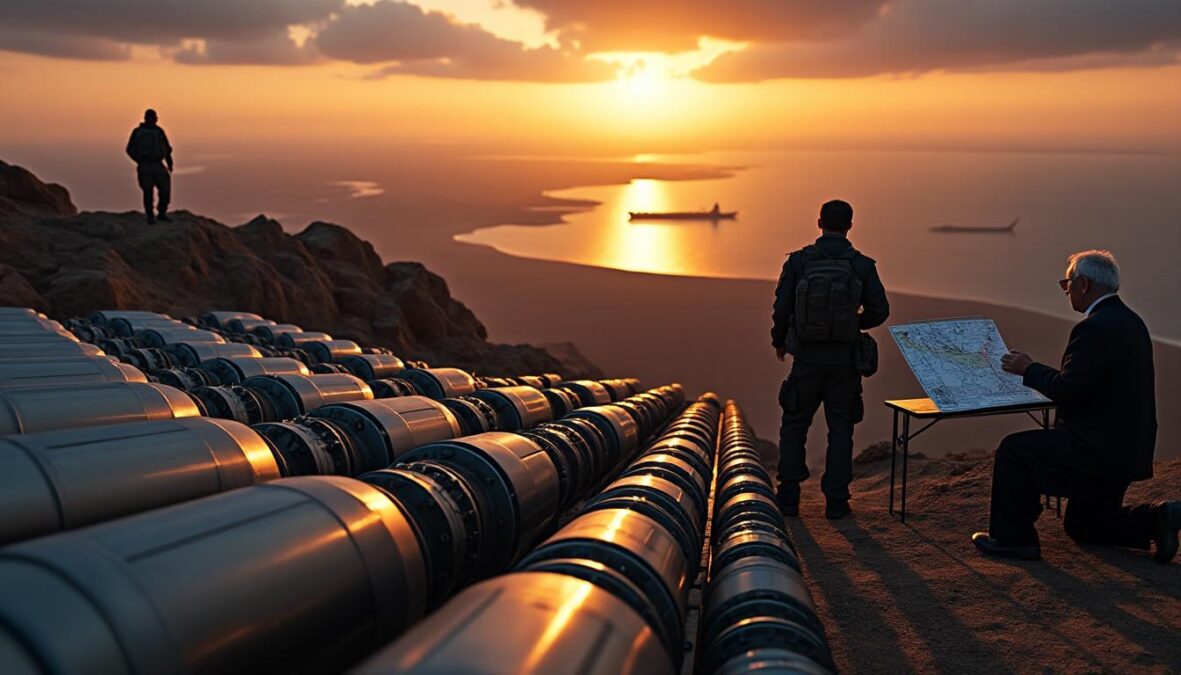
The current conflict in Iran raises numerous concerns around the halt of the military nuclear program, issues related to the Strait of Hormuz, and the crucial role of Hezbollah in the regional dynamics. In this tense context, Donald Trump has proposed unprecedented measures aimed at fostering a peace agreement. This article examines these various aspects, looking at the implications related to these diplomatic developments.
Conflict in Iran: halt of the military nuclear program
The ongoing conflict in Iran is exacerbated by international concerns regarding its military nuclear program. While the United States and other nations attempt to pressure Tehran into renouncing its nuclear ambitions, the situation remains critical. In recent discussions, it has been suggested that halting this program could be a key point for establishing sustainable peace. Iranian authorities therefore find themselves in a complex position, balancing the defense of their sovereignty against external pressures.
Issues at Hormuz
The Strait of Hormuz holds crucial strategic importance for global maritime transport, with nearly 20% of the world’s hydrocarbon production passing through this route. Since the onset of hostilities, Tehran has largely threatened to block this passage, a measure that would have catastrophic repercussions on the world economy. Recent statements from Iran, confirming that non-hostile ships could benefit from secure passage, reflect a willingness to de-escalate. However, these promises are tarnished by military strikes and Iran’s unwavering support for groups like Hezbollah, who operate as proxies in the region.
Role of Hezbollah
Hezbollah plays a decisive role in the geopolitical landscape of the Middle East, being both a military actor and a strategic ally of Iran. As a resistance group, it defends Tehran’s interests while conducting military operations against adversaries, such as Israel. Recent escalations of violence along the Israeli-Lebanese border illustrate Hezbollah’s determination to maintain pressure on the Israeli state. The increasing tensions in this region are fueled by Iranian support and Israeli strikes targeting the movement’s military infrastructures.
Donald Trump’s unprecedented proposals
In an effort to end the conflict, Donald Trump submitted a peace plan in 15 points to Iran, via Pakistan, which traditionally has good relations with both countries. This plan includes a one-month ceasefire during which Iran would review its obligations, while setting conditions such as halting support for regional militant groups. In return, the United States offers a lifting of international sanctions and support for a civilian nuclear program, which could represent a major turning point in U.S.-Iran relations. Trump’s optimism in the negotiations contrasts with the reality of military strikes and persistent tensions on the ground, illustrating the complexity of the issues at play.
These issues, blending diplomacy, military pressure, and internal political aspirations, form a highly volatile conflict terrain, where each act can have global consequences. The path to peace is fraught with obstacles, but the current proposals could offer a fragile hope for a peaceful future.


