
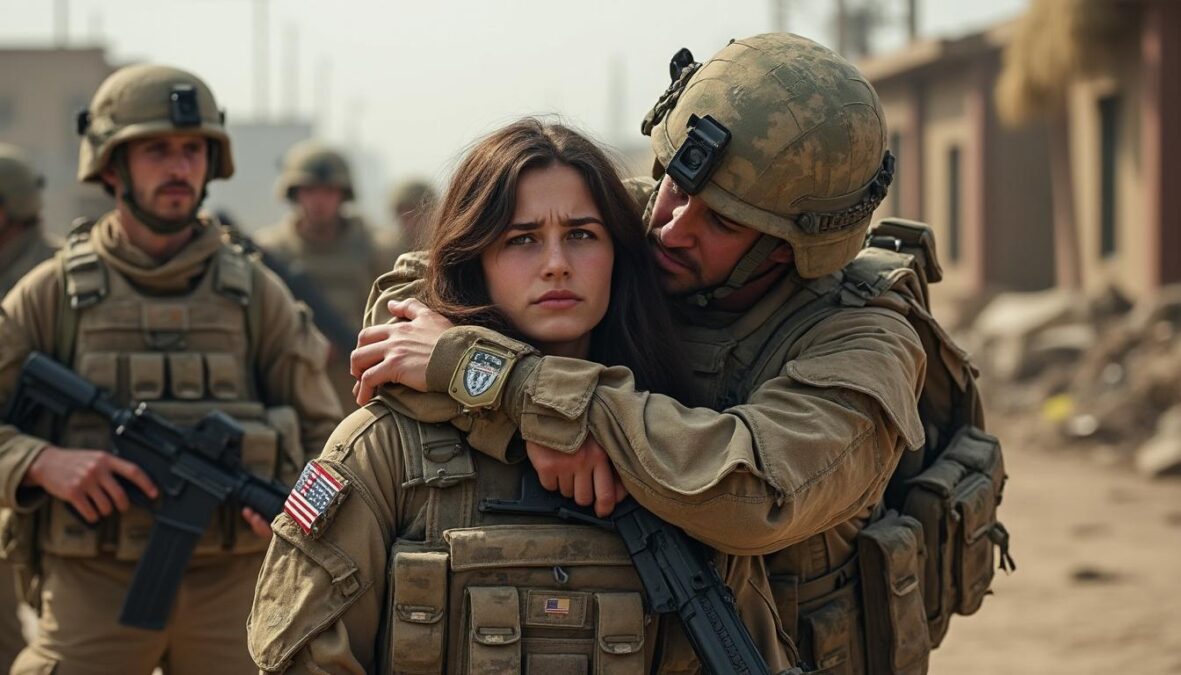
Since the beginning of the recent conflict in Iran, disturbing videos have circulated on social media, showing American soldiers in tears expressing their desire not to go to the front. However, these images are, in most cases, the result of artificial intelligence, thus fueling a debate on disinformation surrounding this conflict. This phenomenon highlights the dangers of modern technologies and the manipulation of images in a military context.
Videos created by artificial intelligence
Social media has been flooded with content relating to events in Iran, particularly since the Israeli-American strikes on Tehran on February 28. Among this content, several AI-generated videos depict American soldiers, often in tears, sharing personal distress testimonies. Such videos can contribute to creating a distorted image of the reality on the military ground.
Tears and moving testimonies
In one particularly viral video, a soldier confides: “My wife is sick, she is in the hospital right now, I wish I could be by her side, but I am here to protect this border.” Another soldier, also in tears, talks about his desire to return to his parents. These testimonies, while poignant, should be considered with caution, as their authenticity may be questioned.
Analysis of the videos and revealing elements
Upon examining the videos, some details may betray their artificial origin. For example, the “US Army” patch appears to be misplaced on the soldiers’ uniforms, an element that does not conform to real uniform standards. This inconsistency is often a telltale sign that the images may have been manipulated or created using artificial intelligence software.
A wave of disinformation
The trick videos, shared by pro-Tehran accounts, raise the question of the conscious decision to use such technologies to disseminate specific messages. While the war in Iran raises real concerns, this disinformation strategy can have serious consequences, influencing public opinion and masking the truth on the ground.
Impacts on public opinion and the perception of the conflict
The impact of these videos on public opinion is immense. By playing on the emotions of viewers, they can generate a wave of support or sympathy that is not based on factual foundations. This phenomenon underscores the need for increased education and vigilance against disinformation in the digital age.
As a result, to form an informed opinion on the Iranian conflict, it is essential to analyze information sources critically and not easily succumb to the emotions provoked by these touching yet potentially fabricated narratives.


