
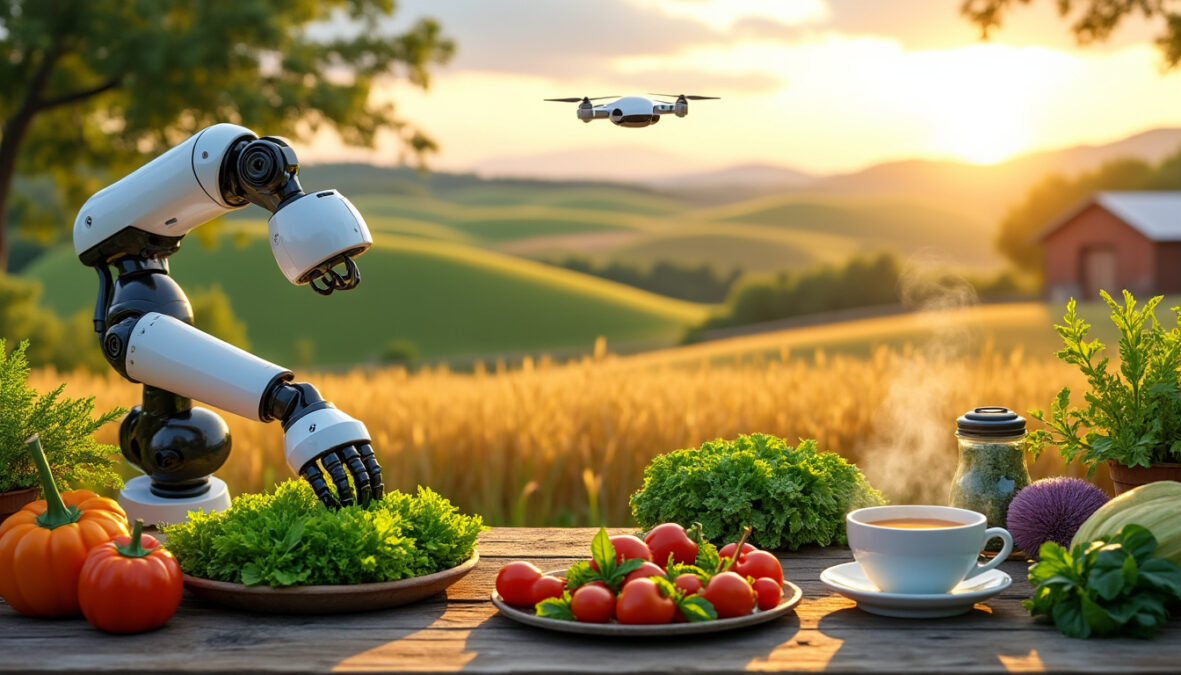
Artificial intelligence (AI) is often perceived as a vector for acceleration and efficiency, but it also raises profound questions about our relationship with time, particularly in agriculture. In this context, it is crucial to ask whether this quest for speed is detrimental to the health of ecosystems and our collective memory. This article explores how agriculture, traditionally associated with slowness, can provide reflection on the approach we should adopt in the face of AI.
A reflection on slowness
Familiarity with the agricultural world invites a true praise of slowness. Indeed, agricultural practices, to be sustainable and profitable, require time. For instance, when sowing a seed, one cannot hasten its growth. This raises the question: why this obsession with accelerating our processes at any cost with AI? As a proverb states: “It is vain to pull on the tail of a leek to make it grow faster.” This popular wisdom could well apply to the rise of AI in various sectors.
Concerns of religious authorities
Leading figures, such as Pope Francis, have emphasized the importance of taking a step back from techno-solutions. In his encyclical Laudato si’, he highlights the dangers of being seduced by technological growth, without considering collective well-being and humanity. In this reflection, Pope Leo XIV also added his viewpoint regarding human dignity in the era of AI in his work Magnifica humanitas. These discourses ground the debate on the necessity of integrating a time for reflection and a more human approach to new technologies.
The consequences of speed
It is evident that technological advancements, although beneficial, when applied hastily, can have disastrous consequences. In agriculture, the pursuit of speed has often led to choices that have backfired against nature. For example, excessive drainage of soils has resulted in drying out lands, making them unable to retain water, leading to flooding with every heavy rain. Nature, on its part, follows its own rhythm, a fundamental aspect highlighted by the beaver, which has managed to maintain the balance of water through its dams.
A lesson from the forests
Forests provide another relevant example. The intensive cultivation of species like spruces or Douglas firs, which grow quickly, represents a short-term solution but exposes serious ecological repercussions, such as increased fire risks. A hardwood forest, with its slower growth rate, fosters an ecological balance favorable to biodiversity. It is a lesson in patience that should be considered in the development of technologies like AI, which should also be given time to mature before being deployed on a large scale.
A necessary and responsible evaluation
When it comes to artificial intelligence, it is imperative to ask the right questions: does the decision to integrate these technologies stem from a genuine necessity to preserve life or is it simply a race for speed? The slowness of discernment is essential to anticipate the consequences on ecosystems. AI can also influence the water resource that we all depend on. Do we really need to go faster and faster?
Reassessing our priorities
What agricultural practices teach us is a call for a deeper awareness of what truly matters. Instead of yielding to the imperative to accelerate, it might be wiser to invest in sustainable solutions that take the long view into account. This approach could translate into support for environmentally friendly agricultural practices, for example, by prioritizing agro-ecological systems over intensive livestock farming. This reevaluation of slowness could also help restore a stronger connection with our collective memory, essential to avoid repeating past mistakes.


