
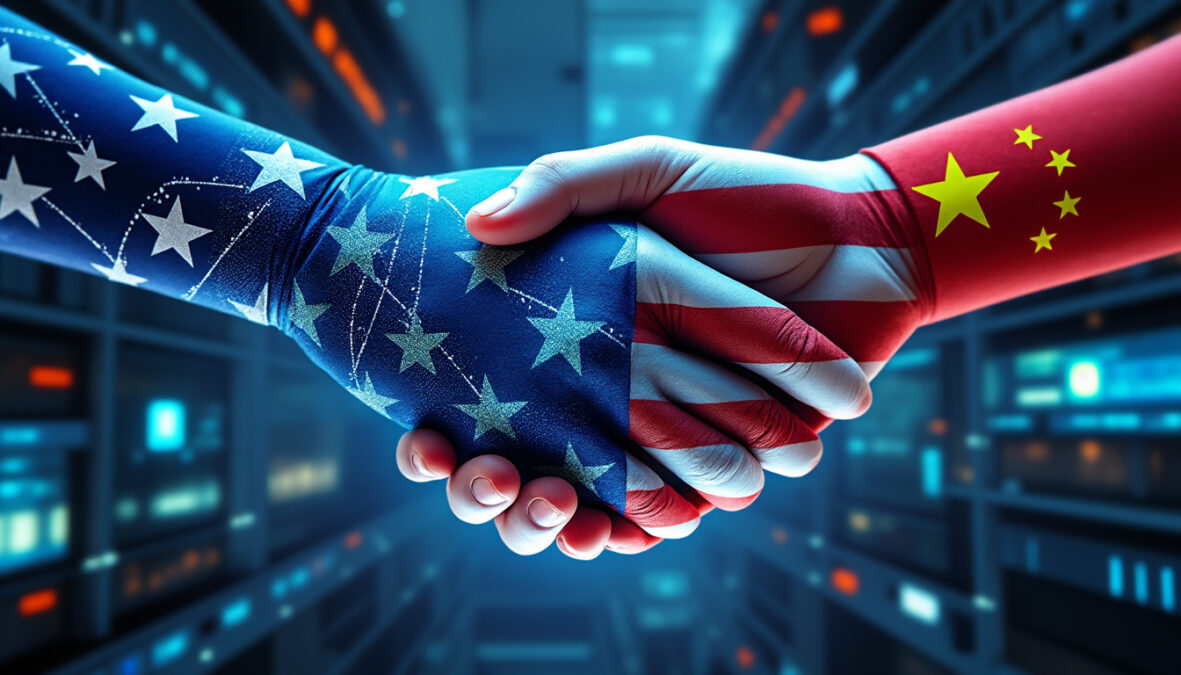
The emergence of artificial intelligence (AI) as a determining factor in economic and technological growth poses complex challenges and opportunities on the international stage. Recently, discussions have been ongoing between the United States and China, two global superpowers, to establish a common vision for AI. These meetings aim to align their efforts and define shared goals that could influence the global development of this technology.
The stakes of artificial intelligence in international relations
Artificial intelligence is not limited to its technological application; it has become a major issue in international relations. The United States and China recognize the importance of cooperation in this field, particularly to strengthen their respective positions in the global market. AI is perceived both as a driver of innovation and as a source of potential tensions, notably due to concerns related to security and ethics.
Recent exchanges between American and Chinese authorities
The U.S. Treasury Secretary, Scott Bessent, recently had a meeting with the Chinese Vice Premier to discuss future directions regarding AI. This dialogue revealed a mutual interest in exploring collaborations and establishing protocols that would address themes such as the societal impact of AI as well as its implications for the labor market.
The perspectives on a common regulatory framework
For AI to develop in an ethical and responsible manner, an international regulatory framework is necessary. Both countries are beginning to consider creating regulations that could govern the development and use of AI. By pursuing this path, they could avoid future conflicts and foster a climate of trust for nations adopting this technology.
The importance of a proactive approach
Adopting a proactive approach is crucial to ensure that AI is used for beneficial purposes. Discussions between the United States and China could contribute to the development of strategies aimed at maximizing the benefits of AI while minimizing its risks. Initiatives such as those launched by the French Minister of National Education, which aims to integrate AI into educational systems, demonstrate a willingness to face the challenges of tomorrow through innovative projects. For more information, you can refer to this article on the launch of an innovative AI project.
The ethical challenges posed by artificial intelligence
The ethical challenges associated with AI are a major concern for governments. Issues related to surveillance, algorithmic discrimination, and the impact on employment raise concerns that must be addressed as a priority. In this regard, deeper discussions between these two powers could help map out a roadmap for ethical and responsible regulation of AI.
Towards a collaborative future in artificial intelligence
The search for a shared vision between the United States and China regarding artificial intelligence is a crucial step in ensuring a peaceful and constructive use of this technology. As both countries strive to remain at the forefront of innovation, their collaboration could also inspire other nations to strengthen their own initiatives in the field. This could have a positive global impact, as evidenced by the NSA’s desire to fully leverage available AI models and engage in international dialogue.
The future of AI on a global scale
It is undeniable that AI will profoundly transform our societies. However, for it to serve the collective interest, global actors must work together. In this sense, establishing a constructive dialogue between the superpowers of the United States and China could serve as a model for other countries. This would pave the way for the emergence of a collaborative framework conducive to the development of ethical and sustainable artificial intelligence. Articles such as this one also raise essential questions about Europe’s readiness to regulate this technology.


