
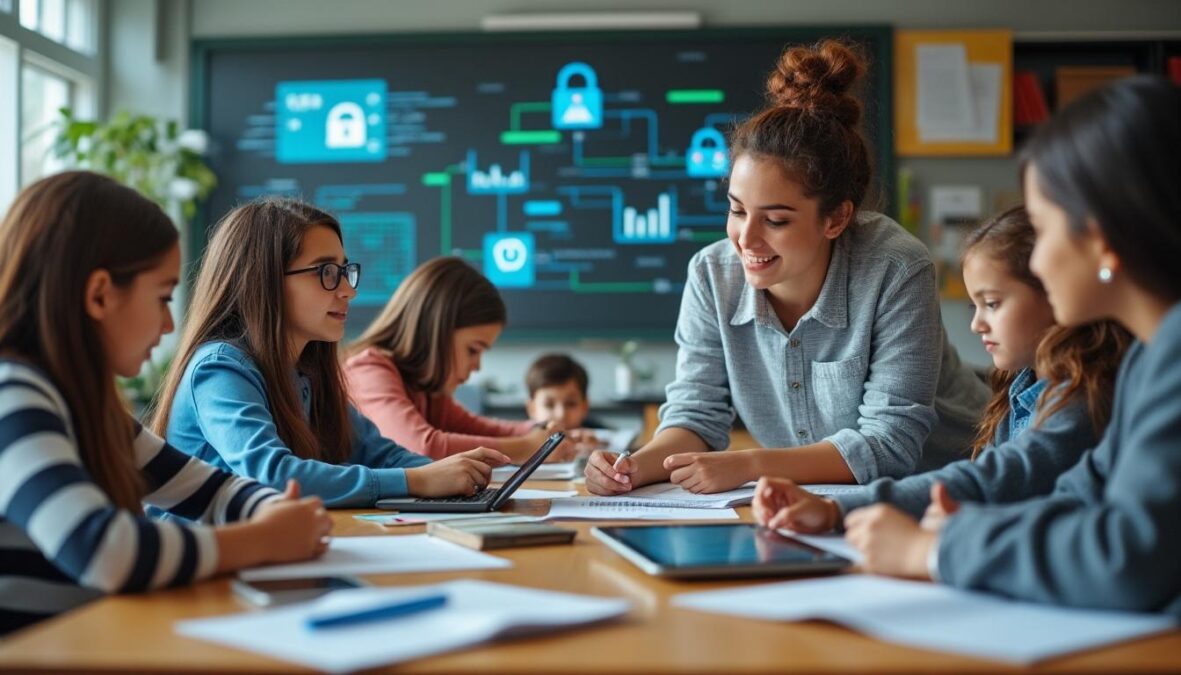
The integration of artificial intelligence (AI) into the educational system raises major questions about its potential impact, both positive and negative. Teachers and students benefit from its facilitative applications, while concerns arise regarding the privacy of personal data, particularly those of minors. This debate highlights the importance of thoughtful and informed use of these tools in the school environment.
A valuable aid for teachers
The educational revolution enabled by artificial intelligence should not be overlooked. Teachers can leverage AI to lighten certain aspects of their work, such as organizing their schedules or creating exercises tailored to their students’ needs. These assistive tools can transform repetitive and time-consuming tasks into smoother and more efficient experiences, allowing teachers to focus on teaching itself.
Élodie Weil, a lawyer at the CNIL, emphasizes the importance of using AI for administrative tasks. However, she warns against dependency on AI for crucial missions, such as grading papers. AIs are not always reliable and can lead to errors if used in this context. This raises questions about the need for strict regulations when AI is employed in the educational field.
The risks of data collection
One of the main challenges of using AI in schools concerns the protection of students’ privacy. AI-powered applications collect significant amounts of data which, without necessary security measures, can be exploited for commercial purposes. Teachers must be aware that every interaction with these tools can contribute to shaping a user profile, which is particularly concerning when it comes to children’s data.
The CNIL recommends raising awareness among teachers about the dangers these tools represent, urging them to consult their hierarchy and the data protection officer of their institution before using such technologies. The necessity for transparency and accountability is therefore crucial to ensure the protection of personal data for all the students involved.
The use of AI for students
As for students, AI can also provide support in their studies, for example during revisions or homework. However, this approach must be framed and scrutinized carefully, as AI should not become a substitute for human interaction or autonomous learning. Élodie Weil reminds us that AI is a tool and not a friend, an essential aspect to teach young users to avoid detrimental dependencies.
Parents and educators must question the types of questions their children ask these artificial intelligences. Indeed, some inquiries may seem innocent but could potentially compromise the security of personal data, turning AI into a “vacuum cleaner” for sensitive information. This dynamic risks negative consequences if not managed properly.
Towards informed regulation
In light of these challenges, the question of regulating the use of AI in schools is crucial. A clear legal framework could allow for harnessing the benefits of AI while protecting users from potential abuses. Precedents, such as warnings regarding the use of AI in politics or in application development, show that it is imperative to rely on robust ethical principles and adequate protections to guide the implementation of these new technologies.
Debates surrounding AI, both in the school context and in other sectors, continue to evolve. While recognizing its advantages, it is essential to remain vigilant about the actual implications of its use. Ongoing discussions could lead to the implementation of an educational policy that exploits both the enriching potential of AI and the necessary precautions to preserve the rights and safety of users.


