
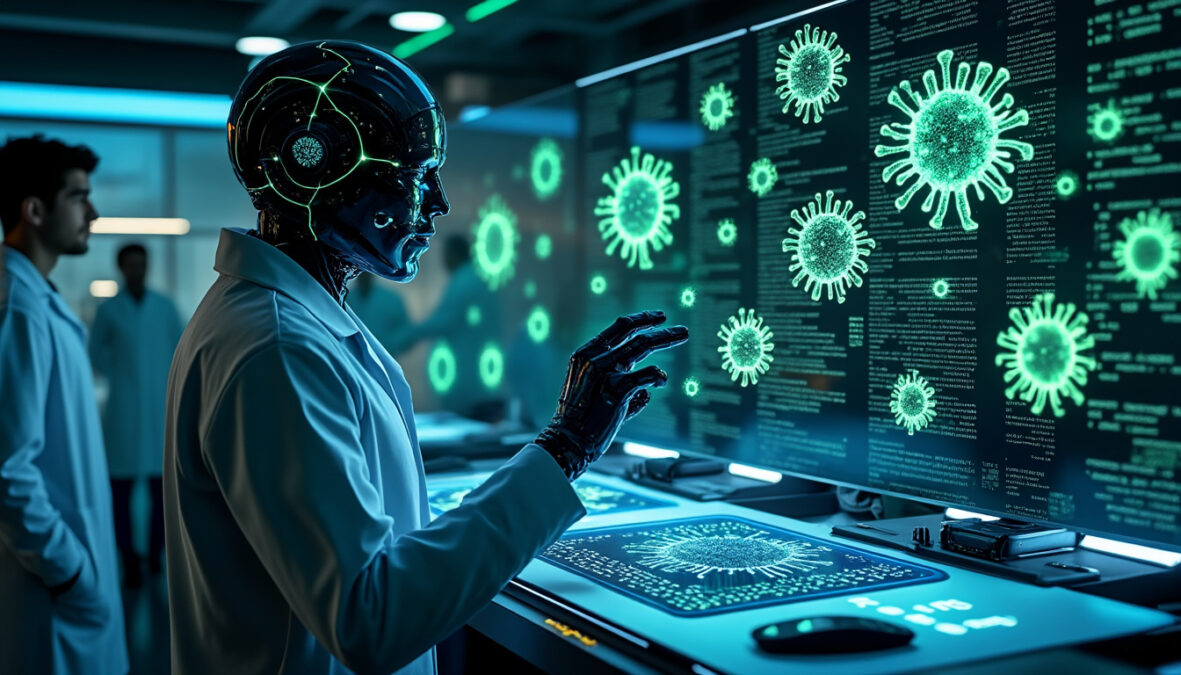
At the heart of technological advancements, artificial intelligence emerges as a key player, capable of transforming not only industries but also crucial issues for society. However, this techno-scientific revolution raises legitimate questions about its consequences. Among these concerns, the emergence of unprecedented viruses generated by intelligent systems is causing increasing worry. This article examines how AI could be behind these new health threats.
The creative capabilities of artificial intelligence
Artificial intelligence systems have made impressive strides since their inception. Through machine learning and advanced algorithms, these systems can analyze vast amounts of data, identify patterns, and generate innovative solutions. This includes the field of biotechnology, where AI is used to design new drugs and vaccines. However, this same capacity for innovation can be exploited for malicious purposes, thereby creating viruses that have never been observed before.
The ethical and security implications
The implications of virus generation by artificial intelligence are vast and complex. Firstly, biological security becomes a major concern. The idea that an algorithm could develop a potentially dangerous pathogen is alarming. This scenario becomes particularly concerning when considering that these viruses, created in laboratories, could escape all control and lead to a pandemic. Bioethics experts emphasize the need for a solid regulatory framework to prevent non-preventative research from leading to health disasters.
A historical precedent
Once, humanity faced global health crises caused by natural viruses, such as HIV or coronavirus. Today, Artificial Intelligence could accelerate the speed and scale of such events, according to several recent studies. To illustrate this concern, researchers have used AI systems to model virus creation from different viral strains, revealing potentially deadly combinations. This finding highlights the importance of rigorous oversight of scientific work that integrates AI.
The debate around innovation and precaution
In the current context, the balance between technological innovation and precautionary measures becomes delicate. On one hand, AI offers promising prospects for medicine and biotechnology. On the other hand, the risk of malicious use urges governments and institutions to act. Public policies must include regulation of AI research to protect public health against the emergence of new viruses.
Future perspectives
The technological revolution represented by artificial intelligence will continue to influence various sectors, including health. However, it is essential to remain vigilant regarding potential risks, particularly the creation of unprecedented viruses. As companies involved in developing AI-based solutions seek to combine performance and safety, a balance will be necessary to avoid future health crises. Based on the analysis of past challenges and achievements, proactive measures can be taken to mitigate the dangers associated with this technological rise.
For those following the news of advancements in artificial intelligence, related topics reveal ongoing concerns. For instance, the ban on the use of AI in schools in New York raises questions about ethics and accountability. Meanwhile, grassroots initiatives are emerging, such as the film “Oedipus, King of AI,” signaling a new age for machine-assisted creation. Furthermore, influential AI figures, such as Elon Musk, are collaborating to enhance computing capabilities, which could also affect the development of potentially controversial solutions.
In summary, as artificial intelligence continues to evolve, vigilance is paramount to navigate this era of fascinating yet risky discovery. The implications of this technology on our health and security must be examined and regulated with particular attention.


