
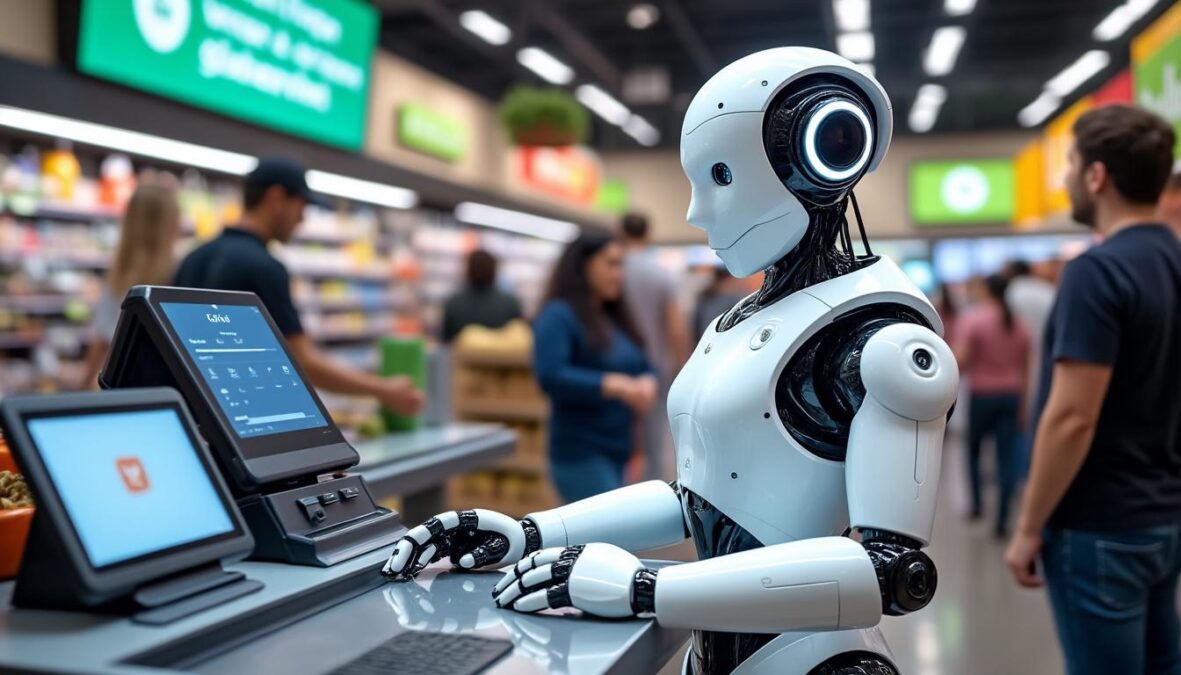
The introduction of artificial intelligence in the field of self-checkout systems raises questions about the social contribution of robots. In this article, we will examine how this technology is transforming the retail sector, its benefits for consumers and businesses, as well as the ethical and societal implications of this evolution.
Development of self-checkout systems through artificial intelligence
Self-checkout systems have become increasingly present in supermarkets and other retail outlets, facilitating the shopping process. Artificial intelligence plays a key role in optimizing these systems, making transactions more efficient and faster. By integrating sophisticated algorithms, the checkouts are capable of recognizing products, calculating prices, and accepting payments without human intervention, thus enhancing the customer experience.
Benefits for consumers
One of the main advantages for consumers is the reduction of waiting times. Thanks to< strong> AI-powered self-checkouts, customers can complete their purchases without having to wait for a cashier to be available. Additionally, these integrated systems can offer personalized recommendations based on past purchases, thereby enriching the shopping experience. The elimination of human errors during transactions also contributes to a smoother and more enjoyable customer experience.
Benefits for businesses
For businesses, artificial intelligence applied to self-checkouts translates into significant savings. By reducing the labor necessary to manage transactions, supermarkets can redistribute their resources toward more strategic areas. These systems also enable the collection of valuable data on consumer purchasing habits, providing businesses with insights that can be leveraged to improve their product offerings.
Ethical and societal implications
The growing deployment of self-checkouts raises ethical concerns. On one hand, there is worry about the elimination of jobs related to traditional cashiers. Many fear that automation might replace jobs, thus increasing unemployment. On the other hand, the prevalence of AI-based technologies raises questions about privacy and the security of customers’ personal data.
Toward a social contribution of robots?
Despite these concerns, it is essential to consider the possibility that robots and artificial intelligence could also contribute positively to society. By freeing employees from repetitive and monotonous tasks, self-checkouts allow workers to focus on higher-value activities, such as customer service or inventory management. This could strengthen the human role in retail service and encourage a more personalized approach in customer interactions.
To further explore these reflections, public debates and discussions on the issues of artificial intelligence are encouraged, as evidenced by a recent café-debate in Belbeze de Lauragais on this topic. Additionally, it is interesting to explore the evolution of this technology in other fields, particularly music, where AI is revolutionizing the rules of the game.
In summary, the interaction between artificial intelligence and self-checkouts is not just a technological issue, but a social challenge that deserves reflection and dialogue around the transformations generated in our daily lives. For more information on these issues, you can consult relevant articles on the spectacular rise of AI in France and the various innovative applications in the automotive sector, which also demonstrate the impact of autonomous technologies on safety and productivity.


