
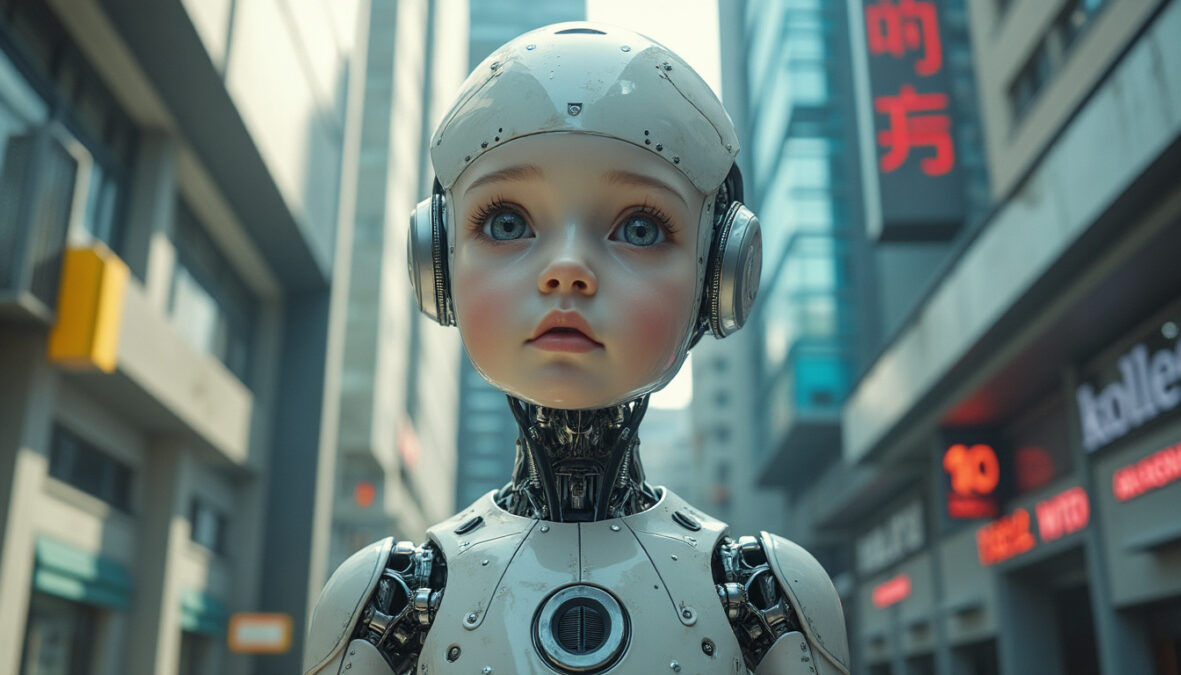
The film “A.I. Artificial Intelligence,” directed by Steven Spielberg, is a much-anticipated adaptation of Stanley Kubrick’s unfinished project. This feature film addresses profound themes surrounding artificial intelligence and human emotion, giving rise to a reflection on the ethics and limits of technology. Through poetic and visually impressive narration, Spielberg succeeds in paying tribute to Kubrick’s vision while adding his personal touch.
The Genesis of a Mythical Project
Kubrick’s project dates back several decades. Known for his attention to detail and innovative approach to cinema, Kubrick always had a keen interest in artificial intelligence and its implications. As early as the 1970s, he began developing ideas for a film that would explore the relationship between humans and machines. This film never came to fruition during his lifetime, leaving a part of the film world in turmoil and waiting for a realization.
The Passing of the Baton from Kubrick to Spielberg
After Kubrick’s death in 1999, Spielberg inherited the project. Friends and admirers, the two directors shared artistic visions, but their styles differed considerably. Spielberg, known for his emotional storytelling approach, managed to integrate the depth of themes left unresolved by Kubrick while adding his own sensitivity. The result is a work that is both rich and complex, addressing ethical questions about artificial intelligence without sacrificing emotional impact on the viewer.
A Journey to the Heart of Artificial Intelligence
In “A.I. Artificial Intelligence,” we are plunged into a future where humanoid robots, called “Mechas,” coexist with humans. The story follows David, a robot child endowed with the ability to love. This character raises questions about love, empathy, and what truly defines humanity. Through David’s initiatory journey, Spielberg illustrates the fears and wonders surrounding the evolution of technology, while inviting the audience to rethink their own emotions and the nature of their relationships.
An Innovative Visual Aesthetic
Spielberg’s artistic direction, combined with Kubrick’s initial vision, offers a bold and captivating aesthetic. The visual effects, combined with a poignant soundtrack, create an immersive atmosphere. The film unfolds a future that is both fascinating and unsettling, where the distinction between human and machine blurs. By exploiting the technological advancements of his time, Spielberg brings to life a world that engages the mind and imagination.
Reflections on Ethics and the Future
“A.I. Artificial Intelligence” is not just a simple entertainment. The film encourages reflection on the development of artificial intelligence and its potential consequences for society. As contemporary debates arise around the actions of artificial intelligences and the ethical responsibilities that follow, Spielberg’s work invites us to remain vigilant and critical of technological advancements. At the same time, this work raises pertinent questions about how we will envision the future at the intersection of technology and humanity, as evidenced by recent articles on the ethical and societal issues of artificial intelligence.
A Lasting Cinematic Legacy
The impact of “A.I. Artificial Intelligence” far exceeds its release period. By merging Kubrick’s avant-garde vision with Spielberg’s emotional approach, the film offers a critical and contemplative perspective on human interaction with technology. This masterpiece continues to spark debate and reflection, both in the cinematic field and in the realm of artificial intelligence research. Its relevance remains intact, as evidenced by the contemporary challenges we face in an increasingly automated world.


